

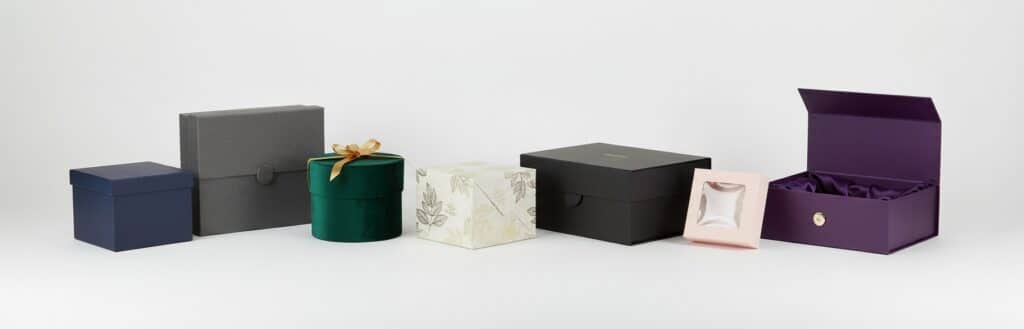
Magnetic vs. Ribbon Closure: Which is Better for Your Gift Box?
When it comes to luxurious packaging, sealing your box the right way is an important technical aspect of the packaging design process. This determines the robustness of the box, as well as the ease of use it provides for the customer. If you want to decide between the two most popular ways of closing gift box packaging designs—magnetic flaps and ribbon ties, you must analyze material science, assembly, and durability accordingly.
A beautiful closure is also an asset to a brand, but it’s actually not as important as what I call “the utility of the system.” A closure should ensure that the box doesn’t distort under pressure, speed up packing at the warehouse, and guarantee that packed items are protected during intercontinental transport. The article dissects both magnetic and ribbon systems’ mechanics to assist you in identifying the appropriate engineering design that suits your production and transport requirements.
The Mechanics of Magnetic Closures
The power of innovative designs of gift box closures always lies in how effectively Neodymium NdFeB magnets are incorporated into the gift box frame. Unlike in a gift box where one must loop and secure it by hand, in a magnetic closure, “magnetic flux” enables it to snap closed in place. This happens effectively when there is a balance between the strength of the magnets and the weight of the paper coating them.
- Hidden Strength: For quality boxes, Engineers embed tiny magnetic discs ranging from 1mm to 3mm thick in the cardboard materials. These boxes are designed to be neat while giving the best grip.
- Self-Centering Design: The most important advantage here is that the magnets “guide” the lid into position. The moment the top is placed near the base, the force of the magnetic field attracts it into perfect square alignment.
- The N-Rating: “Magnetic power is given an ‘N-rating,’ generally ranging from N35 to N52. The number indicates the strength of the magnetic force, with higher numbers denoting a greater attraction.” In fact, according to a report released by Smithers Institute in “Global Packaging Trends,” this is precisely what modern consumers are seeking: “a ‘snap’ that is easy to operate.”
- Safe Shipping: A medium-grade magnet ensures that the gift box does not accidentally open up during the shipping process. This happens if a lower-grade magnet is used for closing a gift box.
- Precision Routing: Precision routing is done to ensure that the gift box is flat on all sides. The process involves “routing” the board by creating a small pocket to ensure that it is flush with the surface, so that there are no bulges that could cause boxes to lean against each other when placed together inside a storage facility like a warehouse.
The Physics of Tension: The Ribbon-Tie Example
While magnets have invisible force fields, ribbon gift box closure types are based on manual tension. In other words, a ribbon is not only ornamental. Instead, it serves a purpose as a type of fastener that you have the ability to tighten or loosen. A magnet does not allow for this.
Pulling the ribbon through small slits in the box creates a “binding” effect. This particular feature ends up being very handy if your box happens to be ever so slightly filled past capacity. By the fact that you are creating a knot, you can press harder in order to press the sides of the box together in case the contents inside are trying to push the top off.
- Value of Ribbon Material
- Strength and Stretch: Industrially produced ribbons are produced with high-quality polyester or grosgrain. The reason for selecting such ribbon materials lies in their great strength and resistance to stretching. As per the ISO 13934-1 norms for fabric tensile properties, these types of ribbon materials possess greater tensile strengths than what a standard box could ever withstand.
- The Grip Factor: “The utility of a ribbon is in its grip.” A ribbon that’s too smooth (as in inferior silk ties) might have a slipping knot. Ribbons have particular weaves, such as grosgrain, because of the friction they generate, preventing the knot from coming undone while in transit.
- “Creep” Risk: “Creep” is one of the few negative technical characteristics of a magnetic earring design. It refers to a creeping or fraying of fibers. Now, a magnet will remain constant throughout its life. However, a string may unravel if it is touched one too many times or if one secures it improperly.
- Custom Fit: The fact that you put the ribbon together yourself makes it really “forgiving.” So if the box is ever slightly warped or irregularly shaped, you can pull the ribbon tight and compensate for it so that the final gift box arrives looking beautiful for the consumer.
Logistics and Assembly: Shipping Efficiency and Labor Costs
In the high-volume shipping industry, the most desirable types of gift box closers are those that are beneficial in terms of saving both money and time. When businesses consider a closing system, their prime interest is in two things: the space that these boxes will consume, and the time any individual will take to close these boxes.
- Magnetic Closures: The “Flat-Pack” Winner
Magnetic closures are preferred for packaging cases referred to as “collapsible” cases. These cases can be shipped to you flat, and this is a huge technical benefit.
- Saving Space: Because they are flat, boxes can fit on one pallet, which will cut your delivery costs and give you more space for more boxes within your warehouse.
- Fast Assembly: For assembly, you just “pop” them up when you are ready to use them. The magnets close the folded flap quickly.
- The Technical Risk: The cardboard may warp because of humidity when it is transported. As a result, it is possible that the magnets will not align properly.
- Ribbons Closures: The ‘Hands On’
Types of ribbon-wrapped gift box closings are typically found on “set-up” gift box (box that is pre-assembled and will not flatten).
- The Labor Cost: The greatest cost in this case is time. Taking a long time to tie a perfect bow by hand takes significantly longer than snapping a magnet together. According to articles relating to manufacturing optimization, manually tying knots in ribbons can potentially slow down a packing line by up to 30%.
- Tamper Protection: On the positive side, a ribbon provides tamper protection. It is difficult to untie a ribbon and then tie it back in a way that it appears sealed. This is one way that a tampered-with box may be concealed.
- Shipping Bulk: Ribbon boxes contain pre-assembled packaging. They require more space in a truck shipment. You are essentially being charged to ship “air” with empty boxes. That causes their shipping charge to be higher per unit than magnetic flat-packed boxes.
Environmental Resilience: Heat, Humidity, and Recycling
A gift box design may be ideal in a production setting, but it must live in the “real world.” That means it will be hauled in a hot truck. It will be stored in a warehouse with high humidity. “Technical utility” is ensuring that when the weather changes, it won’t fail.
- Magnets, The Heat Factor
Magnetic closures are extremely strong, but they contain an Achilles’ heel of which the uninformed consumer has not been made aware.
- Adhesive Failure: The magnets are bonded with adhesive. In the hotter shipping boxes (above 50°C), the adhesive could soften. If the adhesive fails, the magnet can come right out of the cardboard box when the customer opens the box.
- Humidity Gap: High humidity may cause cardboard to swell or warp. Even if the cardboard box top is slightly warped, that will create a gap. Magnetic fields are known to weaken drastically when the distance is greater, so a warped box may not close at all.
- Ribbons and Humidity Factor
- The “Slack” Problem: Most ribbons are made of synthetic fibers that are capable of absorbing a little moisture. In damp weather, the ribbon can become “limp” or lose its grip. This results in the knot sliding or loosening up during transit.
- The Sustainability Win: When it comes to being “green,” ribbons usually win. According to the Sustainable Packaging Coalition’s Design for Recyclability guidelines, rare-earth magnets are hard to recycle because they are mixed into the cardboard. Ribbons are easy to pull off, allowing the rest of the paper box to be recycled without any metal “contamination.”
- Quick Comparison: Weather & Eco-Friendliness
- Heat Resistance: Ribbons are better – no glue to melt.
- Humidity Resistance: Generally, magnets are better as long as the box doesn’t warp.
- Recyclability: ribbons are much better to work with, for they are easier to remove.
Types of ribbon gift box closures are independent of magnets and glue, but are affected by moisture in the air.
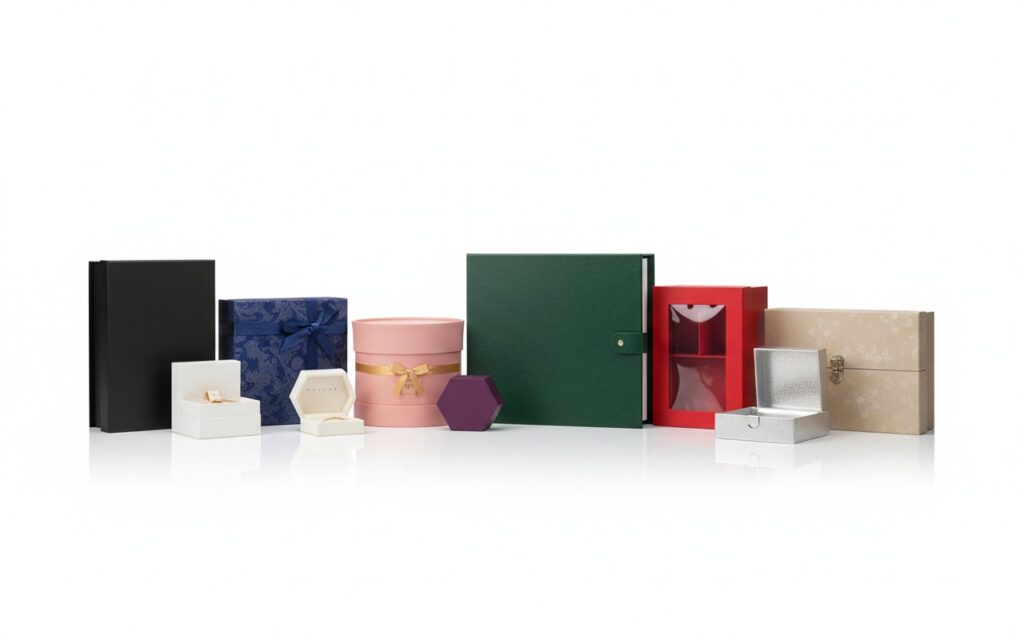
The Endgame Aesthetic—Acoustics and Tactile Feedback: “Snap” vs “Manual Untie”
Packaging design also considers how a gift box feels and how it sounds. This is in addition to how a box can look. This is referred to as “haptic feedback.” This is how a gift box will indicate that it is of high quality, and that one’s product is secure.
- The Magnetic “Snap”: Instant Confirmation
The type of magnetic gift-box closure makes a very specific “click,” or “snap,” sound. This is not only for cosmetic purposes but has a specific use.
- Sound as a Tool: That “snap” sound tells you that the box is now closed. You don’t have to double-check it.
- loth Ease of Use: Only one hand is required to open and close a magnetic box. Those who want “high-tech” looks may find this immediate feedback very pleasing.
- Physics of the Click: When the magnet pulls the lid down, the energy turns into a sound wave. If the sound is clean, the box feels luxurious. If the sound is dull, it feels cheap.
- The Ribbon “Untie”: The Slow Reveal
The experience with ribbon closures is a totally different one. These closures have a “slow reveal” element attached.
- Controlled Opening: The ribbon gives a controlled opening to the gift box. This is very important if there is something heavy and fragile in the box because the ribbon acts like a brake system during opening.
- The “Unboxing” Ceremony: Luxury brands have liked using bows because the customer is compelled to unpack it slowly. Unraveling a string is an event that cannot be created by simply snapping a magnetic closure.
- Soft Touch: Ribbons have a soft touch; they are not hard and clicking like metal and board. So, they are better for “gentle” products such as high-quality clothing and jewelry.
_Which One Feels Better_
- For Speed and Tech: Fast and loud. Very futuristic.
- For Luxury and Care: Choose Ribbon. It’s slow, quiet, and it feels like it’s by hand.
Cycle Testing and Fatigue: How Many ‘Opens’ Does the Gift Box Tolerate?
In the world of commercial packaging, we speak of “fertility life.” That’s a fancy way of asking: How many times can a customer open and close gift box before it breaks? That’s based solely upon the physics of your choice of closure.
- Magnets: Designed for the Long Haul
Magnetic closures are considered “non-contact” fasteners by engineers. Even if the box’s surfaces are in contact with each other, the magnetic force isn’t something that “wears out.”
- Infinite Force: The Neodymium magnet has a loss of less than 1% of its total power in each 10-year period. This indicates that the closing force remains strong even when the cardboard has degraded.
- Failure Points: A failed magnetic box is not normally a problem with the magnet. This is because either the paper hinge of the box is broken from being bent multiple times, or because the glue that holds the magnet together is dried out.
- Best Use: This kind of packaging is ideal for use in gift box that will be used for years, such as a box for high-end headphones or a jewelry box.
- Ribbons: “Fraying”
Types of ribbon-based gift box closures are mechanical, which involve physical fibers that scrape each other.
- Fiber Friction: Each time that you tie and untie a bow, the tiny fibers in your ribbon are rubbing against each other. This leads to “pilling” or “fraying.” This causes your ribbon to become fuzzy, making it look like it has lost that freshly washed, clean appearance.
- Structural Limitations: A regular satin or grosgrain ribbon could possibly appear damaged after only 50 to 100 uses. In addition, when the ribbon is pulled too forcefully, the holes of the cardboard (eyelets), where the string is run through, could also start to separate.
- Best Use: These are best for a “one-time” gift experience or where the item is not accessed that often. For example, a wedding keepsake box or a special holiday gift.
- The Durability Winner
- Magnetic: Has thousands of applications. Ideal for long-term usage.
- Ribbon: Only a few functionalities. Excellent for a spectacular, short experience.
Tolerancing and Precision: Why Fractions of a Millimeter Matter
In manufacturing, “tolerance” refers to the size of small errors the machine is allowed to make. Regarding gift box closure types, some designs are very finicky, while others are a bit more forgiving.
- The Precision of Magnets
Magnetic closures have to be extremely accurate. Even if it is just a tiny bit “off,” it won’t work.
- The “Weak” Gap: Since the magnetic pull gets weakened very fast when the distance increases, a gap as little as 0.2mm – the thickness of two sheets of paper – may render the lid loose or pop open.
- Perfect Angles: In order for magnets to line up, gift box has got to be perfectly square. It requires a high-tech “V-slot” cutting machine that carves grooves precisely into the cardboard. If this fold is just barely crooked, magnetic poles will not align, and the box looks “skewed” or lopsided.
- Guarantee of the “Click”: Getting that satisfying snap, the magnet is to sit at exactly the correct depth; when it’s buried too deep in the cardboard, it loses power.
- The Flexibility of Ribbons.
A type of closure of a gift box with a ribbon is very “forgiving” compared with metal clasps. They do not require any costly machines for their perfect functionality.
- Adjustable Tension: The gift box may be very slightly warped, or the lid may not lie flat. However, this can easily be adjusted by pulling on the ribbon. The ribbon will cover up errors that a magnet will reveal.
- Manual Closure: Because it involves a human or an elastic machine, the binding of this closure allows it to accommodate the particular shape of that single gift box. As such, ribbons remain superior for hand-made boxes or small-scale productions in which all boxes might not be similar in shape.
- Reducing Waste: With fewer ribbon boxes going to the landfill for being “imperfect” since the ribbon could likely be pulled down to close the gift box. Also, magnets going out of order often have to be trashed.
- Which One is Easier to Make?
- Magnetic: High-accuracy machines are needed, and they are very costly.
- Ribbon: It is very flexible. This is good when the box is not 100% perfect.
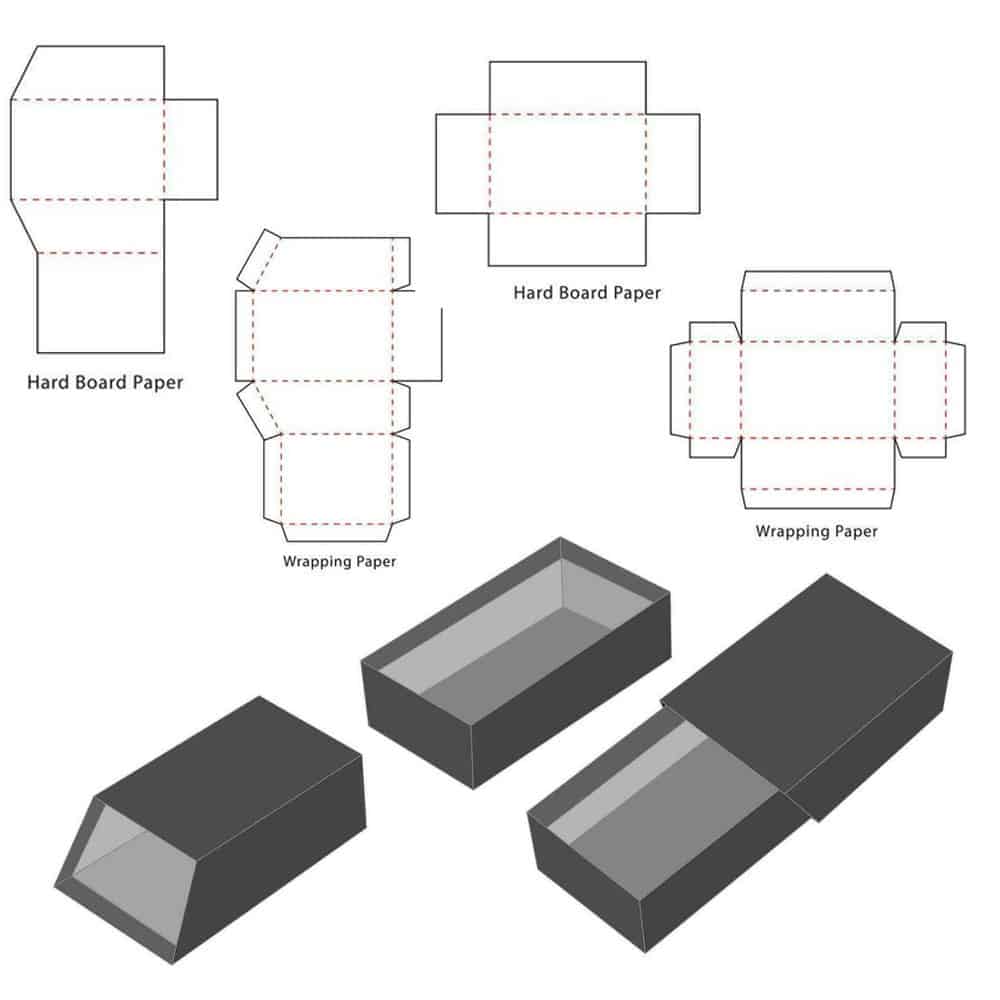
Safety Rules: Magnets Versus Ribbons
By 2026, the legislation concerning packaging had become very strict. Engineers, while choosing a type of gift box closure, have to keep in mind not only the issue of appearance but also follow the international rules of safety with the aim of protecting consumers, especially children.
- Rules for Magnets: Avoiding Accidents
Magnets come in very handy, yet they can be dangerous when they become loose.
- Risk of ingestion: Strong and small magnets can cause severe internal injury if ingested. Because of this, laws like CPSC 16 CFR Part 1262 in the United States require that these magnets be “permanently encased.”
- Testing for Strength: The companies use a “small parts cylinder.” Anything that can fit inside this tube must be glued and sealed to such an extent that it is not possible to pull it out, even with various tools.
- Peak Safety Items: To improve other high-tech items, magnets must be carefully tested for their “magnetic flux” in order to prevent interference with the product inside, like a compass or a pacemaker.
- The Rules for Ribbons: Chemicals and Length
Ribbons appear to pose less danger but come with their own set of rules for chemicals or physical hazards.
- Strangulation Hazards: When it comes to gift box marketed as toys or children’s items, there may be specific restrictions on ribbon length. A ribbon that is longer than specified might potentially be a strangulation device.
- Strength in Tension: The ribbon needs to be secured to the gift box in such a way that it doesn’t easily come off if a child tugs on it.
- Which one is easier to clear?
Throughout history, there have
- Magnetic: More difficult to pass. Has very strict “drop tests” and “pull tests” to ensure that magnets remain concealed.
- Ribbon: Easier to pass as long as it is made of non-toxic material, provided it is of a safe length.
Conclusion: Choosing the Best Engineering Solution for Your Package
Where these two gift box closure types differ is in their balance of mechanical durability, logistical efficiency, and end-of-life sustainability. Strictly from a technical standpoint, magnetic closures cannot be beat for high-volume, precision-engineered packaging where speed of assembly and a consistent “snap” feedback loop are required. Their survivability through several thousand cycles with no loss of force makes them the standard for the industry in reusable, high-value containers. But the ribbon closure remains a vital tool in the packaging engineer’s toolkit, offering a lightweight, low-cost, highly recyclable option that shines in the areas of manual tensioning and tamper-evidence. Ultimately, the “better” closure is the one that best fits your particular distribution stress-tests and environmental goals. You will be assured that the gift box-enclosing mechanism you choose will maintain structural integrity on the manufacturing floor, right to the consumer’s hands, safely protecting both product and brand reputation for quality.
Frequently Asked Questions
Q1. Could the magnetic closure compromise the electronic content?
Although the magnetic field is strong around the Neodymium magnets, the magnetic flux is usually confined within the rigid PCB and the strike plate. In the usual electronics product, the intensity of the magnetic field is not strong enough to cause damage. In the case of highly sensitive magnetic media disks and medical devices, though, the ribbon type is the technically superior “no interference” option for closed utility boxes.
Q2. What is the “Golden Ratio” for ribbon length compared to box width?
A common formula to design a functional ribbon closure is $L=(2W) + (2D) + 400mm$, where $L$ represents the total length of ribbon, $W$ represents the width of the box, and $D$ represents the depth of the box. This ensures that “tail” length is adequate to provide a high-friction knot that doesn’t slip when pulled.
Q3. How do I prevent “Magnet Migration” when I’m working under high heat situations?
Magnet migration will happen when the adhesive fails. To remove this problem, “mechanical locking” techniques are employed, where a hole that is slightly smaller than the magnet diameter is routed, along with a friction fit and high-temperature industrial cyanoacrylate.
Q4. Do hybrid gift box closure types exist?
Yes. High utility “Executive” boxes employ a magnetic closure seal with a ribbon serving as a “pull-tab” in order to better resist the breakout force of high-grade magnets like the very powerful N52 magnets. These measures minimize the forces transmitted to the net-weight-bearing cardboard “hinge.”
Q5. What is the influence of “Surface Energy” upon adhesive bonds of magnetic closings?
In the technical manufacturing of gift boxes, it’s the surface energy of lamination (for example, Soft Touch, UV Gloss, and Matte BOPP) that determines how well a magnet stays in place. The “Corona Treatment” of high-utility boxes is required to improve surface energy prior to applying glue to hold in place the magnet. Where there’s insufficient surface energy, it might “pop” out during initial pull force application. Ribbon closures negate this technical issue altogether because they are not held in place using chemical processes.
Q6. How does “Air Gap” (Magnet Distance) impact the efficiency of the N-Rating?
The attraction force, conversely, follows the Inverse Square Law in accordance with the physics of magnetism. In the case of gift box closing types, this implies that an increase of as low as 0.5 mm in the thickness of the paper wrap could cause the closing strength to diminish considerably. In order to remain functional, engineers must therefore design a paper weight (GSM) strong enough not to tear through with the magnet, yet thinner for the magnetic flux to pass through.
Q7. Can ribbon closures be automated in a modern factory setting?
Magnetic insertion can be readily automated by CNC routing, whereas ribbon threading is one of the “last remaining manual bottlenecks in packaging.” Nevertheless, “2026-tier Automatic Ribbon Feeding” machines are currently available that can “die cut and heat-seal the ribbon into the board” in the lamination stage, thereby improving “the utility of ribbon closures by increasing the cost effectiveness, though at a substantially higher expense in machine tools.”
Q8. What is a better resistance to “Shear Force” when stacking?
Shear Force: This type of force is created when boxes are forced alongside each other on the same pallet. Magnetic Closures: Magnetic closures are very strong when it comes to “Vertical Pull” but are low on “Lateral Shear”; a minimal amount of force is required to slide the magnetic closure open. Ribbon Closures: Because the ribbons are literally encompassing the entire structure of the box, the resistance created is high when it comes to lateral movement. Ribbons are the technically superior closures when the boxes are going to be stacked without the “shipper” boxes.
Q9. What role does “Hinge Memory” play regarding closure reliability?
Rigid boxes consist of grey board that has a “memory,” or tendency to revert to a planar shape. When it comes to magnetic gift box closure designs, if the hinge isn’t “pre-broken” or bent 180° during the manufacturing stage, hinge memory could potentially provide a force outward in excess of the N-Rating force of the magnet and could open on its own. Ribbon closure packaging options are an override to overcome heavy hinge memory in heavier grades of board.
Q10. What is the “Decibel Threshold” for a quality magnetic closure?
As far as a magnetic box is concerned, a utility of 60dB to 75dB is considered desirable. A utility below that is considered mushy by a consumer and denotes either a weak magnet or too much padding. A utility above that may point towards a magnet striking a board a bit too heavily, and even leading to board bruising.