
Soap Wraps Packaging Solutions: Sustainable & Custom Soap Wraps for Modern Soap Boxes
Determine the most suitable Soap Wraps Packaging for contemporary Soap Boxes. Check out our customized soap wraps that enhance branding, eco-friendliness, and soap attractiveness.
In the contemporary competitive market for personal care products, packaging has gone beyond being a simple protector of the product. It is all about perception, eco-friendliness, and functionality. Soap Wraps Packaging has emerged as a practical and artistic means of soap packaging, especially for soap manufacturers who require light, eco-friendly, and cost-effective packaging that still looks great. Soap wraps are designed to protect bar soaps while also offering flexibility in terms of design, material, and branding, making them ideal for small and large-scale soap manufacturers.
Unlike the conventional cartons, soap wraps offer a perfect combination of protection and convenience. They generate less waste, are more convenient to handle, and function in perfect synchronization with the rising consumer behavior of embracing eco-friendly packaging. Companies are increasingly opting for paper-based and biodegradable soap wraps packaging as consumers are increasingly associating the use of eco-friendly packaging with quality. According to the United States Environmental Protection Agency, waste reduction in packaging and the use of recyclable materials are significant factors in minimizing environmental effects, particularly in the packaging of consumer products. Soap wraps are more than just a statement; they are also a smart move.
Functionality-wise, soap wraps packaging also possess a high degree of flexibility. They can be designed to include inner linings, labels, or sleeves and can be easily combined with soap boxes for enhanced protection during shipping. Whether it is used alone or as a multi-layered packaging solution, soap wraps packaging enable brands to communicate their ingredients, usage instructions, and brand stories in a clear and compelling manner. As the soap industry continues to progress in the direction of sustainability and smart packaging, soap wraps packaging are becoming an integral part of soap box solutions rather than a secondary option.
What Are Soap Wraps Packaging?
Soap wraps packaging are flexible packaging materials that are specifically made for the sole purpose of soap wrapping and protection. Being a form of Soap Boxes, soap wraps packaging can be a primary packaging material or a secondary packaging material that can help in the packaging of the product. Usually made of paper-based, biodegradable, or food-grade materials, soap wraps packaging are specifically made to mold into the soap shape closely, thus eliminating unnecessary packaging while still protecting the soap from dust, damage, and moisture.
Functionally, soap wraps packaging are specifically made to help in achieving a balance between protection and breathability. This is especially true for artisanal and cold-process soaps that require air circulation to prevent moisture buildup and preserve the soap’s texture and aroma. Industry best practices for packaging, as set by the Sustainable Packaging Coalition, show that right-sized and material-efficient packaging can help in achieving the improvement of product integrity while minimizing environmental impacts, especially in fast-moving consumer goods such as personal care products. This is especially true in the current trend of soap wraps packaging over fully enclosed rigid packaging.
Functionality-wise, soap wraps packaging can be made with folds, seals, or adhesive strips and can be printed in a variety of ways. They allow brands to communicate necessary product information such as ingredients, certifications, and usage instructions without making the product overly complex. As the preferences of consumers continue to shift towards more transparent, sustainable, and easy-to-handle packaging, soap wraps packaging continue to redefine the packaging of soap products in soap box packaging systems.
Soap Wraps vs Traditional Soap Boxes
Soap wraps packaging and traditional soap boxes are different in terms of material efficiency, flexibility, and sustainability. Traditional soap boxes are usually rigid carton packaging that fully encloses the product, offering excellent structural protection and stacking ability. Soap wraps packaging, on the other hand, provide a lighter and more flexible packaging option that makes them perfect for brands promoting minimalism and material efficiency in the Soap Boxes industry.
In terms of packaging, soap wraps packaging use substantially less raw material compared to traditional soap boxes, which is a direct cost factor in terms of production and transportation. Lighter packaging also means less carbon emissions are released during transportation. In terms of packaging lifecycle assessments, the Ellen MacArthur Foundation has indicated that reducing packaging material while still providing adequate product protection is one of the most effective ways to improve the sustainability of packaging in the consumer goods industry. This explains why soap brands are increasingly turning to soap wraps packaging or a combination of soap wraps packaging and boxes only when necessary.
In retail settings, soap boxes remain effective for high-end soap displays and long-haul transportation, but soap wraps packaging are more flexible and quicker to pack. They are easier to put on, take up less storage space, and are more accommodating of irregular soap shapes, particularly artisanal soap bars. For brands looking for a balance between product protection, sustainability, and cost-effectiveness, soap wraps packaging are increasingly recognized not as a substitute for soap boxes but as a better alternative or complement to traditional soap boxes in today’s packaging solutions.
Why Soap Wraps Packaging Are Essential in the Soap Boxes Category
Soap Wraps packaging have become an essential component of the Soap Boxes market as they offer solutions to the existing problem of packaging in an extremely effective manner. With the rising demand for sustainable and handmade soap, the need for strong packaging seems almost unnecessary. Soap wraps packaging are a clean and efficient means of packing soap without any waste, making them a very useful addition to the soap packaging market.
One of the most crucial factors that have led to soap wraps packaging becoming an essential component of the soap packaging market is that they offer solutions to the demands of sustainable packaging. With the rising demand for sustainable packaging, customers are now looking for packaging that is recyclable, biodegradable, or compostable, especially in the case of personal care products. The European Commission guidelines on sustainable packaging clearly state that reducing unnecessary packaging and using paper-based materials can significantly enhance recyclability and sustainability.
From a business standpoint, soap wraps packaging also enhance efficiency in business operations. They are more convenient to store, faster to apply, and flexible to accommodate different sizes and shapes of soap, especially for small-scale soap manufacturers. On their own or in conjunction with outer soap boxes for high-end or shipping sales, soap wraps packaging increase flexibility for different sales platforms. They are more than just an alternative; they are essential components of the soap boxes market for businesses that want to remain competitive and environmentally conscious.
Materials Used in Soap Wraps Packaging
The soap wrap packaging is also very dependent on the materials used, which should be able to protect the soap and be eco-friendly and aesthetically pleasing. Under the Soap Boxes category, soap manufacturers and brands are very particular about the materials used for the wrapping of the soap, including factors such as durability, breathability, and eco-friendliness. The modern soap wraps packaging are not made of paper alone; instead, they are made of a variety of materials that are specifically designed for different types of soap.
Kraft paper is one of the most popular materials used for soap wrap packaging, which is very durable, textured, and recyclable. Kraft paper soap wraps packaging are most in demand in the handmade and organic soap market, as they not only reflect the brand’s commitment to being eco-friendly but also ensure a sufficient amount of protection for handling. According to the Forest Stewardship Council (FSC), eco-friendly paper materials such as certified kraft paper are environmentally responsible and support sustainable forestry practices, making them ideal for personal care packaging.
Another conventional alternative material would be grease-resistant or wax-coated papers, which would provide an additional barrier against moisture without fully closing the soap. These materials would be most ideal for soaps with higher oil content, as they are designed to prevent staining and allow airflow. The current trends on soap packaging from Smithers, a world-renowned expert on packaging materials, show that paper coatings with functional properties are increasingly being used in place of plastic barriers in soap and cosmetic packaging due to their improved recyclability and consumer acceptance.
For brands that target the premium or specialty market, biodegradable and compostable wrap materials are now gaining popularity. These materials include plant-based films and cellulose papers that can easily decompose after disposal. These materials further enhance the value of soap wraps packaging by ensuring that soap packaging is environmentally responsible, making them a sound investment for brands that aim to innovate in the rapidly changing soap boxes market.
Eco-Friendly Benefits of Soap Wraps Packaging
One of the most alluring benefits of soap wraps packaging is their positive effect on the environment, making them extremely relevant in today’s sustainability-driven Soap Boxes market. Soap wraps packaging require less material than rigid boxes, hence less waste and resource consumption. Companies can therefore meet their sustainability objectives without affecting the safety and aesthetic value of the product.
From a sustainability standpoint, paper-based and biodegradable soap wraps packaging are more recyclable and compostable than layered cartons and plastic packaging. This is because soap wraps packaging directly relate to the circular economy concept, which involves reusing and reprocessing materials rather than disposing of them. According to the Sustainable Packaging Coalition, packaging designs that focus on material reduction and recyclability allow companies to meet their sustainability objectives while addressing the growing demand for sustainable products from consumers. Soap wraps are a perfect example of this strategy, which provides functional packaging without the need for layers.
In practical applications, eco-friendly soap wraps packaging also aid in enhancing the brand image. Nowadays, consumers are increasingly associating eco-friendly packaging with responsible and quality production, especially in the context of personal care products like soap. The lighter weight of soap wraps packaging also assists in reducing carbon emissions and energy consumption during the transportation phase, thus further enhancing the eco-friendliness of soap wraps packaging. In the forthcoming years, as standards and demands continue to change, the application of soap wraps packaging is no longer a concern of environmentalism-it is a business choice for soap brands to stay relevant and responsible in the soap boxes industry.
Custom Soap Wraps for Brand Identity
Custom soap wraps packaging are an essential component in the creation of brands, especially in the highly competitive Soap Boxes industry, where differentiation through visual representation has a direct correlation with purchase decisions. Unlike conventional packaging, custom soap wraps packaging allow brands to express their message, philosophy, and product quality through the addition of visual representations such as logos, color patterns, fonts, and text. This allows soap wraps packaging to not only serve as a protective cover but also as an effective branding tool.
Custom soap wraps are an important component in the creation of brand identity, especially in the competitive Soap Boxes market where the design of the packaging is an important factor in determining consumer purchasing decisions. While generic packaging is very common, custom soap wraps packaging enable brands to express their identity, ideology, and product quality through the effective application of design elements such as logos, color schemes, font styles, and text. As such, soap wraps packaging are not only a protective covering but also a branding tool.
From a marketing perspective, brands that employ consistent and well-designed packaging are able to establish brand recognition and trust with consumers. A study carried out by Nielsen shows that the design of packaging has a direct impact on consumer perception and purchasing decisions, where effective branding and eco-friendly designs are often linked to higher product quality. Custom soap wraps packaging help brands to communicate their certifications, natural ingredients, and eco-friendly designs in a friendly and approachable manner, which is especially important for eco-friendly consumers.
From a practical standpoint, custom soap wraps packaging offer flexibility in product offerings. It becomes relatively easy to modify the design for different soap product offerings, such as fragrances, ingredients, or seasonal items, without having an impact on the packaging size. This makes the packaging process simpler while still having a brand identity. For handmade soap or retail soap packaging, custom soap wraps packaging offer enhanced shelf display and brand recognition, making them a vital component of modern soap box packaging design.
Design Elements That Enhance Soap Wraps Packaging
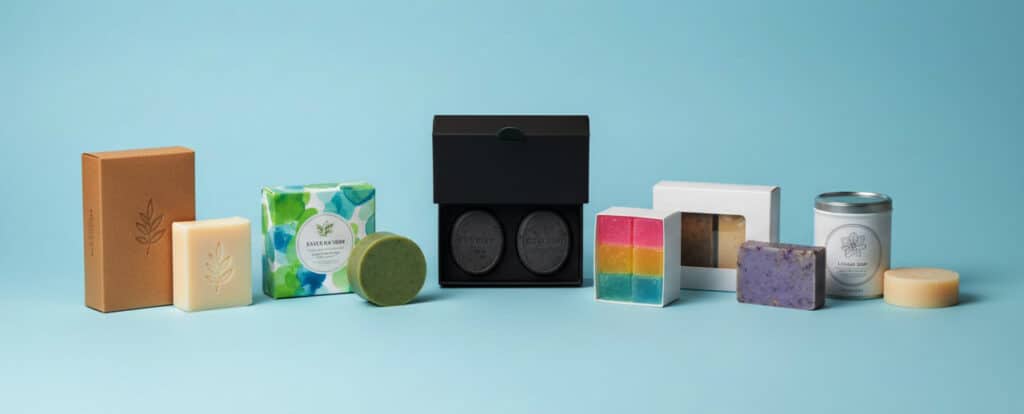
Effective design is what distinguishes soap wraps packaging from simple protective covers to become attention-grabbing and sales-driven packaging for the Soap Boxes product line. An effective design package helps in communicating product quality, enhancing shelf display, and overall user experience. As soap wraps packaging offer less space compared to soap boxes, every design element matters.
Typographic elements and design are also some of the most important considerations. Legible fonts can also help in ensuring that important information like ingredients, usage, and branding is also provided. Visual hierarchy is also important in this respect, where the brand name and product variant are given priority first, and then secondary information. In connection with design and usability principles for packaging, according to the Interaction Design Foundation, simplicity and clarity in design can also help in improving consumer understanding and acceptance of product packaging.
Color schemes are also important in the perception of soap packaging. Earth colors are often associated with naturalness and purity, while bright and pastel colors can be associated with freshness, luxury, or fun. In addition, matte textures can also help in improving the sensory experience without having to sacrifice recyclability. Mintel talks about packaging trends wherein consumers are increasingly drawn to packaging designs that communicate a message of authenticity and calmness, particularly in the personal care category.
In relation to functionality, functional design elements such as easy-open designs, secure closure designs, and soap shape designs are relevant. When these design elements are combined, soap wraps packaging become a functional packaging solution that is a requirement in soap box display.
Printing Techniques for High-Quality Soap Wraps Packaging
The quality of the printing is a very important consideration in the perception of soap wraps packaging, particularly in the competitive Soap Boxes category where display is an important consideration in the purchase decision. High-quality printing ensures that the branding, product information, and regulatory information are communicated in a clear and professional manner. As soap wraps packaging are usually simple designs, printing errors are more noticeable, and thus accuracy is a consideration.
The printing methods that can be distinguished on soap packaging wraps include offset printing, digital printing, and flexographic printing. Offset printing is the most suitable method for mass production, providing high resolution and color accuracy. Digital printing, on the other hand, is the most suitable method for small-scale production, customized printing, and seasonal variations, providing fast setup and economical printing. Based on the packaging print trends from Printing Industries of America, digital printing has become extremely popular in personal care packaging because it provides customization without compromising quality.
Another important point to consider is the type of ink, especially for eco-friendly soap brands. Water-based and soy-based inks are commonly used for soap packaging wraps because they help reduce VOCs and recyclability. According to the Environmental Protection Agency, low-VOC and water-based inks have greatly reduced the harmful impacts of printed packaging materials on the environment. These inks are appropriate for eco-friendly soap packaging materials such as kraft paper and biodegradable materials.
From a functional perspective, not only does a good print job result in aesthetically pleasing packages, but it also helps ensure that the soap boxes integrate all necessary labels. When paired with a suitable material and design approach, advanced print technologies can offer soap wraps packaging not just aesthetic but also functional performance, further justifying their position as a top choice in the overall soap boxes marketplace.
Soap Wraps for Handmade & Artisan Soaps
“Handmade and artisan soaps” is a new category developing in the Soap Boxes market, and soap wraps packaging are the perfect packaging options for showcasing handmade and other soaps as premium, eco-friendly, and unique products. Unlike mass-produced soaps, handmade soaps are not defined shapes, are brittle in texture, and are made from raw or semi-processed materials, thus requiring soap packaging options that are not only protective but also adaptive. Soap wraps packaging are the perfect fit for the job, as they actually cling onto the shape of the soap for a snug fit without adding any weight or size to the soap.
Similarly, with the artisans, the soap has a marketing component with the use of a wrap. In this case, the story may also be told with the themes of nature, scents, or handmade, creating the theme of personification with the end consumer. In a report issued by Packaging Insights, it was noted that with handmade or personal care product end users, the packaging value is high when it is related to the theme of authenticity and sustainability.
Kraft paper, wax-coated papers, or cellulose compostable films are commonly chosen natural materials that may be used to wrap artisan soaps, as they not only offer effective protection to the soap, but they can also help in achieving the desired image of being eco-friendly to nature. Design features such as foldable sleeves or labels with ribbons can be added to the proposed packaging without incurring additional costs.
Furthermore, the fact that soap wraps packaging allow artisans to make smaller quantities without the need to invest in large equipment for making rigid boxes is an added advantage. As such, the environment is preserved, storage space is minimized, and artisans can change the design of their product quickly if need be. Soap wraps packaging, therefore, offer handmade and artisan soaps an environmentally friendly, attractive, and functional packaging solution, commensurate with their high-end product.
Luxury Soap Wraps for Premium Soap Boxes
In the premium segment of the Soap Boxes category, the need for luxury soap wraps packaging has turned out to be an essential factor for any brand, particularly while focusing on the sense of exclusiveness, quality, and sophistication in the market. Specifically, unlike regular soap wraps, luxury soap wraps emphasize the overall experience through superior materials, printing, and design elements in the product itself.
Some of these materials include textured papers, also known as embossed papers, metallic foils, and others. These materials not only offer an elegant look to the soap wrap but also add strength and sophistication. It has also been stated that premium packaging is an essential aspect in the allowance of consumer willingness to pay for personal care products, as studied and emphasized by Smithers Pira.
Design elements used in the packaging, such as spot UV, foil stamping, de-bossing, or intricate patterns in design, add to the aesthetic value while reinforcing the brand identity. For example, soap custom packaging of a luxury soap brand can have a subtle design element or a logo in embossed text, or an interesting closure element that conducts a sensory experience when you touch or see it when you unwrap your soap.
From the practical point of view, the advantage with the luxury soap wraps lies in the fact they retain the advantage with the conventional soap wraps, which are light, flexible, and protective. Hence, it can be said the luxury soap wraps will be advantageous if supplemented by the soap boxes for the purpose of gift packs. Hence, with the intention of investing in the luxury soap wraps, the brands can establish the image of luxury required by the customers for the soap that is premium.
Minimalist Soap Wraps Packaging Trends
The soap wraps in a minimalist style have been highly popular in terms of design within the theme of Soap Boxes. This can be considered a strategic move in accordance with changing consumer behavior, looking for cleaner, greener, and more uncluttered products from the brand; promoting a culture of de-escalating unnecessary packaging, highlighting the intensity of the soap product, and the values promoted by the brand itself. The popularity of this concept is also seen within those consumers living a sustainable, eco-friendly lifestyle.
The minimalist soap wrap designs tend to include simple color schemes, typography styles, and branding options that give way to the soap’s natural beauty. In a report done by Packaging Strategies, consumers are increasingly becoming interested in minimalist design schemes for soap and other personal care products. These include designs that are seen as more eco-friendly, elegant, and trustworthy. Consequently, minimalist soap wraps are highly flexible and can be used for various soap designs without requiring customization.
In practice, the minimalist wraps will lead to reduced production costs, and this is perfectly in line with the sustainability angle, which desires minimal use of resources in the sustainable production paradigm. By being light, the minimalist wraps will still be functional, ensuring the soap product is properly covered and secured in the course of transportation and use.
Hence, by incorporating the various minimalist soap wrap trends, companies can leverage a modern, environmentally friendly, and trend-filled option that desired brand positions, aspires to reach environmentally mindful customers, and applies a soap wrap that is functional and trendy in soap box evolution.
How Soap Wraps Improve Shelf Appeal
The first major advantage of soap wraps, being a constituent of Soap Boxes, is their capacity to have a beneficial impact on improving shelf appeal. The actual fact is that, in the real world of shopping, the product package mainly presents the initial phase of interaction on the one side and the product on the other side. The soap wraps have this power to enhance attractiveness of the soap products, making them better compared to the rest.
Thus, properly crafted wraps can utilize their color, typography, and texture in their favor in order to make that very first impression. For example, eco-friendly kraft paper-based wraps, which can even feature embossed logos and metallic sheens, can leave an instantaneous impression of quality and sustainability. A study conducted by the Paper and Packaging Board states that packaging that can effectively visually communicate its values and benefits to its consumer can indeed raise purchase intent for those products by as much as 30%. Therefore, soap wraps are not just packaging; they are marketing mediums that impact how purchases are made.
Furthermore, there is also a place in shelf appeal for a product’s functionality. Products that are easy to open, have a clean folded look, and a consistent look when applied will increase the sense of professionalism or quality in a product. Additionally, identifying the ingredients, fragrance, and any certification that a product may have are further variables in a consumer’s sense of reassurance. For an artesian soap, a beautiful wrapping job could elicit a tactile response that invites the consumer to pick up the product.
By integrating the aspects of both aesthetics and function in presenting the design, as well as sustainability, the soap wraps play a crucial role in enhancing the visual appeal of the respective brands and thus increasing sales in a competitive retail market relating to the soap boxes category.

Soap Wraps for Retail & Wholesale Packaging
Soap Wraps are a highly versatile package type which is compatible for usage in retail as well as wholesale operations within the category of Soap Boxes. Such a package type is found to be highly beneficial to brands due to their lightweight, pliable, as well as economical nature.
In the context of the retail market, the soap wraps function as an initial platform of engagement. Therefore, there is a huge possibility that the design and look of the soap can have an immense impact on the consumer. According to a report published on the Paper and Packaging Board website, the visual appeal of the packaging, which is very common among soap products, can significantly encourage consumer engagement, particularly when the product falls into the personal care segment.
In the context of wholesale distribution, soap wraps prove to have practical benefits. Its lightness and easier storage in bulk quantities coincide with the varied shapes and sizes of soap bars, thus saving transportation and storage space costs. At the same time, their malleability permits their use with other containers such as cartons or trays to further protect the soap during transportation. Kraft paper or wax-coated paper or other such environmentally friendly materials are utilized to maintain the soap’s integrity in a sustainable context.
By serving both retail and wholesale markets, soap wraps fit into an overall package for brands where a cost-effective, environmentally friendly, and attractive package is required, which reiterates its importance for soap boxes.
Compliance & Safety Considerations for Soap Wraps
When soap wraps are used within the category of soap boxes, for example, issues of compliance and safety go a long way towards ensuring consumer safety and regulatory compliance. For instance, any packaging for personal care and hygiene has to meet particular standards to ensure that contamination and product quality are not compromised, and to ensure that adequate product information is provided to consumers. Even soap wraps, for all their “lightweight and flexible” credentials, must meet these basic standards to be effective and legal.
Materials used to wrap soaps, whether paper, wax-coated paper, or biodegradable films, should be food-grade or certified to come into direct contact with personal care products. According to the U.S. Food and Drug Administration (FDA), materials prepared to come into direct contact with cosmetic products, of which soaps are a part, should not have harmful chemicals that can migrate into the product. https://www.fda.gov/cosmetics/cosmetics-labeling-regulations Ensuring the right material choice keeps out any potential safety hazards and improves consumer trust.
Labeling is another essential aspects of compliance. Wrappers of soaps normally contain vital information, which usually includes ingredients, weight, date of manufacture, expiration date, and allergy warnings. According to the International Organization for Standardization, the use of correct labeling on cosmetics and personal care packing aids in regulatory compliance and provides perfect information to the consumers.
From a practical point of view, safety can also be interpreted as the closing mechanisms and wrapping strategies so that the product does not suffer any damage while it is being handled and moved around. When designed properly keeping safety and compliance in mind, soap wraps not just add a guarantee for safety but can also play an instrumental role in building a sense of credibility and reliability for the brand, making soap boxes a necessity.
Cost-Effective Soap Wraps Packaging Solutions
The soap wraps come as a cost-effective option under the Soap Boxes category, which would be helpful for new artisans as well as existing ones. Soap wraps are made from a reduced amount of material, are easy to manufacture, and entail reduced transportation costs as they are lighter and smaller in size than the conventional stiff boxes required for soap packing.
Additionally, by eliminating the need for maximum use of materials, soap wraps assist companies in saving on raw materials as well as disposal costs. As per research conducted by Packaging Europe, reduction of packaging materials while ensuring their functionality can result in the reduction of product creation costs up to 20%. This is possible for personal care products, as cited in. “Soap wraps, constructed out of kraft paper, wax paper, or biodegradable films, are the epitome of the balance between cost efficiency, durability, and the environment.”
In addition, soap wraps also simplify the storage process and the management of inventoried goods due to its flexible nature, which allows the easy stacking of the wraps, reduced storage required, and easy packing, particularly if the soap product is small in quantity. Further, the flexible nature of soap wraps helps reduce the number of packaging forms required, thereby simplifying the entire process.
Therefore, in respect to any specific brand, it has to be noted that since the focus will be specifically for any market, such as retail and ecommerce, the use of soap wraps will not only ensure an efficient look but will also take care of the environmental factor in the right manner, which would then make it an extremely important part of the overall strategy that is being developed in respect to the wrapping of the soap box.
How to Choose the Right Soap Wraps for Your Soap Boxes
The proper choice of the right type of soap wraps is an important element, and this is more specific in the context of the right brand, which comes under the category known as Soap Boxes. It is an important element because it might influence the promotion of the brand in some way. The selection of the right type of soap wraps is done based on the assessment and analysis of materials.
First and foremost, the materials to be used would be the primary factor of consideration. Kraft papers, wax-coated papers, or biodegradable materials would offer vastly different levels of protection, tactility, and environmental impact. For example, kraft papers have good protecting qualities and are also environment-friendly, whereas the wax-coated papers can afford somewhat higher levels of oil-based soap products. As per the Sustainable Packaging Coalition, the materials used, which are appropriate for the product needs and/or environmental aspirations of the company, are crucial in determining the performance and impression of the product.
The requirements related to the design and brand also play an important role in the selection of the choice in a wrap. For instance, in the case of high-end soaps, the textured/embossed look, metallic finish, and prints play an important role; however, in the case of artisan and eco-friendly soaps, soaps should have a minimum look. The size and shape of soaps and the ease of packaging are also considered as requirements.
Finally, consider the scale of production and cost. With digital printing, the flexibility for small-scale runs, which is achievable, can be considered in comparison to offset printing. Based on the analysis and balancing of the appropriateness of all the above factors, the brand is in the position to select the most appropriate soap wraps that will not only ensure the right preservation of the soap products but will also provide identity for the brand, sustainability, and cost efficiency, thus being part of the package for soap boxes.
Future Trends in Soap Wraps Packaging
As the category of Soap Boxes is further developing, the soap wraps segment is at the forefront of the development of innovative and sustainable packaging solutions. The increasing requirement for consumers to integrate eco-friendly, practical, as well as aesthetically appealing packaging solutions is having a significant impact on the development of the soap wraps sector to achieve success in the market, both online and offline.
The rising tide of completely biodegradable and compostable materials is another factor at play. The expanding necessity for environmentally friendly packaging solutions, both from a consumer and legislative viewpoint, has meant soap wrapping materials such as plant film, cellulose, and paper sourced from well-managed forests have a benefit to focus on within this arena as well. A report generated from industry research scholars at Smithers Pira, an industry analysis firm, has recognized that, as detailed within their sustainable packaging trends report, packaging solutions for the personal care industry have an expected foreseeable increase dominated by increasingly environmentally friendly materials, as it becomes a necessity for companies looking to reduce their carbon footprint.
Another new emerging trend is personalization and customization. There is the ability to create small quantities of products that are different from those of other brands in terms of design or seasonal offerings. This does not have to come at the usual expense. There is a benefit to brands in the ability to create a more personal and engaging relationship between themselves and the consumer.
Interactive and smart packaging is also starting to have an impact on soap wraps. QR codes on the wraps can offer consumers information or traces of the products, among other content, thus connecting the physical packaging and digital consumer experience. Packaging Europe argues that, for instance, “packaging with technology, such as sustainable packaging, adds value and also increases transparency and trust among consumers”.
Overall, the future of soap wraps will depend on sustainability, design, and functionality to remain an integral part of the dynamic soap boxes market.
Conclusion: Why Soap Wraps Are the Future of Soap Boxes
In the dynamic category of Soap Boxes, soap wraps have surfaced as an efficient, adaptable, and eco-friendly packaging solution that is functional, beautiful, and environmentally friendly, as well as meeting the branding and consumer-related requirements simultaneously. Unlike traditional rigid boxes, the soap wraps reduce the cost of materials, postage, as well as the option of accommodating varying sizes of soap in diverse quantities.
In terms of branding, the wraps provide an effective opportunity to promote storytelling. The wraps, therefore, provide an avenue to communicate product qualities, environmental characteristics, and unique craftsmanship. The luxury and minimalist designs, therefore, present an opportunity to utilize the touch-sensitivity and simplicity that well-designed wraps provide. Effective packaging, as suggested by Packaging Insights, is effective not only in protecting the product but also in consolidating the brand and engaging the consumer.
Sustainability is still an important parameter for the overall adoption of soap wraps. As mentioned earlier, kraft papers, biodegradable materials, FSC papers, etc., are being widely used, thereby making a significant contribution to a more pristine environment. According to the Sustainable Packaging Coalition, their reports state the importance of those packaging materials, which reduce the usage of materials and increase recyclability, are in high demand today from consumers and regulators alike.
Looking into the future, innovation in the form of soap wraps available for digital printing, interactive and engaging designs using QR codes, and eco-friendly materials will undoubtedly continue to rewrite the rules for packaging and promoting soaps. For artisan soaps, luxury soaps, and even regular soaps, the flexibility of soap wraps as a means of presenting and promoting the product, both visually and in terms of their impact on the environment, cannot be overemphasized.
In conclusion, while soap wraps are presented as a substitute for traditional soap boxes, soap wraps are, in effect, the future of smart, green, and productive soap packaging, which makes it an essential feature for any brand that wants to remain competitive and viable in today’s personal care marketplace.
Frequently Asked Questions About Soap Wraps
- What are soap wraps, and how do we differentiate them from soap boxes?
Soap wraps are soft wrapping materials, commonly made from papers, wax-coated papers, and bio-plastic, which is meant to wrap the soap during packaging for protection. Soap wraps should be differentiated from the use of soap boxes since they are eco-friendly and easily shapeable to the form of the soap, and they need very little amount of material during the process, making it eco friendly and cost effective. Flexible packaging, such as soap wraps, is said to play a crucial role in reducing the effects of ecological damage and still ensuring the security and conservation of the products.
- Are soap wraps applicable in the selling of luxury soaps?
Yes, for example, the materials used in wrapping the soap up can be materials such as textured papers, foil stamping, and embossed materials to make it look luxurious, at the same time, keeping in mind the environmental impact of using fewer materials.
- Are soap wraps eco-friendly?
The soaps currently being wrapped are also likely most meant for recycling, biodegradation, and/or composting.Paper-based wrapping mediums, kraft paper which is FSC-certified, and plant-based films are all part of an eco-friendly package standard and play an active role in ensuring that the carbon footprint is reduced compared to traditional mediums such as soap boxes.
- What is the advantage of soap wraps to handmade/artisanal soaps?
They work well with large shapes, soft textures, and create an eye-catching background to efficiently convey your brand and/or product-related messages. They should be used on products with a small scale or on products with a limited edition, as they are easy to work with.
- Can soap wraps be provided with any print or brand marks?
Absolutely. In this context, soap wraps can be printed through digital printing, offset printing, and flexography printing. In this context, it is important to point out that the inks used for the printing process are environmental-friendly since they are water-based and made from soy that does not hinder the sustainability of the environment.
- May soap wraps be used in trading as well as wholesale trading?
Yes. They are easy to send since they are lightweight. This can be used individually as a single for retail purposes, along with other outer for dispatch at the wholesale level, which provides the options.
- How to Select the Apt Soap Wrap for Your Soap Boxes?
Material, type of product, green goals, design requirements, and scale could be some of the factors. Kraft paper, bio-based films could be some of the options for green and craft products. The specialty paper could be one of the options for the luxury brand. Digital printing and offset printing could be an option for this question too, depending upon the scale and level of personalization required.