
Custom Hanger Tuck Box Packaging for Retail Display: The Ultimate Structural & Branding Guide
Packaging used to be merely a container, but today’s competitive retail environment makes it a silent salesperson. The Custom Hanger Tuck Box Packaging for Retail Display is a custom packaging option that offers structural protection and high-visibility merchandising in one solution. Unlike conventional packaging, this style includes an integrated die-cut hanger tab that enables the package to be hung on retail peg hooks or hanging racks.
That may seem like a small structural adjustment, but in stores, the impact is large. Products placed at eye level on hanging displays tend to attract more attention from customers than items that are displayed flat on shelves. Often found in convenience stores, supermarkets, pharmacies, and hardware outlets, pegboard systems are commonly used by retailers, making this hanger-style packaging incredibly versatile.
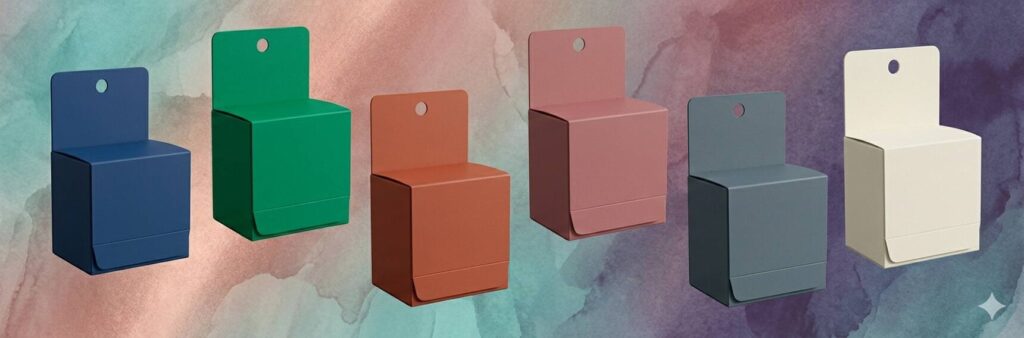
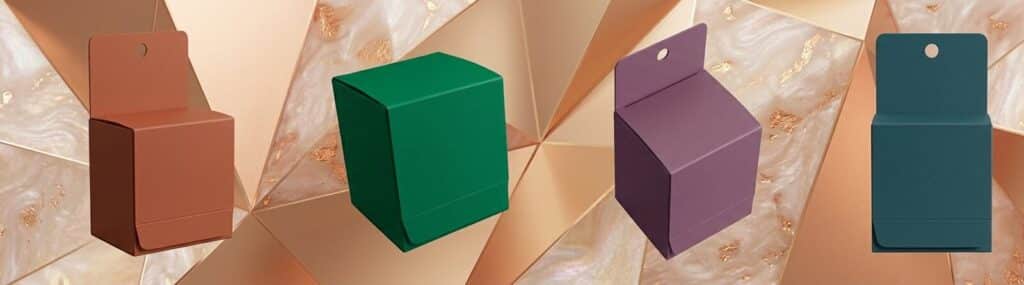
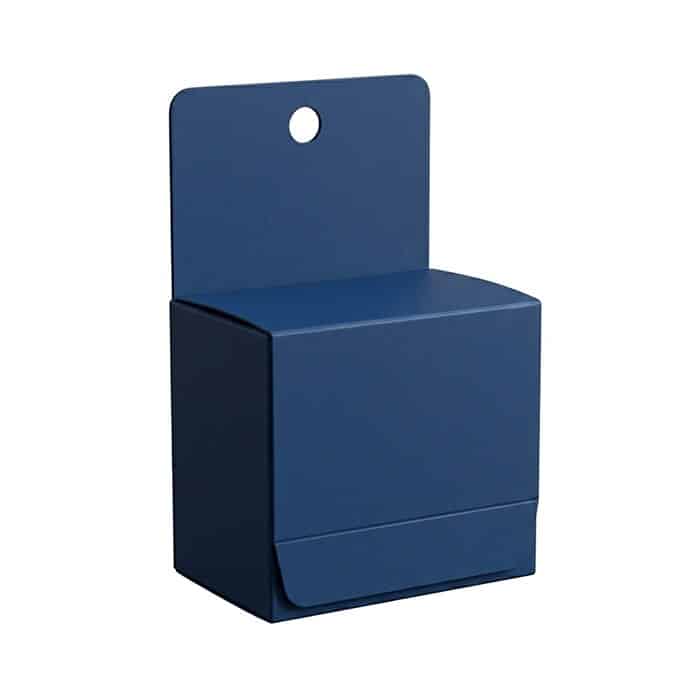
A Custom Hanger Tuck Box Packaging usually maintains traditional packaging mechanics — such as straight tuck end (STE), reverse tuck end (RTE), or auto-lock bottom structures — with a reinforced hanging tab at the top. This tab is designed to accommodate product weight while maintaining the box’s integrity. The die-cut hole (most commonly the euro-slot style) allows for standard retail hook compatibility.
Custom Hanger Tuck Box Packaging for Retail Display provides ace front-facing visibility, hence, in and out of the mailbox, you are completing the mission of branding. Because the product is hung vertically, consumers can face the main display panel directly. This makes logo placement, colour, typography, and product imagery all more potent.
Key Structural Elements
A Custom Hanger Tuck Box Packaging usually consists of:
- Tuck flap (straight or reverse)
- Bottom closure (standard tab or auto-lock)
- Reinforced hanger tab
- Euro Slot / Round Punch Hole
- Front display panel for branding
- Product Detail and Compliance Information Side Panel
The mounts portion must be designed not to rip. In fact, for larger products such as tools or cosmetic kits, manufacturers often add double-layer reinforcement or high-GSM paperboard to their Custom Hanger Tuck Box Packaging for greater durability.
Retail Functionality & Consumer Convenience
Hang on, Retailers Smart Custom Hanger Tuck Box Packaging the Way to go: Hang-On packaging is preferred by retailers because it:
- Saves shelf space
- Hands-on vertical merchandising
- Easier to restock
- Enhances product classification
From the consumer side, hanging boxes are easy to grab, inspect and return to place without displacing surrounding products.
Compliance & Labelling Considerations
For retail Custom Hanger Tuck Box Packaging, companies must follow labelling guidelines, such as those set by the US Food and Drug Administration for consumer goods and cosmetics, and packaging & labelling guidelines from the Federal Trade Commission. These agencies are responsible for ensuring that labels are truthful, ingredients are disclosed, and it is fair to protect consumers.
The Fair Packaging and Labelling Act mandates accurate quantity declarations and proper product identification on retail packaging.
Custom Hanger Tuck Box Packaging for Retail Display achieves utility and growth beyond packaging by aligning these factors with compliance, structural integrity, and branding strategy — thus creating a retail marketing tool built for performance.
Custom Hanger Tuck Box Packaging Structural Engineering
The real power of packaging for Retail Display lies in its structural engineering. The outer casing appears simple enough, but the internal workings are carefully engineered to balance durability, weight dispersion, and retail considerations.
A custom hanger tuck box packaging is required to perform two critical functions at once:
- Protect the product inside.
- Hang vertically in a self-sustaining manner without tearing
- It is the second requirement where engineering becomes essential.
- Die-line Essential Development & Load Distribution.
Key to every custom packaging is an exact die-line. The die-line shows the fold lines, glue flaps, panel size, and where the hanger slot will go. Extra stress on the top where they hang from a peg hook, unlike your standard custom hanger tuck box packaging.
Designers look at the below to follow the hanger tab zone.
Changing fold geometry to try to decrease the point of the train
Double-layer support behind the euro slot
The euro slot, a common retail Custom Hanger Tuck Box Packaging fastener, needs to be on point, exactly at the product’s weight centre. The box tips forward with a slot that is too high or too low, disrupting the visual balance and making it more prone to tears.
- Paperboard Thickness & Material Strength
Material selection directly affects performance. Common paperboard options include:
- Solid Bleached Sulfate (SBS)
- Kraft paperboard
- CCNB (Clay Coated News Back)
250–300 GSM may work for lightweight cosmetics or accessories. 350–400 GSM board with internal reinforcement is usually needed for hardware, tools or heavier products.
Testing for compression strength and tear resistance is critical during development. Packaging has to hold its shape in transit, storage and display.
Testing guidelines and packaging performance standards are typically aligned with frameworks from agencies such as the National Institute of Standards and Technology, which provide measurement standards and engineering guidance for manufacturing industries.
- Auto-Lock vs. Standard Tuck Bottom
The bottom closure does impact structural integrity:
- Straight Tuck End (STE) – Neat appearance, lightweight items
- Reverse Tuck End (RTE) – Engineered for high-volume production
- Auto-Lock Bottom – More robust, works well for heavier products
In the case of vertical display with heavy products, auto-lock bottoms are typically recommended: Unlike regular interference or friction lock bottom boxes, they distribute internal weight evenly and prevent downward stress from directly transferring to the hanger tab.
- Glue Flaps & Folding Mechanics
The width of the glue area is also very important. Indeed, a thin strip of tape can compromise the box’s vertical integrity. Professional die-line engineering ensures:
- Proper glue margin
- Secure folding angles
- Clean edge finishing
- Compatibility with machines for mass production
Automation matters. Modern production lines must make precise folding-glueing systems that can maintain structural integrity at scale.
- Safety & Consumer Protection Considerations
Retail packaging needs to hold weight while not introducing hazards. Exposed sharp die-cut edges, weak tear zones or collapsing structures can be safety hazards.
In the US, packaging safety considerations may be integrated into product safety directions established by the Consumer Product Safety Commission, particularly for children’s products or consumer accessories.
- Engineering for Aesthetic Stability
A good packaging is:
- Dangle vertically without angling
- Hold the flat front panel in place
- Do not warp with humidity
- Maintains shape after repeated use
That balance between physics and presentation is what takes simple packaging into premium, retail-ready territory.
When designed effectively, Custom Hanger Tuck Box Packaging for retail display is structurally reliable, economical, and offers visual stability throughout the supply chain.
Choosing Materials for Strength and Durability
When it comes to developing Custom Hanger Tuck Box Packaging for Retail Display, choosing the right substrate is one of the most critical decisions. As the box is intended to hang vertically, it needs to withstand constant downward pressure without deforming; thus, shape, print quality, and structural strength remained paramount.
Material selection affects:
- Load-bearing capacity
- Hangar slot tear resistance
- Print quality
- Moisture resistance
- Sustainability overview
Total cost of production. Let’s break it down properly.
- Paperboard Options Commonly Used
Because retail presentation requires a smooth, printable surface, most custom hanger tuck box packaging are made of paperboard rather than corrugated stock.
Solid Bleached Sulfate (SBS)
SBS is a high-quality paperboard made from virgin pulp. This offers a smooth white surface suited for premium printing and luxury branding. It’s widely used in cosmetics, electronics accessories, and personal-care packaging.
Kraft Paperboard
Kraft board is also known for its strength and eco-friendly perception. Its all-natural brown colour suggests sustainability and is appropriate for organic, artisanal, or eco-friendly brands.
Clay Coated News Back (CCNB)
A lighter-weight, more economical choice is CCNB, which has a coated exterior and a recycled-fibre interior for printing. AFDs are often used for packaging light-end consumer products.
For heavier goods, manufacturers might increase GSM (grams per square meter) to ensure complete durability. For the balance between rigidity and cost, 300–400 GSM is best suited for most retail applications.
- Reinforcement at the Hanger Area
As the stress point of a hanging box concentrates on the die cut slot, manufacturers tend to:
- Insert a double-layer top-over flap
- Add internal patch reinforcement
- Use laminated cardboard
- Adjust fibre density using the upper panel
In this context, appropriate testing of fibre strength and evaluation of the substance are useful for ensuring resistance to longitudinal strain. Exact standards for material performance testing often borrow from research and technical guidance from the U.S. Forest Service, specifically on fibre strength and paper material properties.
- Moisture & Humidity Resistance
Retail environments vary significantly. Humidity levels may vary across pharmacies, supermarkets, and hardware stores. – Moisture can affect the rigidity of the paperboard, causing a failure in the hanger tab.
In response, manufacturers might use:
- Aqueous coating
- UV coating
- Laminating (matte or gloss)
- Varnishes that are moisture-resistant
Not only do these coatings make the surface more durable, but they also improve its appearance.
- Sustainability & Environmental Responsibility
Today, when more businesses are expected to put the environment first, modern brands cannot afford to wait. Sustainable packaging decisions may involve:
- Paperboard made from sustainably managed forests (FSC)(https://www.fsc.org/)
- Fraction of recycled fibre
- Break down, heat and penetration coatings
- Soy-based inks
Environmental Claims: Environmental claims should be truthful and substantiated. A review of guidance on responsible environmental marketing claims is available from the Environmental Protection Agency to confirm adherence to green-labelling practices.
- Balancing Cost & Performance
A thicker board offers greater durability, but it increases both production costs and shipping weight. Smart packaging design should focus on structural geometry optimisation rather than simply increasing wall thickness.
Done correctly, with appropriate engineering and manufacturing techniques, a medium-weight board can perform similarly to a heavier one as stress is redistributed and areas of pressure are reinforced.
- Final Material Consideration
The goal when choosing material for Custom Hanger Tuck Box Packaging is to place on Retail Display-Balanced, not just Strength:
- Durable enough to hold properly
- Of such low weight, cost-effective
- Branding-appropriate as printable
- Viable for current generation compliance
Material is the foundation. Even the prettiest designs won’t survive the retail handling process without a proper substrate.
Printing, Coating & Finishing Techniques
Structural integrity brings the box on the hook. It is printing and finishing that make it sell.
Custom Hanger Tuck Box Packaging for Retail Display places the front panel directly in front of a consumer. That means design precision, colour strategy, and finishing quality are high-stakes decisions that impact purchasing decisions.
When a product is hanging amid many dozens of competitors, you have about 3–5 seconds to capture attention. That’s it.
- Printing Methods for Retail-Ready Results
Some of the most popular printing techniques are:
Offset Printing
Ideal for high-volume production. It provides precise, sharp detail, consistent colour reproduction, and cost efficiency at a large scale. Ideal for cosmetics, electronics, accessories and branded retail products.
Digital Printing
Ideal for short runs or product variations. Enables speedy adaptation and quick pit turns without costing an arm and a leg on plateage.
Flexographic Printing
Commonly applied for large-volume packaging, it’d be both fast and cost-effective.
This capability is crucial in front-facing display packaging, which is why offset printing is preferred for retail packaging, given the richness of colour depth and the accuracy of image placement.
- Colour Psychology & Shelf Impact
Since hanger boxes are displayed vertically, aligning them at eye level is a psychological advantage.
Colour choices influence buying behavior:
- Red activates urgency
- Blue builds trust
- Green evokes the idea of eco-friendliness
- Black is an indication of luxury
- Yellow catches immediate attention
Strategic contrast between background and typography enhances readability even from afar. Another note on design: In crowded retail environments, high-contrast packaging is more effective [16], so experiment with bold colours to see how they pop against the backdrop and possibly attract attention.
- Protective & Decorative Surface Coatings
Common options include:
Gloss Coating
Gives shine and makes colours pop. Commonly used for tech or beauty items.
Matte Coating
Provides a soft, premium sensation and minimises glare under retail lighting.
Soft-Touch Lamination
Offers a rich feel, which adds an extra dimension of luxury.
UV Coating (Spot or Full)
Provides focused shine on logos, brand names or images — Creates visual hierarchy.
Glare Resistance: In bright lighting conditions, glare resistance becomes crucial. Most matte finishes perform better than direct in-store lighting since they reduce reflection.
- Speciality Finishing Techniques
Brands can enhance the Custom Hanger Tuck Box Packaging for Retail Display using:
- Foil stamping (holographic, gold, silver)
- Foil stamping/embossing/debossing
- Patching the window for product visibility
- Unique die-cut patterns
Window cut-outs work best for hanging packaging as they provide potential customers with a clear view of the real thing while keeping it safe.
- Labelling & Regulatory Print Requirements
Legally required information that MUST be on retail packaging:
- Product identity
- Net quantity
- Name of Manufacturer or Distributor
- Country of origin
- Safety advisories (where applicable)
Labelling accuracy is governed by frameworks like the Fair Packaging and Labeling Act, which are enforced by either the Federal Trade Commission or the US Food and Drug Administration, depending on product type.
Sharp labeling safeguard consumers and stops misleading packaging claims.
- Barcode & Retail Compatibility
Custom Hanger tuck box packaging utilised in supermarkets and chain stores shall have the provision of:
- UPC barcodes
- QR codes
- Batch numbers
- Expiry dates (if present)
Folds, edges, and curved areas should also be avoided for barcode placement to ensure smooth scanning at checkout.
- Print Durability
Print durability is important for hanging boxes, as they are often handled. Anti-scuff lamination or protective varnish protects against scratches in transit and on display.
Well-printed custom hanger tuck box packaging effectively climbs the e-commerce ladder — from warehouse to checkout counter.
Custom Hanger Tuck Box Packaging for Retail Display serves as a gateway to impulse buying and an engaging tool in retail when coating & finishing are blended systematically with printing.
Retail Display Strategy & Consumer Attention
Great designs like your Custom Hanger Tuck Box Packaging for Retail Display won’t perform if they are poorly merchandised. Discovery, placement strategy, and consumer behavior patterns determine retail success.
Hanging packaging is impactful because it works perfectly with vertical merchandising systems like pegboards and slatwalls. These systems are widely used in pharmacies, supermarkets, electronics and hardware products.
The key advantage? Eye-level exposure.
- The Science of Eye-Level Selling
Studies have shown time and again that products kept at eye level experience higher rates of interaction and purchase. Custom Hanger tuck box Packaging get maximum attention at 4 to 5 feet off the floor (average adult eye level).
Why this works:
- Little physical effort is required to see
- Good front visibility
- Ability to compare products with fewer efforts
- Aligning a natural scanning motion
Consumers usually scan shelves, what’s called a horizon” al Z-patt. They’re so well-placed in the stream of life that hanging boxes, interrupting this with bold colour or contrast, draw natural attention.
- Vertical Merchandising Efficiency
Retailers love hanger-style packaging because:
- Which takes advantage of little shelf space
- Permits tight product alignment
- Makes inventory management easier
This is different from a horizontal system, where you may stack products on top of each other; with a vertical hanging system, SKUs would be more visible in much less space.
This is particularly useful in:
- Convenience stores
- Travel retail
- Checkout counters
- Promotional end caps
- Impulse Buying Behavior
Hanging product packaging often ranges near highly trafficked areas, such as checkout.) This placement encourages impulse buying.
Impulse triggers include:
- Bright colors
- Limited-time offers”
- “New” badges
- Compact size
- Clear product window
The degree of cognitive load required to decode a Custom Hanger Tuck Box Packaging for Retail Display drops substantially if using impactful graphics, with accompanying icons, key focus points or minimal reference copy.
- Product Category Clustering
Retailers often place similar products in the same section of the pegboard. In packed environments, to be noticed:
- Incorporate unique colours associated with your brand
- Keep a strong logo presence
- Use readable typography
- Do not design overloaded
Brand recall also improves with product line consistency. Consumers instantly recognise the brand when numerous SKUs share a harmonious layout.
- Safety & Accessibility Considerations
Retail displays should be set up to enable safe access by consumers. Hanging boxes should not:
- Easily fall from hooks
- Considerable wear after light handling
- Obstruct walkways
- Create sharp edges
In the US, retail products and mitigation of consumer risk are governed by guidance from the Consumer Product Safety Commission, especially when packaging is accessible to children.
- Data-Driven Merchandising
Major retail chains commonly use sales data analysis to select a peg position. High-performing SKUs receive a premium position. Well-designed hanger packaging is a wise investment for brands, as it invariably leads to improved shelf data performance due to:
- More visibility means more engagement
- Careful messaging is % 100% conversion
- Trust is built by professional packaging
- Strategic Placement Tips for Brands
You’re selling to retailers, ask yourself:
- Role myth: eye-level positioning
- Packaging designed to key in on peg width standards
- Euro slot compatibility assurance
- Equalising the box width for balanced hanging
At its most effective, Custom Hanger Tuck Box Packaging for Retail Display serves as both a container and an advertisement. Paired with clever retail placement, it becomes a high-impact selling tool.
Fair Packaging & Labelling Norms by the Government
Compliance is not a choice; it’s an element you should take into consideration whenever designing Custom Hanger Tuck Box Packaging for Retail Display. Federal and state regulations require that retail packaging protect consumers, encourage transparency, and prevent fraudulent claims.
Non-compliance can lead to product recalls, fines, retailer rejections, or even lawsuits. So this part is important for brands considering wide retail distribution.
- Fair Packaging & Labelling Requirements
The Fair Packaging and Labelling Act (FPLA) provides that consumers shall be provided accurate, truthful information about the products available in the United States. The Act is enforced mainly by the Federal Trade Commission and the US Food and Drug Administration, depending on the product category.
This regulation requires retail packaging to indicate clearly:
- Product identity
- Contents net quantity
- Name and address of manufacturer, packer or distributor
- Correct measuring units
- Non-deceptive claims
For custom hanger tuck box packaging, this information is usually located on the back or side panel to maximise branding space on front-facing products.
- Country of Origin & Import Compliance
“Country of Origin” labelling is required under US customs regulations for products manufactured internationally. Mislabeling the origin may cause delays or additional import fees.
Retailers are very tight-lipped about this, particularly major ones.
- Safety Warnings & Hazard Disclosure
For some classes of products — electronics, toys, or chemical-based goods, for example — safety warnings need to be clear and properly formatted.
Consumer protection and product hazard requirements are governed by the Consumer Product Safety Commission, which also sets certain labelling standards for goods it regulates.
Some examples of mandatory warnings could be:
- Warnings about choking hazards
- Flammability cautions
- Age restrictions
- Electrical safety advisories
These warnings need to be readable, suitably sized, and sufficiently prominent to be compliant.
- Barcode & Retail Scanning Standards
Major retailers require:
- UPC barcode should be placed in a scannable flat area
- Correct secure areas surrounding the barcode
- Minimum size requirements
Incorrect barcode placement on folding lines or curved edges can cause a failure during checkout scanning.
- Environmental & Sustainability Claims
There is no doubt that many brands have, in recent years, made claims about packaging being recyclable, biodegradable, or bio-based. Nonetheless, marketing claims regarding the environment need to be honest and supported.
The Environmental Protection Agency lays out guidelines for environmental claims, and the FTC Green Guides bolster them.
False sustainability claims could even lead to litigation for deceptive marketing.
- Typography & Legibility Rules
Regulations often specify:
- Minimum font size
- Contrast requirements
- Placement standards
- Labelling without obstructions
Hanger-style boxes pose a challenge of finding the right mix between compliance information and branding aesthetics while avoiding overcrowding panels.
- Why Compliance Strengthens Brand Trust
Packaging that complies does more than sidestep penalties. It:
- Provides confidence to consumers
- Improved Relationships with Retailers
- Lowers risk of recall
- Shows professional legitimacy
A custom hanger tuck box packaging for retail display created through modern design techniques incorporates regulatory information naturally into the layout — without undermining aesthetics.
Sustainable & Eco-Friendly Packaging Practices
Modern consumers are paying attention. Retailers are paying attention. Regulators are definitely paying attention. This is the reason why sustainability is a major design consideration in Custom Hanger Tuck Box Packaging for Retail Display.
First, packaging today must strike a balance between three things:
- Building performance
- Visual appeal
- Environmental commitment
And honestly? The smarter brands are using being sustainable as a competitive edge.
- Sustainable Material Selection
Material sourcing is the first step in eco-friendly hanger packaging.
Common sustainable options include: Paperboard certified by the Forest Stewardship Council (FSC)
- Fibre content board with recycled material
- Unbleached Kraft of stock
- Coatings of biodegradable nature
This also gives you credibility when making claims about environmentally friendly practices.
In the US, sustainable forest management practices are established and researched by the U.S. Forest Service, which also guides the responsible use of timber and fibre resources.
- Smart Engineering to Minimise Material Waste
Packaging of a sustainable nature is not limited to “recycled paper.” It’s also about intelligent design.
Structural optimisation can:
- Minimise unnecessary board use
- Reduce voids inside the carton
- Lower shipping weight
- Pallet cube efficiency
Particularly for hanger-style packaging, it’s often more environmentally friendly to reinforce high-stress areas (such as the hanger tab) rather than increase full-board thickness.
Less material + better engineering = less carbon.
- Recyclability & End-of-Life Considerations
Consumer Convenient Packaging Consumers will more likely recycle packaging when:
- It is very clearly labelled as recyclable
- It employs mono-material construction
- It is free from plastic lamination
Instead of plastic used for window patching, brands should switch to recyclable PET or implement simple design features that allow labels’ easy-tear windows to be removed.
Environmental claim guidelines, such as the FTC Green Guides, set standards for truthful sustainability messaging at the federal level. These frameworks of environmental marketing align with mega-policies supported by the Environmental Protection Agency.
- Sustainable Inks & Coatings
Petroleum-based inks are more commonly used, and their overall environmental impact is increasing. Many packaging manufacturers now use:
- Soy-based inks
- Water-based coatings
- Low-VOC varnishes
These substitutes help reduce emissions and make recycling more compatible.
- Retail & Consumer Perception
Here’s the more interesting part: sustainable packaging impacts purchasing behavior.
Consumers increasingly equate sustainable packaging with:
- Ethical brands
- Improved product quality
- Long-term brand trust
If a minimalist, natural-adjacent custom hanger tuck box packaging can communicate transparency and responsibility, it is ideal for industries such as cosmetics, organic food, and lifestyle-oriented products.
- Regulatory & Environmental Transparency
Brands must be sure that those claims (such as “100% recycl”ble”” or “eco-friendly”) are substantiated.
False or deceptive green claims can lead to enforcement actions under consumer protection laws overseen by the Federal Trade Commission.
Clear, honest communication builds trust — hype frays it.
- The Competitive Advantage of Sustainability
Retail buyers are increasingly favouring suppliers who show environmental responsibility. Sustainable packaging can:
- Offer more retailers better terms
- Enhance ESG reporting
- Enhance brand image
- Lower material costs for the long term
When done correctly, sustainability does not detract from performance; it enhances brand positioning.
Flexible Retail Display of Custom Hanger Tuck Box Packaging to Make it Durable, Vivid and Eco-Friendly.
Where Are Custom Hanger Tuck Box Packaging Used?
Custom packaging for Retail Display is among the most versatile packaging types. It translates easily across industries beca”se “screa” ing” hanging display systems can be found in just about every type of retail format — ranging from corner convenience stores to big-box chains. Let’s take a look at where custom hanger tuck box packaging are predominantly utilised.
- Cosmetics & Personal Care
This market is one of the strongest for hanger packaging.
Products like:
- False eyelashes
- Hair accessories
- Small skincare tools
- Travel-size cosmetics
- Nail kits
Benefit heavily from vertical display. These products are light, visual, and impulse buys.
Hanging packaging provides added organisation — protecting the product while offering maximum SKU visibility in cramped cosmetic corridors.
- Electronics Accessories
Think about:
- Charging cables
- Earphones
- USB adapters
- Memory cards
- Phone stands
Pegboards are so prevalent among electronics retailers. These products are built to be compact, and hanging packaging prevents theft while allowing a visual check.
Additional inserts are often used inside the box to keep products in place.
- Hardware & DIY Tools
Walk into a hardware store, and there are rows of peg hooks adorned with small tools and accessories.
Examples include:
- Screws and fasteners
- Small tool kits
- Measuring accessories
- Replacement parts
Due to the heavyweight nature of hardware products, reinforced hanger tabs and heavy paperboard are commonly used in this segment.
- Pharmaceutical & Medical Accessories
Hanging displays are commonly used in retail pharmacies for:
- Accessories for a thermometer
- Small medical kits
- Dental care items
- Tools for personal hygiene
When it comes to medical or healthcare products, which are closely regulated and supervised by the likes of the US Food and Drug Administration, compliance with labelling becomes even more important.
Dosage instructions, safety information, and product identification must all be properly displayed.
- Toy & Hobby Industry
Hanger tuck packaging is often used for small toys, collectable items, craft kits and hobby tools.
Safety warnings and age labelling requirements are particularly relevant to children’s products. The Consumer Product Safety Commission oversees product safety guidance for children’s products.
- Food & Snack Accessories
Non-perishable food accessories, such as spice tools, kitchen gadgets, or miniature baking accessories, can use Custom Hanger Tuck Box Packaging for space-efficient retail display.
For food-related packaging, both labelling transparency and ingredient disclosure must meet federal label guidelines administered by the FTC and the FDA.
- Travel & Convenience Store Products
Hanging packaging executes admirably to:
- Airport stores
- Gas stations
- Convenience shops
- Checkout counters
Small form + Vertical sight line = High impulse conversion.
The Many Industries That Turn Towards It
Custom Hanger Tuck Box Packaging for Retail Display:
- Utilisation of shelf space
- Product grouping organised
- Better visibility
- Theft reduction
- Easy restocking
- Good branding visibility
It’s not just one mark. It’s a cross-category, flexible retail solution.
Cost Factors in Bulk Manufacturing
This is particularly true if you are producing Custom Hanger Tuck Box Packaging for Retail Display, as costs will be key to profitability. The pricing involves various considerations, from material selection to printing, finishing, and logistics.
- Material Costs
The type of paperboard has a major effect on unit cost:
- Premium SBS Board (300–400 GSM): More expensive, very good print quality and structural integrity
- Kraft Paperboard: Moderate price, green appeal
- CCNB Board: Cost-efficient, good for lightweight goods
Heavier boards cost more in material and shipping weight, so some balance is key.
- Printing & Finishing Expenses
Printing methods and finishing options influence cost:
- Offset Printing: Cost-effective for high runs, great quality
- Digital Printing: Higher cost per unit, ideal for customisations or small batches
- Coatings & Laminations – Gloss/matte/UV spot or soft-touch finishes = additional unit cost
Consider speciality finishes such as foil stamping or embossing, which can increase production costs while enhancing perceived value.
- Die-Cutting & Tooling
Hanger slots and tuck flaps require custom die-cut templates. ASX initial tooling costs can be huge, but they are amortised over the run and are one-off.
Die-cutting is also more expensive, although high-volume production lowers die-cut costs per unit.
- Volume of Production & Economies of Scale
Though larger orders lower unit costs because:
- Discounts based on the bulk quantities of materials
- Lower costs for setup, on a per-unit basis
- Used labour and machine time more efficiently
For instance, a run of 10,000 boxes may be 30–40 per cent less expensive per unit than a run of 1,000 boxes.
- Labour & Manufacturing Complexity
Multi-fold boxes, reinforced hanger tabs or complex finishing take more labour or machine time. They are costly to manufacture, but often command a premium price because they look and feel so special.
Automation can lower labour overhead and keep things consistent.
- Shipping & Logistics
Shipping costs are determined by weight, size and fragility. Compact design save space and reduce freight costs.
Flat packing means less volume shipped
The inclusion of protective inserts or reinforcement may add minimal to moderate weight for shipping
As these expenses can add up, intelligent structural design can help balance those costs.
- Branding & Compliance Investment
Compliant labelling, sustainability certifications, and clear branding may incur some initial costs but can help avoid penalties and enhance acceptance by retailers.
- Regulatory labeling
- Eco-certifications (FSC, recyclable claims)
- Integration with bar code & tracking
By investing in compliance upfront, costly redesigns or regulatory rejections can be avoided.
- Profit Optimization
Brands can achieve the following by balancing design, materials, printing, and volume.
- Reduce the cost of production
- Increase perceived value
- Attain competitive retail margins
Sustaining the balance between durability and aesthetics, well-engineered packaging for Retail Display can even help justify premium pricing.
How to Choose the Right Custom Packaging Manufacturer
Choosing the appropriate custom packaging manufacturer is critical for Custom Hanger Tuck Box Packaging For Retail display. Even the finest design, materials, and printing strategies can go awry if you don’t have a trusted manufacturer that understands not just engineering but also retail requirements.
- Experience & Portfolio
Hospitals should look into manufacturers with experience in:
- Custom Hanger tuck box Packaging manufacturer
- Packaging for retail display
- Multi-material integration (window, laminations, coatings)
A compelling example of a creative balancing act between structure, branding and compliance across various industries.
- Engineering & Customisation Capabilities
Ensure the manufacturer can:
- Create accurate die-lines for hanger tabs
- Strengthen high-stress locations without adding unnecessary material
- Generate structural prototypes for stress test
Specialised engineering ensures your box hangs securely and in the correct position at retail.
- Printing & Finishing Expertise
Evaluate capabilities in:
- Offset, flexographic or digital printing
- Coating (glossy, matte, UV coating, soft-touch)
- Speciality finishes (foil-stamping, embossing, windows)
Shelf impact and brand perception are enhanced through high-quality finishing.
- Compliance Knowledge
Manufacturers need to be familiar with regulatory frameworks applicable to their products, such as:
- Fair Packaging & Labelling Act (FTC)
- FDA regulations for consumables or cosmetics
- CPSC regulations for children’s products and toys
A compliance-savvy partner reduces legal risk and expedites retail approvals.
- Sustainability Practices
Check if the manufacturer supports paperboard from either FSC-certified or recycled sources.
- Inks that are low-VOC or soy-based
- Recyclable coatings and laminates
Retailers and consumers alike are demanding sustainability capabilities.
- Production Capacity & Lead Times
Ensure that your manufacturer can meet your expected volume and deadlines. Consider:
- Prototypes turnaround
- Mass batch production
- Wiggle room for reorders or seasonal runs
Long lead times are never a guarantee, while reliable ones prevent retail stockouts and delays.
- Cost Transparency
A good manufacturer would be transparent about the cost for:
- Material
- Print and finishing
- Die-cutting, tooling
- Shipping
Transparent pricing leads to no surprise costs and accurate profit predictions.
- Communication & Support
Smooth collaboration is key. Look for manufacturers who provide:
- And dedicated account management
- Clear design feedback
- Examples of approval processes
- Finished services
Forceful communication guarantees your packaging dream translates accurately from concept to shelf.
This makes the maker’s choice on Custom Hanger Tuck Box Packaging for Retail Display necessary to bridge the transformation from a conceptual idea to an executable product worthy of gaining shelf space in retail. Integrating experience in engineering, materials, printing, compliance and sustainability means boxes:
- Hang securely
- Protect the product
- Showcase branding
- Regulatory compliance
- Attract eco-conscious consumers
With good guidelines and design, a Custom Hanger Tuck Box Packaging can boost your brand when placed on retail shelves, increase sales and create an excellent impression with customers.
Conclusion
Retail Display Packaging, beyond being a vessel, serves as a strategic retail tool that ingeniously integrates structural engineering, branding, and sustainability compliance. Reinforced hanger tabs, precision die-cut engineering, premium printing, and eco-conscious materials are just a few details that contribute to product protection and consumer appeal.
Retailers profit from organised, space-saving vertical displays while consumers have packaging that is easy to handle and eye-catching. Custom Hanger Tuck Box Packaging: a unique box design helps deliver a quality shelf presence that reflects greater credibility for federal regulations compliance and sustainability.
Ultimately, a well-designed packaging is a marketing tool that not only increases sales and brand awareness but also gives an advantage in a densely populated retail field.
Q&A Section
Q1: Custom Hanger tuck box packaging is ideal for products that require display shelf placement, such as hangers and accessories.
Light to medium-weight products within cosmetics, electronics, toys and hardware and personal care are the best. The products that have front-facing vertical display, are easy to handle, and that provide a neat appearance on the shelf perform better.
Q2: What do I need to know about making my custom hanger tuck box packaging meet US compliance?
Seed to include mandatory labelling such as product identity, net quantity, manufacturer contact information, safety warnings and country of origin. Follow guidance from the Federal Trade Commission, the US Food and Drug Administration, and the Consumer Product Safety Commission.
Q3: What material should I select for a custom hanger tuck box packaging?
We should find the right balance between material strength, weight, printability and sustainability. These could be SBS for high-end positioning, Kraft for environmentally friendly messaging, or CCNB for lower per-unit costs. Hanger tabs are a reinforcement for heavy products.
Q4: Are custom hanger tuck box packaging sustainable?
Yes. 4. Use FSC-certified or recycled paperboard, bio-degradable coatings, soy-based inks and mono-material designs. Communicate clearly recyclable and sustainable claims per FTC & EPA guidance.
Q5: How to choose a packaging manufacturer?
Important factors include which custom hanger tuck box packaging you have experience with, your engineering and customisation capabilities, quality of print & finishing, compliance knowledge, sustainability practices, production capacity (in relation to our need), cost transparency and reliability in communication.