


Printing White on Kraft Paper: Process, Challenges, and Best Results
What Is Printing White on Kraft Paper?
Printing white on kraft paper refers to a particular technique where the brown, unbleached kraft paper is printed with a design containing white ink to achieve high contrast with the brown paper. This technique is determined by the condition of the paper when compared to regular printing on paper. Kraft paper contains unprocessed cellulose fibers, which means the paper is darker, and the ink (in this case, white) appears more pronounced.
Kraft paper is unbleached, which means it contains a higher cellulose and lignin content compared to white paper. Printing white on kraft paper is very porous and rather rough. Because of it is a very technical endeavor. It also means that standard inks (that most printers would use) would likely not be sufficient to achieve good coverage on the design. Most likely, high-opacity white inks combined with multiple layers of ink to ensure that the design would be bright enough and clear.
The technique combines the natural look of printing white on kraft paper with the modern look of white printing. This technique is also an excellent way to visually differentiate your business.
When printing white on kraft paper, the aim is to create an aesthetically pleasing, natural look to the kraft paper while using white ink to bring legibility and delineation to the elements of the design.
Why Printing White on Kraft Paper Is Popular in Packaging
The unique combination of visual appeal and the ability to create an eco-friendly brand image through sustainable materials has given the use of printing white on kraft paper a sharp rise in popularity.
The strong visual contrast created with white ink on the natural brown color of kraft paper makes the logos, text, and designs pop. This makes the packaging look more expensive.
When combined with minimalist printing white on kraft paper also communicates an eco-friendly brand identity. A lot of consumers looking for eco-friendly products are also looking for brands that have an eco-friendly image.
A lot of people want an eco-friendly look to their products, and printing white on kraft paper creates that look. It creates a design that feels rustic and organic while also feeling modern and clean. This looks great for handcrafted items, organic products, cosmetic containers, and food products.
The printing technique also maximizes design versatility, allowing users to choose their preferred design. Whether that be simplicity with a logo or a more complex design with illustrated art and creative text, white ink is able to capture all of those elements while also highlighting all of them on kraft.
The use of white ink on kraft also has the ability to elevate the perceived value of the product. The more premium the printing white on kraft paper, the more value and consideration customers will give the product.
The triumph of white ink on kraft paper as a printing technique is owing to the combination of aesthetics, sustainability, and efficiency that this technique allows.
Key Factors to Consider When Printing White on Kraft Paper
When printing white on kraft paper, the primary consideration is to achieve a less messy and more precise look. Normal printing techniques do not work on kraft paper since it is a porous surface.
- Ink Opacity and Coverage
This is why ink opacity is important, as brown paper will defeat the purpose of using lighter-toned inks, as the design will simply not show or will be dull. To ensure the design is highlighted, a white ink with a higher opacity should be used.
To enhance the opacity and coverage of the white ink, many printing companies apply more than two layers of white ink. To achieve a bright white, a solid, or lively appearance is preferred to a translucent or muted one.
- Surface Texture of Kraft Paper
Kraft paper is generally rough and absorbent, which affects how ink is applied and absorbed. Improperly handled, this texture can cause uneven printing.
Printing white on kraft paper grades that are smoother tend to produce better results because they promote more uniform distribution of ink. Printing clarity and consistency can be greatly improved by selecting the right paper quality.
- Printing Method Selection
The selection of a printing method is a decisive factor when it comes to attaining optimum results. The common ones are screen printing, flexographic printing, and digital printing with white ink.
Each of the methods comes with varying degrees of ink coverage, accuracy, and cost. For instance, screen printing is more cost efficient and digital more so for shorter runs, and so is screen printing. The method you choose must be determined by how complex your design is and how much you would like to produce.
- Color Contrast and Design
The design of your work is very critical when it comes to printing white on craft paper. Given that your work is based on a dark background, you must work on designs that will be very easy to see and read.
The white ink is most striking on a dark background, and bold designs work the best. If there are very fine details, you may need to layer the print several times to keep the details of the image very well visible on the craft background.
- Cost and Production Efficiency
The cost of printing white ink on kraft paper is generally higher than normal printing because it requires special printing techniques and inks. The cost of production can be high because it requires more ink layers and takes a longer time to print.
Businesses need to find the right balance between the complexities in plans and the costs in order to maximize the efficiency of their operations. The right choice of materials and printing techniques can optimize costs and provide the required quality.
Focusing on the above components will ensure your projects involving printing white on kraft paper will leave a mark and transcend average results.
Step-by-Step Process of Printing White on Kraft Paper
For quality printing white on kraft paper, the next procedure must be followed. Each of the procedures below will ensure optimal results in the strength and clarity of the paper.
Step 1: Choosing the Right Kind of Kraft Paper
Your choice of the printing white on kraft paper to use in your project is the first step. The various types and qualities of kraft paper will influence the final results.
High-quality and less recycled paper will yield the best results. The success of your printing process depends on the quality of the stock paper to be used.
Step 2: Selection of the Right White Ink
In the printing process, white ink is very critical if the target surface is brown. In the process of printing on brown surfaces, the white paint used must be one of the types that are very opaque.
In order to get high-quality results, use the pigment-based and UV-curable types because they remain on the surface rather than being absorbed by the paper.
Printing companies may use several passes (double hits) of white ink for brightening and better coverage, particularly for dark kraft substrates.
Step 3: Design File Preparation
Design file preparation is critical and must be done with precision for successful printing.
Consider the following when creating a design for printing white on kraft paper:
- Elements intended for printing must be white and have a high degree of contrast.
- Consider omitting fine detail unless you have a high-opacity printing solution.
- Create a separate layer in the design file as a ‘spot’ color with white ink.
White ink is considered a separate ink (in addition to CMYK) in most professional printing processes. Considerations for printing with white ink often include a white underbase to achieve color vibrancy and evenness in the print.
Step 4: Printing and Drying
Printing with the prepared design and chosen substrates is the last step in the process. Typical strategies include screen printing, flexographic printing, and digital printing, along with white ink.
While printing is in process:
- White ink may be printed as a separate design layer or as a base layer.
- Ink is typically flash-cured or quick-dried before new layers are printed.
- For instance, in flexo and digital printing, the white ink is often dried with UV light before introducing additional colors.
Good drying is key to avoiding smudges, maintaining the adhesion of the design layers, and the sharpness of the print.
Step 5: Final Review and Production
The last step is reviewing the print and doing any finishing techniques. Consider these areas during the quality check:
- Opacity and consistency of the ink used
- Definition of the details
- Smudges or bare spots
Finishing techniques like coating, laminating, or embossing can be added for longevity and added appearance.
Inspecting is fundamental as the performance of white ink would be inconsistent depending on the substrate and printing. Thus, quality control is very necessary.
Common Challenges in Printing White on Kraft Paper
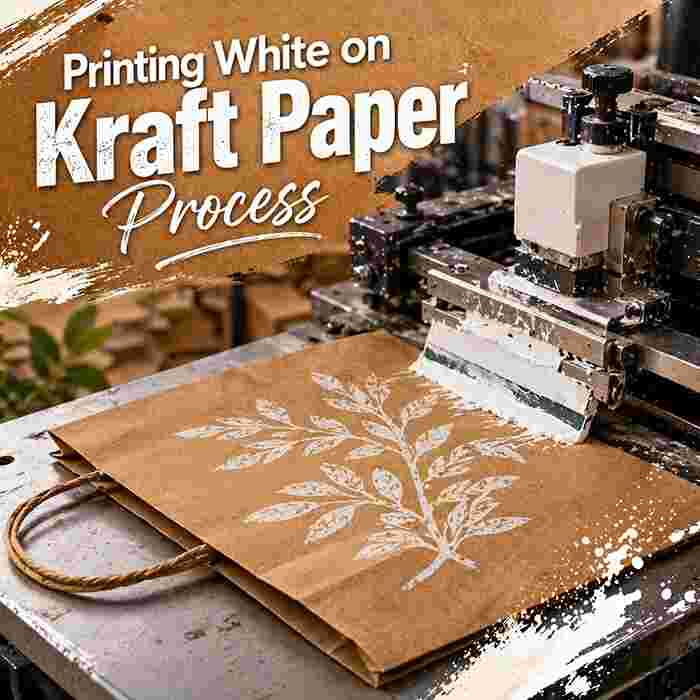
Printing white on kraft paper has a distinct and added value of premium-looking printed paper; however, there are a number of issues associated with this. While the composition of kraft paper is intended for printing, the natural brown hue and surfaces of kraft paper are the opposite. They create an added level of difficulty as well as reduce the level of print quality attainable as compared to printing on plain white sheets.
- Low Ink Visibility on Dark Surface
One of the primary issues with printing white on kraft paper is ink visibility. Kraft paper is composed of brown paper, and if white ink is printed so that it appears opaque, it can clearly look dull and semi-transparent. This can create inconsistent and poor-quality printing.
Regular ink is poor for opaque printing. Hence, it is recommended to use high-opacity ink. In many instances, three or more passes of ink are needed to achieve a true and bright white print. Without sufficient opacity, the print may look unprofessional and fade out the design.
- Uneven Ink Absorption
Printing white on kraft paper has a natural porosity, which can cause uneven ink absorption. Some areas can absorb ink, resulting in inconsistent prints.
This problem is especially evident in cheap kraft paper or rough paper. To combat this, printers will use smoother kraft stocks or will use coatings and primers to help with ink consistency.
- Printing Consistency Issues
Consistent quality is hard to maintain in long print runs. Paper texture, ink application, and printing pressure can cause a variance in brightness and coverage.
Some batches may have a brighter print, whereas others may look a bit faded. This inconsistency may affect the business’s brand image, particularly if they need to have a uniform look to their packaging.
Using quality printing techniques, test printing, and quality control can help to reduce this problem.
- Higher Production Costs
Increased production costs can be another major drawback. Printing white on kraft paper may mean needing to use special inks, adding print layers, and may even necessitate a slower print speed.
These things mean that there will be greater material and labor costs than typical printing. Additionally, some printing techniques, such as screen printing or digital white ink printing, may need more costly machinery.
In order to get a good quality outcome, businesses will need to find a good combination of design, complexity, and budget.
Best Printing Methods for Printing White on Kraft Paper
In order to attain the best outcomes for printing white on kraft paper, you need to use the right techniques. Since kraft paper is dark and absorbent, not all printing methods will be able to give you the opacity, clarity, and consistency that you want. The following are the best techniques available for this kind of printing.
- Screen Printing
Screen printing is one of the best and most reliable techniques for printing white on kraft paper. It utilizes a mesh screen and applies a thick layer of white ink directly onto the surface.
This technique gives the best opacity and is able to give the best coverage, meaning that the white color will look even better on the dark kraft paper. It is best for areas where there are solid colors, big logos, or where the design is simple.
Because of the time and monetary investment to get machines set up, screen printing isn’t the best option for small print runs, although, for larger runs, screen printing becomes a viable option.
- Flexographic Printing
Flexographic printing uses rapidly drying inks and flexible printing plates to print on different materials; this technique is most commonly used on printing white on kraft paper and is a staple in mass-producing packaging.
Flexographic printing can produce great results with sufficient control of the ink and high-quality white inks when used to printing white on kraft paper. This method is especially efficient when used for high-volume, repeatable packaging, like boxes, bags, and labels.
In screen printing, the opacity achieved when white ink is used increases, while the opacity in flexographic printing is commonly less. In most situations, flexographic printing is the better choice in terms of speed, cost, and quality in comparison to screen printing.
- Digital Printing with White Ink
Digital printing with white ink is the most contemporary option to print on kraft paper. Modern printers can print white ink either as an underlayer or as an independent layer on a printed object.
This option is best for smaller companies or niche services offering quirky, personalized packaging. Digital printing offers quicker turnaround times and the ability to print specific and minute details.
Because of the cost associated with running the equipment, printing above a certain threshold of opacity is often less economically feasible, as it requires multiple passes.
- Offset Printing with Special Inks
Offset printing coupled with unique white inks or underboss is also an option for printing on kraft paper, and has historically been used to create prints of the finest quality and utmost intricacy.
This technique offers excellent detail and color consistency. However, the opacity of white ink and how it is printed can prove more difficult than screen prints. Often, this can mean more ink layers or coatings.
When it comes to lots of copies, offset printing is easy and gives high detail and consistency.
Tips to Achieve the Best Results in Printing White on Kraft Paper
To print white on kraft paper and get the best quality, durable results, you have to get the right materials, work with the right technique, and have the right design. Dark, absorbent surfaces like printing white on kraft paper take their precise and accurate details from working with best practice guidelines to improve clarity, opacity, and the overall appearance of the printed item.
- Use High-Opacity White Ink
With a white opaque ink, you can cover the surface of kraft paper to avoid the dull and transparent effects that white and other standard inks can have. While working with paper that is dark in color, use white ink to get the best results. Most of the time, you will get the best results by using multiple layers of ink or a “double hits” technique.
- Apply a White Underbase Layer
For this white launching design, you should also use some color. When you apply coating color, you should also use coating white and color on your color and white coatings. This technique works like a primer, and it prevents the background of the brown kraft from dulling the colors, while also improving the overall color and accuracy.
- Choose the Right Printing Method
Choosing the right printing technique is important in achieving effective results. Many people prefer techniques like screen printing and digital white ink printing because of better opacity and control.
When it comes to printing techniques with the most advantages, it is more effective to print with thicker ink applications and more designed coverage for white bold print.
- Opt for Smooth and High-Quality Kraft Paper
The quality and smoothness of the printing white on kraft paper are important in determining the print quality. Paper that is too rough and absorbent for the ink will have poor ink absorption and adhesion.
When you use high-quality and smooth kraft paper, the ink adhesion, sharpness, and consistency are improved, thus resulting in a cleaner and more professional print.
- Keep Designs Simple and High-Contrast
When you are designing for kraft paper, you should keep the design simple. If there are too many details, the design may not be printed due to poor surface texture and ink absorption.
It is better to use bold shapes, thick lines, and contrasting colors to improve visibility and readability instead. If a design is too light or detailed, it will be more muted on kraft paper.
- Test Before Full Production
Do test printing before doing large-scale production, always. This will help you assess and evaluate:
- Opacity and brightness of the ink used
- Accuracy of the colors printed
- Whether the paper printed well
How well did the printed pieces dry and adhere to the paper
Testing will allow you to avoid making mistakes in large-scale printing.
- Use UV or Pigment-Based Inks for Better Results
If you are going to printing white on kraft paper, the best inks to use are the pigmented and UV inks. These types of inks will not absorb the kraft paper and thus will print more vibrantly and in sharper quality.
They provide enhanced durability and resistance to fading, which is useful in many packaging applications.
- Ensure Proper Drying and Handling
To avoid smudges and to maintain the quality of print, drying is important. UV-cure drying and other controlled drying techniques help the ink to settle and increase its durability.
If drying is done and the prints are handled carefully, the print will stay intact.
Eco-Friendly Aspects of Printing White on Kraft Paper
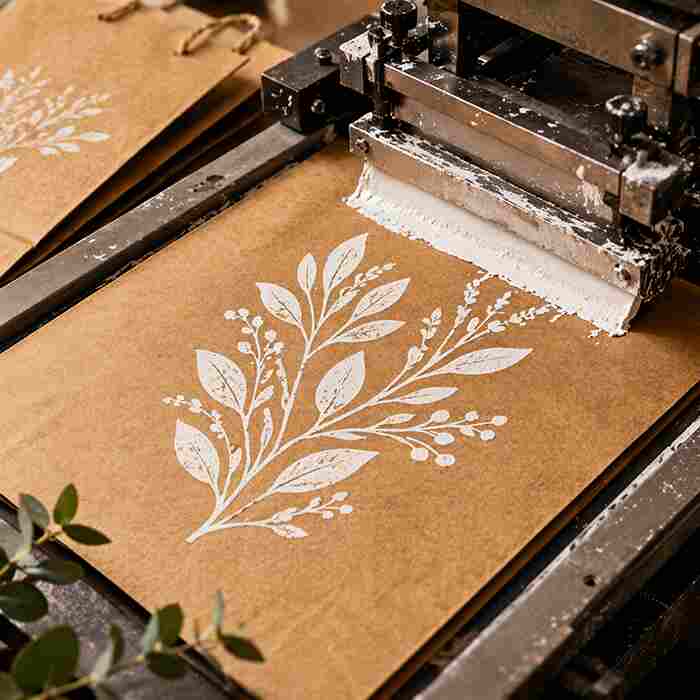
One of the main benefits of printing white on kraft paper is the sustainability that comes with the printing. It is easy to see why businesses and customers are more focused on printing white on kraft paper and simpler designs for branding that aligns with the sustainability and eco-friendly movement.
- Use of Natural and Recyclable Materials
Since kraft paper is made from unbleached wood pulp, it is safer for the environment to use, and it is easier to recycle. It’s wood pulp, along with the raw kraft paper, that allows it to be fully recyclable and biodegradable. This helps to limit the amount of waste placed in landfills.
- Reduced Chemical Processing
Kraft paper uses fewer chemical processes than other coated papers. This is less harmful to the environment. It also allows kraft paper to maintain its natural strength to be processed further.
Because of the cleaner printing white on kraft paper, the packaging is more sustainable than other processed papers.
- Minimalist and Low-Waste Design
When businesses print using white ink on kraft paper, they often adopt a minimalist design style. This style typically has a simple logo, simplistic writing, and fewer design elements, which means less ink is used. This means that less waste and resources are used in the entire printing process.
Minimalist design in packaging is modern, sleek, and helps to conserve resources because less waste and less production time are needed. This saves the packaging company resources, and ultimately, the consumer will see the benefits as the packaging costs less.
- Compatibility with Eco-Friendly Inks
Several companies have recently begun using a new style of printing white on kraft paper, which is less harmful to the environment. This new style of printing uses water, soy, or UV curable inks.
The new ink styles previously mentioned release significantly less VOCs (volatile organic compounds) and therefore are less harmful to the environment.
- Lightweight and Effective Packaging
Packaging using kraft paper helps to conserve energy and reduce the carbon footprint of the shipment because it is lightweight and helps to reduce the amount of packaging needed.
- Supports Sustainable Brand Image
Your brand will truly value sustainability if you use kraft paper and white ink on your packaging, and this will resonate with your customers, as they will also value sustainability.
Your brand will attract environmentally conscious customers who value soft paper packaging.
- Easy Disposal and Reusability
The Kraft paper packaging is simple to dispose of as it is easy to recycle, and it is easy to use again, which helps to reduce the packaging waste.
To conclude, printing white on kraft paper demonstrates a commitment to aesthetics, as well as sustainability. This construction has a clean, modern, and premium brand image, and with this method, businesses can lower their impact on the environment.
Final Thoughts on Printing White on Kraft Paper
In the current environment, which is highly competitive, integrating white printing on kraft paper is a strong approach to attract businesses that appreciate aesthetics and sustainability. Combining simple kraft paper and modern white ink, the end product is visually appealing and allows the brand to sustain a reputation as environmentally responsible.
The process may seem difficult when planning for sufficient opacity and regulating ink absorption. But with the right design, printing method, and materials, opacity and ink absorption can be controlled. With the right kraft paper, white ink, and printing technique, businesses can deliver visually appealing, clean, and focused jobs.
A premium and minimalist kraft background with white PDF file ink resonates with general consumers as modern, and this creates the identity results that are highly sought after for food packaging, cosmetics, craft products, and more.
This printing method also serves a purpose to sustain the environment. Kraft paper is 100% recyclable, and its biodegradable nature, combined with the right eco-friendly (sustainable) ink and minimalist design, decreases its environmentally harmful nature.
To finish, kraft paper printing is a great design choice to meld aesthetic and eco-friendly design, and building your brand in a great way can come down to your packaging design in a big way.
FAQs About Printing White on Kraft Paper
Is printing on kraft paper possible?
Printing on kraft paper is possible using white paper printing; for more opaque paper, a more advanced printing technique is necessary. To create cleaner finishes, many designers will use multiple layers to create finishes; however, white printing designs are less economical and are a more advanced process.
What is the most economical printing process for printing white and printing on kraft paper?
There are multiple ways to design. You can use screen printing and digital printing to create less intricate designs, whilst flexographic printing is almost solely for the printing of packaging.
Is printing on kraft paper costly?
There are many reasons why kraft paper printing is less economical than printing on other types of paper. The main reasons for this are the printed paper’s specialty inks, more layers that are created, and the process is almost always longer to create this paper’s design. However, for more advanced packaging designs, businesses will need to consider the premium designs and the costs.