
Rigid Box Structural Integrity: Why Luxury Brands Use Rigid Packaging
In high-end retail, the box matters as much as the product inside. For luxury brands, strong packaging is essential. It must protect the item and still look premium.
Rigid boxes set the standard for this level of quality. Unlike folding cartons, rigid boxes are not made to collapse. They are built from heavy chipboard that is four to five times thicker than regular paperboard. This creates a strong structure that keeps its shape.
Because of this strength, rigid box structural integrity handle global shipping without bending or deforming. The box stays square and clean from the factory to the customer. Careful control of corners, wrapping tension, and material density helps protect high-value items inside.
This solid construction ensures the product arrives safely. It also protects the unboxing experience, keeping it smooth, elegant, and flawless.
Material Science—The Foundation of Chipboard Density
The strength of a rigid box structural integrity depends on the material used inside. This material is called greyboard or chipboard. It forms the core of the box and gives it structure.
Unlike corrugated board, greyboard has no air gaps. It is made from solid, high-density fibers. Its strength is measured by thickness, called caliper, or by weight, known as GSM. For a true luxury feel, manufacturers usually choose boards between 800 GSM and 1500 GSM. These boards resist bending and warping under pressure.
Packaging guidelines from Smithers Pira show that strong bonding between fibers improves burst strength and prevents corner cracks. A board with high density and proper thickness keeps the box strong, even in humid conditions or when stacked during shipping.
This careful material choice helps the box stay firm over time. It reduces fatigue and keeps the box looking premium from start to finish.
Manufacturing Mechanics—V-Slotting vs. Scoring for Corner Precision
The shape of a rigid box shows how strong it really is. Clean and sharp 90-degree edges are a rigid box structural integrity. To achieve these edges, manufacturers use a special process called V-slotting.
In regular packaging, the board is only scored with a crease so it can fold. This often creates rounded corners that look bulky and may bulge after wrapping. These weak corners can lose shape over time.
For premium rigid boxes, a V-slotting machine cuts a precise V-shaped groove into the greyboard. The cut does not go all the way through the board. This allows the board to fold neatly into a sharp and flush corner.
Packaging engineering standards from PMMI explain that removing this small amount of material reduces stress at the joints. It also creates a flat surface for strong adhesive bonding. As a result, the box keeps its shape and avoids spring-back during storage or display.
Compression Strength and Load-Bearing Analysis
A rigid box structural integrity must be able to handle outside pressure without bending or losing its shape. In luxury retail and global shipping, boxes are often stacked ten to twenty units high. Because of this, manufacturers must know the box’s compression strength.
Rigid boxes are different from corrugated shipping boxes. Corrugated boxes get their strength from air-filled flutes. Rigid boxes get their strength from solid chipboard and reinforced corners that are firmly stayed in place.
According to packaging standards from TAPPI, high-thickness greyboard provides strong side walls. These walls resist bulging, which is common in lower-quality packaging. This strength is especially important for heavy products such as electronics and glass perfume bottles.
The rigid box structural integrity acts like a protective outer shell. It carries the stacking weight instead of letting that pressure reach the product inside. By calculating perimeter resistance correctly, manufacturers ensure the box stays strong and reliable throughout the entire supply chain.
Internal Reinforcements—The Role of Inserts in Structural Stability
The concept of rigid box structural integrity is not only about the outer shell. The inside design also plays a very important role. When a high-value product is placed inside a rigid box, the concept of internal support becomes important.
This support is created using custom inserts such as EVA foam, molded pulp, or paperboard. These inserts have two main functions. First, they absorb shocks during handling and transport. Second, they act like internal supports that help the box resist inward pressure on its side walls.
According to engineering studies from ISTA, filling empty space inside the box with material that spreads impact energy evenly across the structure greatly improves drop-test performance. These inserts hold the product firmly in place. This prevents the “hammer effect,” where a heavy product shifts inside the box and hits the corners from the inside.
Whether manufacturers use high-density foam for electronics or molded fiber for cosmetic products, a well-designed internal structure works together with the rigid box. This combined design protects both the product and the box from damage during demanding shipping and handling conditions.
Adhesive Bonding and Corner Staying—The Chemistry of Rigidity
In the end, the strength of rigid box structural integrity comes from how well its corners are bonded together. After the greyboard is V-slotted and folded, the corners must be firmly secured. This step is called corner staying. It uses strong heat-activated tape or special adhesives to hold the box in its final shape. This process stops the box from flattening and gives it the stiffness needed for luxury packaging.
The type of adhesive used in rigid box structural integrity is very important. Some manufacturers use protein-based animal glue because it grips quickly. Others use modern hot-melt adhesives for added strength. According to FEICA standards, a good adhesive must resist creep, which means it should not weaken over time due to heat or humidity. If the adhesive fails, the corners can open or the outer wrap can peel away. This leads to a loss of box strength.
By applying high-quality adhesives with precision, manufacturers ensure the box works as one solid unit. Instead of acting like separate pieces, the rigid box becomes a single strong structure that stays durable throughout storage, shipping, and display.
Climate Resistance and Substrate Expansion—Managing Environmental Variables
One major challenge in keeping rigid box structural integrity is that greyboard absorbs moisture from the air. Greyboard is made from cellulose fibers, which can swell when humidity changes. This can cause the box to bend or warp. In technical terms, this problem is called dimensional instability. When greyboard absorbs water, it expands. As a result, the lid may become too tight, or the base may no longer sit flat.
To reduce this risk, manufacturers use balanced production methods. This means the inner liner paper and the outer wrap paper are kept close in weight and fiber direction. When both sides are balanced, the board is less likely to twist or bend. According to data from the Pulp & Paper Technical Association of Canada (PAPTAC), placing the board fibers in a vertical direction helps prevent box crushing and bending caused by the environment.
Extra protection can also be added by applying water-based coatings or thin film laminations to the outer wrap. These layers act as a moisture barrier and slow down water absorption. By carefully controlling the box’s equilibrium moisture content, engineers can ensure the rigid box stays strong and stable. This allows the box to perform well whether it moves from a dry warehouse to a humid or tropical shipping environment.
Pneumatic Resistance and Lid-to-Base Tolerances
A clear sign of a high-quality rigid box structural integrity is the slow and smooth way the lid opens. This gentle resistance is not just for looks. It comes from precise engineering and tight manufacturing control. For this effect to work, the space between the lid and the base, called the fit tolerance, must be very exact. It is usually kept between 0.5 and 1.0 mm. If the fit is too loose, the lid falls off and loses its protective purpose. If it is too tight, air cannot escape, and the box becomes hard to open without damage.
To achieve the level balance of rigid box structural integrity, manufacturers carefully adjust their die-cutting and wrapping machines. According to guidance from the International Confederation of Paper and Board Converters (CITPA), air movement plays an important role in box stability. When the lid is placed on the base, trapped air creates a light vacuum seal. By adding small air escape paths or choosing materials with the right level of air permeability, the opening speed can be controlled.
This controlled air release protects the contents and improves ease of use. It also helps prevent the box from opening by accident due to changes in air pressure. As a result, the box feels solid, reliable, and premium in everyday handling.
Acoustic Density and the Tactile Feedback of Rigid Structures
People often judge the strength of rigid box structural integrity by the sound it makes. Sound travels differently through materials based on their density and stiffness. Luxury rigid boxes are made from high-density grayboard, which is solid and not porous. Because of this, the material has high acoustic resistance. When the lid is closed or the box is tapped, it makes a deep, solid “thud” instead of a sharp or hollow sound like folding cartons or corrugated boxes.
Studies in the Journal of Sensory Studies show that the human brain uses sound and weight to judge quality and durability. A deeper sound is often linked with strength, value, and long-lasting construction. This effect happens because rigid boxes have no air gaps inside the board. The fibers are packed tightly together, which increases density.
This dense structure improves both the sound and the strength of the box. As a result, the box feels like one solid piece when held and used. This “single-unit” feel increases confidence in the box and reinforces its premium and durable image.
Post-Consumer Utility and Structural Fatigue Resistance
The true strength of rigid box structural integrity is seen after the first unboxing. It shows in the second life of the package. Rigid boxes are made from thick chipboard and strong corner joints. Because of this, they resist damage from repeated opening and closing. This type of damage is known as structural fatigue. Unlike folded cartons, which often crack at the creases or wear out at the corners after only a few uses, rigid boxes keep their shape. Their stayed corners and protective outer wrap help them stay firm and stable.
From a technical point of view, this long life is measured by something called stiffness retention. This means the rigid box structural integrity stays strong over time. Studies by the Sustainable Packaging Coalition show that rigid boxes work well as long-term storage solutions because of their high density. The lid stays flat, and the opening and closing action remains smooth even after many uses. By focusing on durability instead of single-use packaging, luxury brands turn a shipping box into a useful item. It becomes a storage box for homes or offices, keeping the brand visible and valuable for a long time.
Technical Validation—Stress Testing and Quality Assurance
To make sure that rigid box structural integrity is truly strong, manufacturers must go beyond just looking at it. Laboratory tests are essential. The first important test is the Edge Crush Test (ECT). This measures how much compression the board can handle. It ensures that the vertical walls of the box will not buckle under weight.
The second important test is the Cobb Water Absorption Test. This measures how much water the paperboard absorbs over a set period. Water can weaken the board, so this test helps predict how the box will perform in humid conditions.
According to ASTM International’s D642 standard, the relationship between the adhesive, outer wrap, and core board must be tested under different environmental conditions. For example, a Vibration Test simulates the movement of a delivery truck. This test can reveal weaknesses in corner tapes or adhesives.
By completing these rigorous tests, manufacturers can issue a Certificate of Compliance. This certificate guarantees that the luxury package has been scientifically tested and can resist physical and environmental stresses, ensuring the box remains strong and protective throughout its use.
Magnetic Integration and Hardware Recessing—The Mechanics of Closure
In modern luxury packaging, neodymium magnets are often used for box closures. Simply attaching a magnet to the surface would create a bump. This could ruin the box’s flush finish and weaken its structure. To prevent this, a recessing method is used. A CNC machine or drill removes a small circular section of the chipboard. The magnet fits into this recess, keeping the lid perfectly flush before the finishing paper is applied.
The magnet’s pull force must match the weight of the lid and wrap paper. Too thick a paper reduces the magnetic effect, while too strong a magnet can pull the paper away from the board. This would weaken the box. By calculating the correct Gauss rating for the lid’s weight, manufacturers create a hidden mechanical function. The lid stays secure during shipment but still gives a satisfying “snap” when closed.
Center of Gravity and Geometric Balance
A key part of a rigid box structural integrity is its balance and center of gravity. A box must be stable not only during shipping but also when the lid is removed or when it is displayed on a shelf. If a heavy lid or an off-center product shifts the weight, the box can tip. This can cause the corners of the base to wear unevenly, a problem called “tipping fatigue.”
To prevent this, engineers calculate the box’s moment of inertia. They design the box so its weight is well-balanced. For example, using a thicker base than the lid lowers the center of gravity. This makes the box more stable and reduces the risk of tipping or lateral movement. Proper balance is especially important for tall boxes, like those for wine bottles or liquor glasses, where a small shift in weight could cause damage to the contents.
Lamination Physics and Surface Tension Reinforcement
Lamination on a rigid box is not just for looks—it also strengthens the box. When a thin film, like biaxially-oriented polypropylene, or an aqueous coating is applied, it creates a “tension skin” on the surface of the chipboard. This skin adds extra tensile strength, helping the rigid box structural integrity to keep its shape even when heavy items push outward from inside.
According to the TAPPI Journal of Paper Science, laminating a paperboard can increase its burst strength by up to 20%. This is especially important for corners that are scored or V-slotted, which can separate along the fibers if unprotected.
Lamination also stops “wicking,” which is when moisture enters the edges of the board and softens the fibers. By sealing the surface, the box stays strong and rigid. Laminated boxes resist bending, abrasion, and softening, keeping their shape and appearance throughout their use.
Hinge Mechanics and Corner-Tape Durability
Changing a rigid box from a two-piece telescope style to a hinged or “clamshell” design adds a challenge for structural integrity. A hinge is naturally a weak point because the board is partially cut or scored to allow it to open 180 degrees. To prevent splitting or material fatigue, manufacturers reinforce the hinge with corner-staying tapes and strong materials like hinge cloths or high-strength liners. These materials are tested for “double-fold endurance,” which measures how many times they can be opened and closed before the fibers break.
According to FEFCO testing standards, a hinge’s strength depends on its flexural rigidity and the adhesive used. If the adhesive is too stiff or not elastic enough, the box can fail after repeated use, causing the outer wrap to tear. A solution is the “double hinge” design, which uses two parallel scores to spread stress over a larger area. This keeps the top aligned with the base even after thousands of openings.
Fiber Length and the Structural Trade-offs of Recycled Substrates
As brands shift toward sustainable packaging, using recycled materials in rigid boxes has become an important engineering consideration. The main difference between “virgin” and “recycled” greyboard is the fiber length. Every time paper is recycled, the fibers get shorter. Shorter fibers reduce the board’s “interlocking strength” and lower its “tensile stiffness.”
To keep rigid boxes strong, especially during printing, boards made from 100% post-consumer waste (PCW) may need to be thicker. According to Environmental Paper Network Technical Reports, the internal bond strength of high recycled-content boards can drop by up to 15%.
To solve this, designers use “hybrid layering.” This means placing a recycled core between thin layers of long-fiber virgin kraft paper. This design keeps the box strong, maintains compression resistance, and meets sustainability requirements for modern global markets.
Die-Cutting Tolerances and Steel-Rule Accuracy
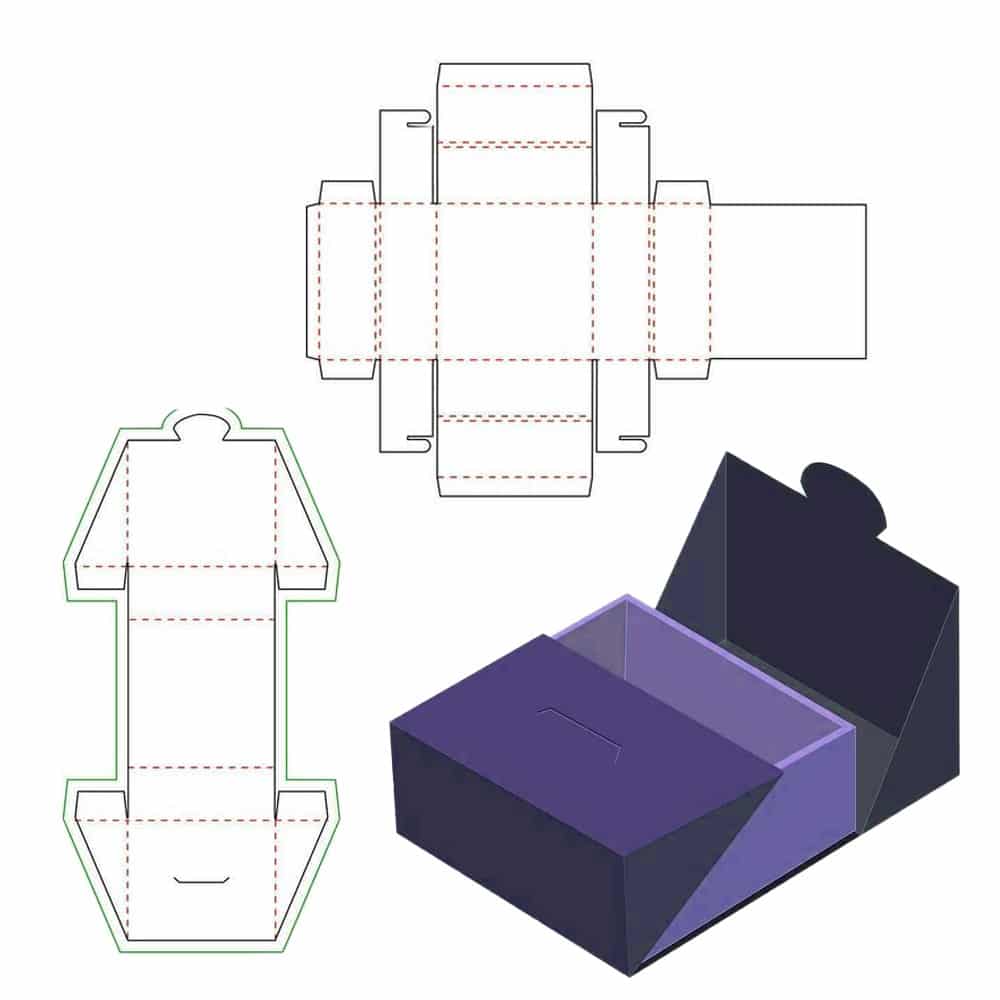
The final strength of a rigid box depends on the precision of the die-cutting process. To turn a flat sheet of high-density greyboard into a box, manufacturers use “steel-rule dies.” These are sharp steel blades mounted on a hardwood base. In technical packaging, the tolerance for these cuts is very tight. Even a small deviation of 0.25 mm can cause problems like “skewing,” where the sides of the box don’t meet at a perfect 90-degree angle.
According to the International Association of Diecutting and Diemaking (IADD), the sharpness of the steel blades is critical. A dull blade chops fibers instead of cutting them cleanly, weakening the edges and reducing the adhesive bonding area. This can compromise the box’s overall structure. The “nicking” stage, which creates tiny holes to hold the board during manufacturing, must also be precisely placed to avoid stress points.
Modern techniques, like CNC laser-cut dies and hydraulic presses, help ensure that all parts fit perfectly. This allows the box to be assembled seamlessly, maximizing strength and structural integrity.
Conclusion: The Engineering Excellence of Rigid Packaging
The strength of a rigid box is more than just style. It is built on material science, mechanical engineering, and precise manufacturing. A luxury rigid box gets its durability from the combination of high-density board, precise V-slotting, and careful lid-to-base fitting. Choosing a rigid box means investing in a protective shell that can handle heavy shipping, changes in humidity, and repeated use by customers.
Every step matters. From cutting the board with sharp steel-rule dies to using adhesives with the right viscosity, quality control ensures the box stays strong. Other factors, like fiber length, magnetic closures, and laminated surfaces, all add to the box’s durability. In the end, a rigid box shows that in the luxury market, real value comes from both usefulness and long-lasting quality.
Frequently Asked Questions: Technical & Utility of Rigid Box Structural Integrity
Q 1. How does chipboard thickness (caliper) directly impact rigid box structural integrity?
It is measured in points-1/1000th of an inch. The higher the caliper, the greater the “Moment of Inertia” of the box walls, meaning that it can resist bending and crushing. For luxury utility, a standard 40pt to 80pt caliper is used to make sure the box does not deflect under the weight of the stacked pallets.
Q 2. What is the difference in box strength between “V-slotting” and “Scoring”?
Apart from aesthetic appearances, scoring only creates a crease in the board that can develop into a bunched corner fiber. V-slotting removes a wedge of material, enabling a sharp 90-degree fold. While V-slotting is more aesthetic, precise adhesive application must be made in order not to compromise the rigid box’s structural integrity with the thinner fold line.
Q 3. What is the importance of the ‘Box Compression Test’ (BCT) in rigid packaging?
BCT is the measure of the maximum load allowed on a final box to avoid deformation. As rigid custom packaging is non-collapsible, it will support the weight of all the units stacked above it in a container. Thus, having a high BCT value assures that the product does not bear the weight imposed on it.
Q 4. In what way does humidity affect the usefulness of a rigid box?
The fibers in the paper are also hygroscopic and tend to expand. This may result in “bowing.” Rigid boxes need “balanced construction”—lining the surfaces on both sides of the chipboard with equal-weight paper in order for the fibers to have the same pull.
Q 5. How does the “direction of grain” of paperboard factor into this process?
This is the direction of the grain. In order for the box to have maximum strength in the vertical direction, the grain must run vertically along the side walls. It will be much more probable for the box to bulge or collapse if the grain is horizontal.
Q 6. Are the same rigid box structural integrities of virgin fibers possible with recycled materials?
Recycled fibres are shorter and have lower “interlocking” strength. To produce the same utility, engineers will often increase the density of the board or add a “kraft” liner to provide the tensile strength that may be lacking in recycled “greyboard”.
Q 7. Why would the “friction fit” or “vacuum effect” be such an achievement from an engineering perspective?
It requires a tolerance of less than 0.5mm. The functional utility of this “slow-release” lid is one that prevents the base from falling out due to gravity, while at the same time allowing the air to provide a pneumatic cushion, thereby cushioning any possible contents against sudden movements.
Q 8. In what way does corner-staying tape contribute to durability for the box?
The “stay” is a mechanical bond that holds corners together before wrapping. Heat-activated reinforced tape is used in high-utility boxes to prevent the corners from “gapping,” or splitting, which is generally associated with the most common failure point in rigid box structural integrity.
Q 9. What is the technical advantage of using EVA foam inserts over card inserts?
EVA foam is a closed-cell material that provides superior shock absorption and “structural bracing.” It braces the internal walls of the rigid box from the inside, serving almost as a skeleton to prevent the box from being crushed inward during high-impact transit.
Q 10. What is the effect of magnets on the structural lifetime of the packaging?
If not recessed correctly, magnets create a “stress riser” in the board. When engineered with precision recessing, they provide a secure, repeatable closure that maintains rigid box structural integrity by preventing the lid from warping or “flapping” over time.