
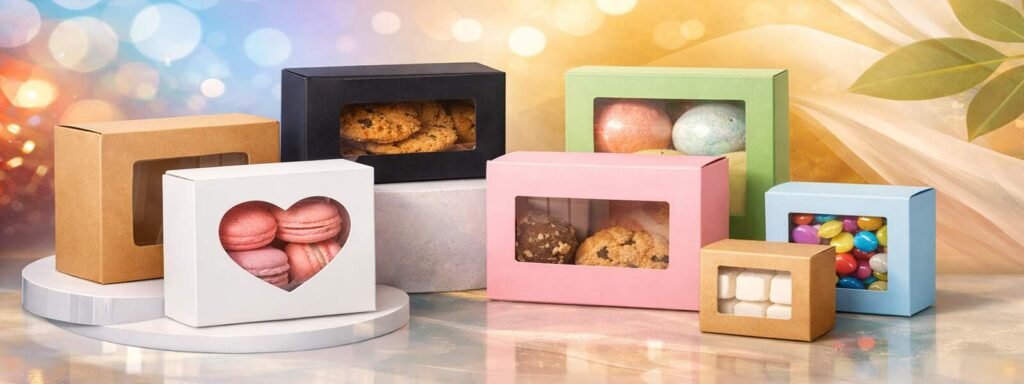
The Ultimate Premium Window Tuck Box Packaging Guide for Retail Branding Success
In the current competitive retail climate, packaging is no longer just a protective enclosure — it’s a silent salesperson. The Premium Window Tuck Box Packaging is one of the most popular retail packaging formats. This packaging style is both practical and visually appealing, thanks to the tuck-end structure and a clear display window that lets customers see what they’ll get before they open the box.
Usually made from foldable carton material like cardboard/kraft paperboard/coated stock, a Premium Window Tuck Box Packaging is a great option. It has tuck flaps on the top or bottom that allow the package to be closed securely. The Unique Feature of these boxes is the die-cut window opening, which is typically sealed with transparent PVC or eco-friendly film, allowing consumers to see the product while preserving its structure.
Retail buyers decide if and what to purchase in seconds. Research on consumer packaging behavior shows trust is well-anchored by visibility, while hesitation disappears. If customers can see the product — whether it’s cosmetics, candles, food items, or small retail goods — they have more confidence in its quality, color, and size. This psychological reassurance has an immediate impact on shelf conversions.
The Structural Advantage
Tuck, as a design, is widely used due to its straightforward, low-cost nature. It is simple to put together, light and stackable for transport. Variations in window sizes do not compromise this convenience. Instead, they improve it through a marriage of secure closure and aesthetic presentation.
The most common tuck configs are:
- Straight tuck end
- Reverse tuck end
- Auto lock bottom tuck
- Snap lock bottom; tuck top
Depending on product weight and retail environment, each variation serves a different purpose. But the introduction of a window elevates an ideal folding carton to a premium display package.
Why Visibility Drives Sales
Modern consumers want transparency — both literally and metaphorically. Perceived risk decreases when packaging enables them to see what they are buying. This is particularly important for:
- Bakery items
- Handmade soaps
- Candles
- Gift products
- Small electronics accessories
The window element gives a “try-before-you-buy” visual effect. It also means you don’t need long product descriptions, since the product itself is a visual sell.
Branding Meets Functionality
The greatest strength of Premium Window Tuck Box Packaging for Retail Branding lies in its design, which strikes a balance between protection, visibility, and storytelling. The hotfoil print process acts as an audible channel, delivering the brand message, while the window displays the product. The right combination of logos, color psychology, typography and finishing techniques creates shelf impact.
A matte black box with a clean die-cut window, for instance, suggests luxury, while a kraft box paired with a simple rectangular window conveys eco-conscious branding. With finish choices, the same structural format can address totally different markets.
Retail Shelf Impact
Shelf competition is intense. A product needs to be different within a few seconds. Window-style packaging adds depth and dimension over fully printed cartons. Areas of solid printed panels and transparent portions juxtaposed with each other are naturally eye-catching.
In supermarkets and specialty stores alike, the packaging that balances clarity with design sophistication tends to outperform fully opaque alternatives. Retailers love window packaging, too, because the product is handled less — customers do not need to open or damage the carton to see the contents.
Consumer Trust and Perceived Quality
The moment shoppers view the actual product, they instantly associate it with honesty and quality assurance. This trust factor is one reason why many emerging brands gravitate more toward window-based carton designs as they move into retail chains.
Moreover, tamper-evident sealing may be incorporated without disrupting the display window and compromising security with respect to visual access.
A Strategic Packaging Choice
Optimizing Your Packaging Design: Why a Premium Window Tuck Box Packaging is the Right Retail Solution. This not only improves product presentation and perceived value, but it’s also cost-effective for mass-produced items.
Premium Window Tuck Box Packaging Styles and Structures
Window Tuck Boxes are a structural innovation in packaging—we can say so because they combine both visual impression and structural efficiency. By understanding the most prevalent styles and configurations, brands can make informed decisions about the right format for their retail objectives.
Some industry references on packaging performance:
Retail packaging and display directly affect consumer buying. It describes how packaging that enhances product visibility also plays a vital role in sales lift for grocery and specialty retail, combined with data from the U.S. Census Bureau.
- Straight Tuck Window Box
Structure:
Perfect packaging for delicate items, like a Premium Window Tuck Box Packaging. This is a simple but very effective structure.
Best for:
Low- to mid-light products: soap, cosmetics, small accessories, and low-weight foods.
Advantages:
- Simple to assemble by hand or with automatic machines
- Economical for short-run and mid-volume production
- The window can be located on the front panel or offset for artistic presentation
- Reverse Tuck Window Box
Structure:
For this type, the top and bottom tuck flaps are folded in opposite directions. This provides a more stable surface when piled and for handling heavier products.
Best for:
Includes the likes of candles, skincare sets and bundles
Benefits:
- More Secure Seal than Straight Tuck
- Balanced appearance on retail shelves
- Stacked performance improvements
- Window Tuck Top with Auto-Lock Bottom
Structure:
Pairs an auto-lock bottom — that goes into place when assembled — with a top Premium Window Tuck Box Packaging with a window.
Ideal for:
Heavy-weight items or eCommerce packaging with POS display requirements.
Why it matters:
Auto-lock bottoms offer structural integrity without added tape or glue. It will enhance durability without compromising visibility as the product is viewable through the transparent window.
- Snap Lock Bottom with Glass Display
Structure:
The Snap Lock Bottom forms a snug fit for a reinforced base ideal for taller or heavier products.
Best for:
Drinks, single unit bulk food items, Tech accessories, Gift Packaging
Retail advantage:
Bottom support reinforcement for enhanced shelf-life appearance, important for retail, where product position is critical in displays.
- Hanger Premium Window Tuck Box Packaging
Structure:
Commonly used for hanging displays, this variation has a tab or hanger hole sign above the window panel.
Common Use:
Peg-hook retail environments — i.e., supermarkets and convenience stores.
Example:
This style is great for smaller products like USB cables, earphones, or packaged accessories.
- Why Different Structures Matter
Choosing the right style doesn’t just influence the appearance of the product — it influences:
- Shipping durability
- Minimal assembly time at the packaging point
- The quality that consumers perceive
- Shelf stability
- Sustainability footprint
The U.S. Environmental Protection Agency (EPA) published a federal report on sustainable packaging design:
“By designing packaging to be recyclable and using minimal material, you can greatly reduce environmental footprint without compromising on the protection of the product.”
- Window Placement Options
This broaches an equally important consideration: the window’s placement.
- Centered window — traditional and proportionate
- Offset window — contemporary and tactile
- Multi-panel windows — show off several product views
So, each option affects the customer’s perception of the item. Larger or multi-panel windows offer a more complete visual for consumers, which is often important for products with multiple textures or colors.
- Materials and Thickness Impact
Window Premium Window Tuck Box Packaging are usually made from:
- Kraft paperboard: Organic, natural style
- Coated folding carton: Requires a high-quality print surface
- Recycled paperboard: Environment-friendly option
Window materials range from classic PVC to biodegradable cellulose films. As sustainability becomes a priority, many retailers opt for compostable window films.
- Structural Summary Table
Style | Best Use | Strength | Visual Impact |
Straight Tuck | Light products | Medium | Standard |
Reverse Tuck | Medium weights | Strong | Balanced |
Auto-Lock Bottom with Window | Heavy + retail | Very Strong | High |
Snap Lock Bottom | Heavy products | Very Strong | High |
Hanger Window | Hanging display | Medium | Moderate |
Premium Window Tuck Box Packaging styles are made not only for aesthetics, but for functional solutions — from weight support to a shelf presentation. However, a proper structure selection is more of a strategic decision that affects cost, customer acceptance, durability, and sustainability.
What are the materials for Premium Window Tuck Box Packaging
Indeed, material selection is one of the most defining factors in determining the sustainability of performance and perceived quality for capabilities in design systems that matter. Whether one is designing a Premium Window Tuck Box Packaging, the right material not only assures structural integrity but also complements branding, compliance, and environmental responsibility.
Paper and paperboard containers, according to the U.S. Environmental Protection Agency (EPA), are among the most recycled packaging materials in the United States, playing a significant role in sustainable material management. Such responsivity reasserts why paper-based packaging remains the preferred curtain for tuck-style cartons.
- Kraft Paperboard
Premium Window Tuck Box Packaging Kraft paperboard is largely used as it is very eco-friendly and sturdy. Brown paper is made from unbleached wood pulp and retains its brown finish.
Why brands choose Kraft:
- Biodegradable and recyclable
- Fiber-rich and nutritious
- Raw and natural design
- Great for earth-friendly branding
Kraft shines for candle boxes, soap packaging, bakery items, and handmade retail products, where a natural aesthetic enhances the product’s storytelling.
- Coated Folding Carton Board (FBB)
Folding Box Board (FBB) is a high-quality paperboard that is usually coated with clay or polymer layers to enhance printing quality and surface texture.
Benefits:
- Ability to print in high resolution
- Shiny paper suitable for lamination & foil stamping
- Ideal for high-end retail packaging
- Strong and lightweight
This type of board is commonly used by cosmetic and skincare brands to create high-end Premium Window Tuck Box Packaging with bold graphics and clean text.
- Solid Bleached Sulfate (SBS)
The most common SBS board is high high-end material, bright and strong. It is completely bleached, giving the carton a clean, white interior and exterior.
Ideal for:
- Premium retail products
- Food-grade packaging
- Applications used for pharmaceutical
Food-contact materials are subject to U.S. Food & Drug Administration (FDA) regulation to determine food safety compliance. SBS is often the choice when a regulatory requirement and visual quality must coexist.
- Recycled Paperboard
As environmental awareness grows, many brands are moving to packaging made from recycled content.
The U.S. Department of Agriculture (USDA) states that sustainable forestry and the use of recycled materials are also beneficial to manufacturing industries, helping reduce environmental impact.
Advantages of recycled paperboard:
- Lower carbon footprint
- Efficient in cost (especially on bulk orders)
- Walks the talk on sustainability marketing claims
- Benefits of circular economy endeavors
Because of this, retailers are increasingly preferring suppliers that offer verifiable recycled-content certifications.
- Window Film Materials
A Premium Window Tuck Box Packaging is normally made of the following:
- PVC (Polyvinyl Chloride) – Classic and transparent
- PEG (Polyethylene Glycol) – More flexible and recyclable
- PLA (Polylactic Acid)– The Eco-Friendly Alternative
- Cellulose-based compostable film
Sustainability trends are driving brands to replace non-recyclable plastics with either compostable or recyclable film substrates.
- Material Thickness and GSM Considerations
Box stiffness is determined by the material thickness, typically measured in GSM (grams per square meter).
- 250–300 GSM: Light retail goods
- 300–350 GSM: Retail Packaging
- 350–400+ GSM: Very heavy or premium products
Choosing the right GSM helps avoid collapse, enhances stacking strength, and gives the packaging a premium feel.
- Balancing Sustainability and Strength
Selecting materials for a Premium Window Tuck Box Packaging is not just about cost — it should also align with brand positioning, environmental stewardship, and retail durability.
Luxury brands may prefer coated boards with specialty finishes, while environmentally conscious brands gravitate toward kraft or recycled stock. The best packaging strategies balance:
- Structural integrity
- Print compatibility
- Compliance standards
- Eco-sustainability
- Cost-effectiveness
Packaging materials directly impact both consumer trust and regulatory compliance in modern retail.
Importance of Premium Window Tuck Box Packaging in Brand Exposure
In retail settings where consumers make choices in mere seconds, visibility is a huge selling point. The Premium Window Tuck Box Packaging excels at showcasing the end product, adds a competitive edge, and helps maintain packaging quality. Together, this transparency and protection unlock measurable business benefits.
- Increases Consumer Trust
Consumers are understandably more confident when they can see a product before buying. Revealing the true color, texture and size lessens doubt.
Research cited by the U.S. Food & Drug Administration (FDA) supports the idea that clear and honest product presentation helps consumers make informed decisions.
While FDA guidance is particular to food and regulated products, the ethos of transparency has broad relevance across retail verticals. The perceived risk is low when customers can see what they are buying.
- Reduces Product Handling in Stores
In traditional retail spaces, consumers tend to tear things open — think of candles, cosmetics, baked goods and gifts. This causes damage to your inventory.
A Premium Window Tuck Box Packaging helps reduce this concern. The product is already in sight, so the customer does not need to open the box and check. Retailers benefit from:
- Reduced damaged stock
- Lower return rates
- A cleaner shelf presentation
The National Institute of Standards and Technology (NIST) supports the development of improved packaging design by reducing product damage and retail loss caused by handling.
- Improves Shelf Impact and Competitive Positioning
Retail shelves are crowded. Products are vying for attention side by side. A box with a clear panel adds depth, contrast, and dimensional impact compared to fully opaque cartons.
Contrast and visible content naturally attract human vision. We want people to see the inside so that they are curious enough to take a closer look.
This benefit increases when the internal product colour matches the external print design.
- Strengthens Brand Authenticity
Capturing people’s humility through brands is important for modern consumers, who hope to express their money-making authentically and genuinely. A transparent display window overtly suggests openness. It implies that the brand is confident in the quality of its product.
According to the U.S. Small Business Administration (SBA), a brand is an identity of service, trust and satisfaction that every customer experiences before, during and after buying your product or service. Such visibility-enhancing packaging, therefore, reinforces this trust-building process at retail.
- Enhances Buying Confidence for New Brands
Credibility is very important for new brands, especially in retail. The product itself becomes proof of quality when it is encased in a Premium Window Tuck Box Packaging. This is especially beneficial for:
- Handmade candles
- Artisan soaps
- Organic snacks
- Natural cosmetics
- Gift items
The presence of the actual product, which allows for firsthand experience, further supports the claim rather than relying solely on printed words.
- Final Perspective on Visibility Benefits
The advantage of window-based packaging isn’t just aesthetic. It impacts:
- Consumer trust
- Retail Loss Prevention
- Shelf differentiation
- Brand credibility
- Purchase confidence
- Sustainability perception
For brands in retail environments, visibility isn’t a nice-to-have — it’s strategic.

Premium Window Tuck Box Packaging Solutions: Eco-Friendly and Sustainable
Sustainability is emerging as a crucial decision-making factor for consumers, retailers, and brands. Using eco-friendly materials and design practices in a Premium Window Tuck Box Packaging aligns with sustainable development and increases brand credibility and marketability.
- Importance of Sustainable Packaging
Consumers want brands to lessen their environmental footprint. The U.S. Environmental Protection Agency (EPA) states:
“In contrast, sustainable packaging reduces the use of materials, is recyclable and less environmentally damaging.”
Implementing sustainable packaging practices is no longer a choice — it has direct implications for brand perception and regulatory compliance.
- Sustainable Materials for Premium Window Tuck Box Packaging
Recycled Paperboard
Recycled paperboard is actually one of the best solutions to minimise your carbon footprint.
Advantages:
- Save natural resources
- Lowers carbon footprint
- Aligns with the principles of a circular economy
Biodegradable Window Films
Conventional PVC windows are also very hard to recycle. Transparent, compostable alternatives such as PLA (polylactic acid) or cellulose-based films are among the options.
Benefits:
- Decreases landfill waste
- Offers visibility of the product
- Used by sustainable branding
Soy-Based and Water-Based Inks
Printing can also impact sustainability. Traditional inks have heavy metals and solvents, which can be detrimental to the environment. Soy-based inks are safer options.
Advantages:
- Non-toxic and biodegradable
- High-quality colour reproduction and colour bright
- Compatible with sustainable paperboards
- Designing for Minimal Material Waste
Sustainable Premium Window Tuck Box Packaging must be designed efficiently to deploy less material without compromising structural soundness. Strategies include:
- Die-cut patterns optimization
- Reducing board thickness where appropriate
- Nesting for production to minimize scrap
- Shipping & retail display friendly multi-use designs
Optimizing production processes can mitigate sustainability challenges and increase cost-efficiency, according to the U.S. Small Business Administration (SBA).
- Certifications and Eco-Labels
Consumers are demanding verified sustainability assertions. Both certifications and eco-labels lend credibility to marketing messages. Popular certifications include:
- FSC (Forest Stewardship Council) – responsible paper source
- Recognized by the World Wide Fund for Nature (WWF)
- PEFC (Programme for the Endorsement of Forest Certification)
- Film certification as compostable or biodegradable
Regulatory agencies and consumers alike tend to recognize these certifications, which help enhance brand trust.
- Retail and Marketing Advantages
Eco-Friendly Premium Window Tuck Box Packaging convey a responsible brand image, which may help in:
- Increased consumer retention
- Opportunities for premium pricing
- Always a place on the shelf for sustainable products
Sustainable packaging is also a preference among retailers as it resonates with corporate social responsibility programs.
- Circular Economy and Recycling
The Sustainable Premium Window Tuck Box Packaging are aligned with the circular economy. Materials that can be recycled or are biodegradable have a lifespan after their initial use. Cartons are easily recyclable for consumers, and the biodegradable films break down without leaving behind harmful residues.
According to the U.S. Environmental Protection Agency (EPA), we should design packaging for recyclability to support municipal recycling programs.
Sustainability and green design are not just trends — they’re a competitive advantage. Brands can opt for recycled boards, biodegradable windows, eco-friendly inks and efficient die-cut designs that:
- Build customer confidence
- Enhance retail appeal
- Limit your environmental impact
- Comply with regulatory standards
Thus, a Premium Window Tuck Box Packaging can be a mark of quality and responsibility, as well as improving your brand’s stance in the competitive retail space.
Techniques To Jazz-Up Your Premium Window Tuck Box Packaging Through UV Printing
Advantages of the Premium Window Tuck Box Packaging: Benefits Beyond Product Protection and Display. The printing method chosen can deeply affect how your brand is perceived, its shelf-point-of-purchase appeal, and consumer interactions. The choice of method guarantees an impressive visual outcome that is both economical and environmentally friendly.
- Offset Printing
Folding cartons are most commonly produced by offset printing. Ink is transferred from plates to a rubber blanket before being pressed onto the paperboard.
Advantages:
- Crisp images with excellent quality
- Simply more consistent color reproduction on larger runs
- Economical if making a large quantity
Using offset printing, brands can print colorful graphics, complex patterns and detailed logos on Premium Window Tuck Box Packaging. Many luxury cosmetic or candle brands employ this technique for upscale packaging aesthetics.
- Digital Printing
When it comes to short runs, customization, and limited editions, digital printing is the way to go. This process eliminates printing plates and enables direct output from a computer file.
Benefits:
- Customized packaging (name, seasonal editions)
- Quick turnaround for prototype or promotional orders
- In practice, it is cost-effective for small numbers
Digital Printing enables boutique brands to experiment with colors, patterns and seasonal themes on Premium Window Tuck Box Packaging without having to invest in large stocks.
- Flexographic Printing
Flexographic printing is a rotary process that uses flexible relief plates and is well suited for high-volume, high-speed production on paperboard.
Advantages:
- Fast for simple, large-scale graphics
- Works with eco-solvent inks
- Best for packaging with sequential designs
Retail brands prefer flexographic printing on green Premium Window Tuck Box Packaging because it allows the use of soy- and water-based inks that do not drain into the environment.
- Specialty Printing Techniques
What sets a Premium Window Tuck Box Packaging apart from ordinary printing is that it delivers an impressive first impression to the end user. Specialty techniques include:
- Foil Stamping – Applied metallic shine to logos or accents, indicating luxury
- Embossing and Debossing – Produces tactile elements for a luxurious touch
- Spot UV Coating – Highlights spots such as symbols or patterns
- Matte and Gloss Lamination – Makes prints look smoother and shine through the issue
- Holographic Foils – Provides some head-turning effects for gift or limited edition products
These techniques take packaging to the next level, ensuring it draws attention even when placed alongside many other products on busy retail shelves and reinforces brand identity.
- Color Management and Consistency
Consistency in color reproduction is essential for brand identity. Methods like Pantone matching are used to match brand colors across printed boxes, regardless of the material or production run. Such accuracy is critical for Premium Window Tuck Box Packaging as it affects how a consumer perceives its quality and expense.
- Integrating Sustainability in Printing
Printing techniques need to align with sustainability goals. Soy-based or water-based inks can also help reduce environmental impact while producing vibrant colors. Eco-friendly window films and paperboard can be complemented by biodegradable or recyclable lamination and coatings.
High-quality printing with eco-friendly materials creates visual and consumer confidence.
- Security and Compliance Printing
And particularly for products that must comply with regulatory requirements — such as food, pharmaceuticals or cosmetics — information printed on the products, including batch numbers, expiry dates and certification marks, is essential. Advanced printing techniques that still allow the window feature to highlight the product while ensuring that such information is legible, tamper-proof, and durable.
- Strategic Visual Impact
Premium Window Tuck Box Packaging transparency paired with advanced printing turns packaging into an asset of marketing:
- Clear window draws focus to the product
- Brand story conveyed through bold printing
- Foil, embossing and lamination increase shelf appeal
- Cohesive color creates brand awareness
Combined, these techniques ensure product images are not only pleasing to look at but also convey quality, reliability, and brand identity.
Economies of Scale and Cost Controls
Premium Window Tuck Box Packaging are a beautiful and practical solution for packaging your products, but you should familiarize yourself with the cost structures for small-scale and large-scale production. Prices are determined by materials, printing type and weight, finishing style, labor (per job), or volume. Strategic planning guarantees that premium packaging stays within budget while maintaining integrity.
- Material Costs
When specifying items, be aware that the material choice will greatly influence total costs. Common factors include:
- Type of paperboard and GSM: An increase in GSM (heavier board) increases material cost. Luxury boxes usually demand 350–400 GSM, and normal retail boxes can use 250–300 GSM.
- Window film: PVC is more affordable but not as environmentally friendly; PLA or cellulose films are more expensive.
- Sustainability considerations: FSC-certified or recycled materials may come at a higher cost, but resonate with eco-conscious consumers.
While something like using recyclable or biodegradable materials may cost more in initial R&D efforts, it can pay big dividends for a brand and politically down the line.
- Printing and Finishing Costs
Printing methods and surface finishes have a direct effect on production budgets:
- Offset printing: Cost-effective for higher quantities but incurs setup costs on plates.
- Digital printing: More expensive per unit but perfect for short runs or seasonal customization
- Specialty finishes: While foil stamping, embossing, spot UV or lamination add to cost, they increase perceived value.
Tip: Using standard printing for large areas and applying only premium finishes to focal-point elements (such as logos) can lower costs without sacrificing luxury appeal.
- Die-Cutting and Window Customization
The die-cutting window incurs more setup costs:
- Custom shapes need precision tooling.
- Standard rectangular or circular windows are more affordable
- Multi-panel or complex designs make production more complicated
Use careful planning and choose the tools that are reusable across multiple production runs to reduce costs.
- Labor and Assembly Costs
Labor is a significant portion of total packaging costs:
- It is possible to do manual assembly for low volume or custom orders, but it increases the per-unit cost.
- Long-run labor costs will be lower, as a result of using automated folding and gluing machinery, robotic machines do cost more upfront.
- Brands that are scaling to retail will find that, over time, automating their assembly lines may be a more cost-effective approach.
- Volume and Bulk Production Economies
Economies of scale are crucial:
- Raw material and setup efficiencies drastically reduce per-unit pricing with larger orders.
- Bulk production is great for standard designs, while custom short runs tend to be more expensive on a per-unit basis.
- Appropriate forecasting avoids overproduction and storage costs.
- Shipping and Storage Considerations
Material thickness, window placement and box design affect shipping efficiency:
- Heavier boards have higher shipping weight
- Fragile products require additional packaging protection in windowed cartons
- Nesting and flat-pack designs lower storage and transport costs
Optimizing shipping design can minimize logistics costs without sacrificing shelf appeal.
- Cost vs. Value Strategy
Although production costs matter, brands need to think about perceived value:
- Higher retail pricing justifiable via premium finishes/sustainable materials
- Premium Window Tuck Box Packaging design is great, which gives shelf visibility and consumer trust
- Strategic cost allocation drives packaging investment to maximize total return on investment
Startups and established brands alike must find a balance between cost, quality and marketing effectiveness.
- Summary Table – Cost Influencers
Factor | Influence on Cost | Optimization Tip |
Material Type & GSM | High | Use recycled or blended materials |
Window Film | Medium | Biodegradable for brand value |
Printing & Finishes | High | Combine standard and selective premium techniques |
Labor & Assembly | Medium | Automate for large runs |
Volume | High | Leverage economies of scale |
Shipping & Storage | Medium | Optimize box nesting and protection |
Premium Window Tuck Box Packaging: Applications in Various Industries
Premium Window Tuck Box Packaging are one of such multi-purpose packaging solutions used in many industries. Their combination of visibility, protection, and customization makes them a perfect fit for retail products where presentation, trust, and consumer engagement are important.
- Candle Industry
Candles are delicate, visually pleasing, and often gift-driven, making them ideal for Premium Window Tuck Box packaging.
Benefits:
- Clear window to see candle color/size/design
- The only wax underneath your roof that needs structural support· Structural support protects fragile wax
- Inserts or partitions are custom-designed to prevent movement and damage
Luxury candle brands typically use embossed boxes or foil stamping, high-end features that convey the prestige of their products, along with ornate windows on beautifully crafted packaging.
- Cosmetic and Skincare Products
Premium Window Tuck Box Packaging are advantageous for cosmetics, skincare, and personal care items. Known as touch-and-feel, customers usually want to see the product’s color, texture, or shape before purchase.
Key advantages:
- Decreases apprehensiveness in purchasing new or unknown brands
- Hygiene- no contact with product required
- Gives an edge on the shelf with premium print and finish
Brands can pair window positioning with matte or gloss laminations for an opulent look that bolsters the brand image.
- Food and Confectionery
Sometimes, Premium Window Tuck Box Packaging are used to ensure product visibility and protection, such as for chocolates, small food items, cookies, and bakery products.
Benefits:
- Showcase product quality and freshness with transparent windows
- Less need for over-labeling as product exposure itself conveys quality
- Works with food-safe coatings and compliant inks
Consumers need to know that food-contact packaging products are regulated by the FDA to ensure consumer safety, while still allowing aesthetics, since they allow for display windows.
- Gift and Retail Accessories
Premium Window Tuck Box Packaging are widely adopted for retail accessories such as jewelry, small electronics, and gift sets.
Advantages:
- Showcase of luxury or decorative items
- Enables differentiation via die-cut window shapes/finishes
- Enables seasonal or promotional packaging campaigns
These openings can take the form of a heart shape for Valentine’s Day gift packaging or a star-shaped cutout for holiday products, making the packaging more attractive to consumers.
- Pharmaceutical and Health Products
Premium Window Tuck Box Packaging are often used for small bottles, supplements or medical devices.
Benefits:
- Product on display enhances authenticity and a trusting nature
- Enable regulatory labeling and tamper-evident features
- Minimizes handling without compromising product quality
The FDA states that compliance is pivotal for packaging to ensure product safety and proper information delivery.
- Promotional and Seasonal Products
Here are several reasons why Premium Window Tuck Box packaging works for retail promotions, limited editions and seasonal campaigns:
- The knack for producing attractive designs
- Appeal for a customer with temporary or collectible packaging
- Personalized printing, finishes and window shapes
These applications improve user experience while promoting brand identity and recall.
- E-commerce Applications
Premium Window Tuck Box Packaging are widely used not just in brick-and-mortar retail. In e-commerce:
- They protect during shipping
- Minimise product returns by letting consumers view packaging pre-purchase
- In the unboxing experience, combine branding
E-commerce brands also opt for premium Window Tuck Box Packaging with inserts, made from sustainable materials and featuring eye-catching finishes to stand out from competitors.
Using premium packaging is one of those practices employed across many industries because of its aesthetic allure and practical advantages. From candles and cosmetics to food packaging, gifts, pharmaceutical items, and e-commerce products, these visible packaging solutions help customers trust, thus reinforcing branding.
High-quality materials, creative window displays and strategic finishes that enhance engagement in the retail and online spaces give consumers renewed confidence and brands a viable point of differentiation.

How to Select the Appropriate Premium Window Tuck Box Packaging for Your Product
Choosing the right Premium Window Tuck Box is not just about a shape or window. It is a strategic choice that weighs product protection against branding, sustainability and cost. By considering key factors, brands can regenerate retail impact and operational efficiency.
- Assess Product Dimensions and Weight
Step one: Understand the size, shape and weight of your product.
Guidelines:
- Standard straight Premium Window Tuck Box Packaging are great for lightweight products (Soap bars, small cosmetics).
- Tightly packed medium-weight products (like candles, skincare kits) use reverse tuck or snap-lock bottom boxes for stability.
- However, when you’re shipping heavier items, you need more robust boards (350–400 GSM) and auto-lock bottoms to keep them from collapsing.
The right size means it fits snugly, leaving less room for movement in the box and protecting the product from breakage during handling and shipping.
- Determine Window Placement and Shape
How window design impacts aesthetics and performance. Consider:
- Front-facing windows for a classic display
- Asymmetrical and offset windows for contemporary, attractive aesthetics
- Unique die-cut shapes that fit brand imagery
Make sure the window is representative of the product — showing enough to entice the consumer without sacrificing structural integrity.
- Material Selection and Sustainability
Material selection affects durability, aesthetics and eco-footprint:
- Kraft paper board: Natural look, eco-friendly
- Coated folding carton: Premium printing surface
- SBS (Solid Bleached Sulfate): Luxury grade for high-end packaging
- Recycled boards: Green solution to affordable prices
Environmentally friendly packaging can be a game changer in markets that value sustainability. Combine with recyclable or biodegradable window films to improve the environmental performance of materials.
- Printing and Finishing Requirements
Printing options directly impact brand perception:
- Offset printing: Precision for high volume
- Digital printing: Personalized and small volume
- Specialty finishes: foil stamping, embossing, spot UV, matte/gloss lamination
Think about which techniques best promote your brand and product. Embossed or foil-stamped boxes are often used for luxury items, while soy-based inks and no-frills packaging are used for eco-friendly brands.
- Branding and Consumer Psychology
A Premium Window Tuck Box Packaging can embody the brand personality:
- Principles of color psychology: Opt for colours that correspond to brand identity (e.g., purple for luxury, green for eco-friendly).
- Logo placement: Make it visible overhead, but do not block the window.
- Storytelling: Highlight essential messages related to the quality, sustainability or unique features of your product through printing.
- Psychologically conscious brands generally have stronger shelf appeal and consumer trust.
- Production Volume and Cost Considerations
Evaluate your production needs:
- Standard shapes and off-scale printing for large-scale production.
- Digital printing for short runs or seasonal campaigns provides flexibility.
- Take into account die-cut setup expenses, choice of material, and labor or automation investment.
Costs rocketed, but so did speed, and the visual impact for the money can boost ROI when building a brand.
- Retail and Distribution Requirements
Consider the retail environment:
- Shelf space and stacking requirements
- Tamper-evidence or recyclability of packaging (depending on the retailer)
- Durability of shipping and weight of packaging
A carton optimized for retail display may differ from one intended primarily for e-commerce shipping.
- Compliance and Safety Regulations
Compliance of the packaging with applicable regulatory requirements:
- Food or beverage items: FDA-compliant food-contact materials
- Pharmaceuticals: labels and tamper-evident closures
- Feel-good products: Logbook material and ink regulations
Compliance prevents costly recalls and protects a brand’s reputation.
- Last Minute Guide for Choosing the Right Box
Factor | Key Questions | Considerations |
Product Fit | Does the box securely hold the product? | Size, weight, inserts |
Window Design | Does it showcase the product effectively? | Shape, size, placement |
Material | Is it durable and eco-friendly? | GSM, board type, sustainability |
Printing & Finishes | Does it reflect brand quality? | Offset, digital, foil, lamination |
Retail/E-commerce | Will it perform on shelves and in shipping? | Stackability, protection, visibility |
Compliance | Are all legal standards met? | FDA, FTC, other relevant agencies |
By systematically evaluating these factors, brands can choose a Premium Window Tuck Box Packaging that provides functional protection and maximum retail impact.
Conclusion
Premium Window Tuck Box Packaging is more than a package — it is a strategy that balances product protection, visual appeal, brand identity, and sustainability. From candles and cosmetics to food, gifts, and e-commerce products – these boxes create a strong shelf presence, build consumer trust, and support green initiatives.
When selecting a Premium Packaging, it is essential to consider factors such as:
- Dimensions & weight of the product – relaxed fit to keep you secure
- Shape and placement of window – optimizing visibility and impact on shelf
- Choosing materials – weighing durability against sustainability
- Printing and finishing — a step up in perceived quality
- Cost and Production Volume – Efficiency without design compromise
- Compliance and safety — complying with FDA, FTC and other regulatory requirements
If purposefully designed, Premium Window Tuck Box Packaging become a marketing asset that adds value to both consumer experience and brand image. The brands that offer a harmonious blend of function, form and ethics hold the upper hand — especially in retail and e-commerce markets where aesthetics can make or break first impressions.
Q&A Section
Q1: What do you mean by Premium Window Tuck Box Packaging?
It is a folding carton with either a clear plastic or cardboard panel that exposes the product as packed. It is widely used for candles, cosmetics, gifts, food & e-commerce.
Q2: What kind of material are Premium Window Tuck Box Packaging made from?
Some of the most popular choices are kraft paperboard, coated folding carton board (FBB), solid bleached sulfate (SBS) and recycled paperboard. Biodegradable transparent window films are made from PVC, PET, PLA, or cellulose-based materials.
Q3: What are the benefits of a Premium Window Tuck Box Packaging vs. a standard tuck box?
The window adds product visibility, builds consumer trust and reduces handling in retail, as well as assists with marketing by showing the live product.
Q4: Are Premium Window Tuck Box Packaging customizable?
Yes. They can be customized in window shape, printing methods (digital, offset, flexographic), finishes (foil, embossing, matte/gloss lamination) and branding elements to communicate a premium or eco-brand image.
Q5: Are eco-friendly premium window tuck box packaging?
They can be. Environmental impact is reduced using recycled paperboard, biodegradable window films, and soy-based inks. Giving these certifications, FSC or PEFC, ensures that the source is from a sustainable manner.
Q6: Which Premium Window Tuck Box Packaging is best for my product?
Product dimensions and weight, the location of windows, material, printing, retail and ecommerce requirements such as shelf-ready packaging (SRP), sustainability goals (reducing waste/output) or regulatory compliance. Finding the right balance between these aspects ensures that the packaging protects the product, looks good on a shelf, and maintains brand visibility.
Q7: Is Premium Window Tuck Box Packaging compatible with e-commerce shipping?
Yes. It can provide secure shipping to your products while ensuring an eye-catching first impression for product opening when used with protective inserts and solid board.