


Tuck Box Engineering: A Technical Guide to Straight vs. Reverse Tuck Structures
Professional packaging depends a lot on smart Tuck box engineering. This field treats the folding carton as a standard container and measures other boxes against it. Engineers do not look only at how a box looks. They also study how the paperboard is placed, how accurate the score lines are, and how well the box stays closed. All of these details work together in Tuck box engineering.
Choosing the right Tuck box is not just about style. It also helps improve supply chain efficiency. Boxes must work well on fast packing lines and during retail transport. That is why it is important to understand how much weight each Tuck box type can carry. This guide explains Tuck box engineering in simple terms. It helps you choose a dieline that matches your product’s weight and needs. According to the Paperboard Packaging Council, keeping the box square and strong against crushing is key in advanced Tuck box engineering.
The Engineering of the Tuck Box: A Technical Foundation
The professional packaging world depends a lot on strong tuck box engineering. This field focuses on folding carton design and how materials work with mechanical function. At its core, box engineering studies how paperboard is scored and folded into a box that stays closed by friction. No glue or extra fasteners are needed. Engineers look beyond how the box looks. They study the paper grain, score lines, and how tightly the flaps close. This guide explains two main tuck box types: Straight Tuck End and Reverse Tuck End. It shows which one gives better protection and works best for industrial use.
Choosing the right tuck box is not only about design. It also affects shipping, storage, and shelf life. Boxes must handle fast packing lines and daily customer use. That is why it is important to know how much weight each tuck style can carry. A good box should stay square and not crush under pressure. Experts at Packaging World say that keeping a box square under vertical load is a key sign of quality. This guide explains these ideas in simple terms. It helps you choose the right dieline based on your product’s weight.
Good tuck box engineering also helps reduce waste and speed up packing. Small changes, like the size of a tuck flap, can make a big difference. The right flap size keeps the box closed during shipping. The wrong size can cause it to open. This section explains how paper thickness and fiber direction affect box strength. It also shows why space inside the box matters, not just the material. With these basics, you can design a tuck box that is strong, efficient, and easy to use.
Anatomy of a Folding Carton: Understanding Flaps, Slits, and Scores
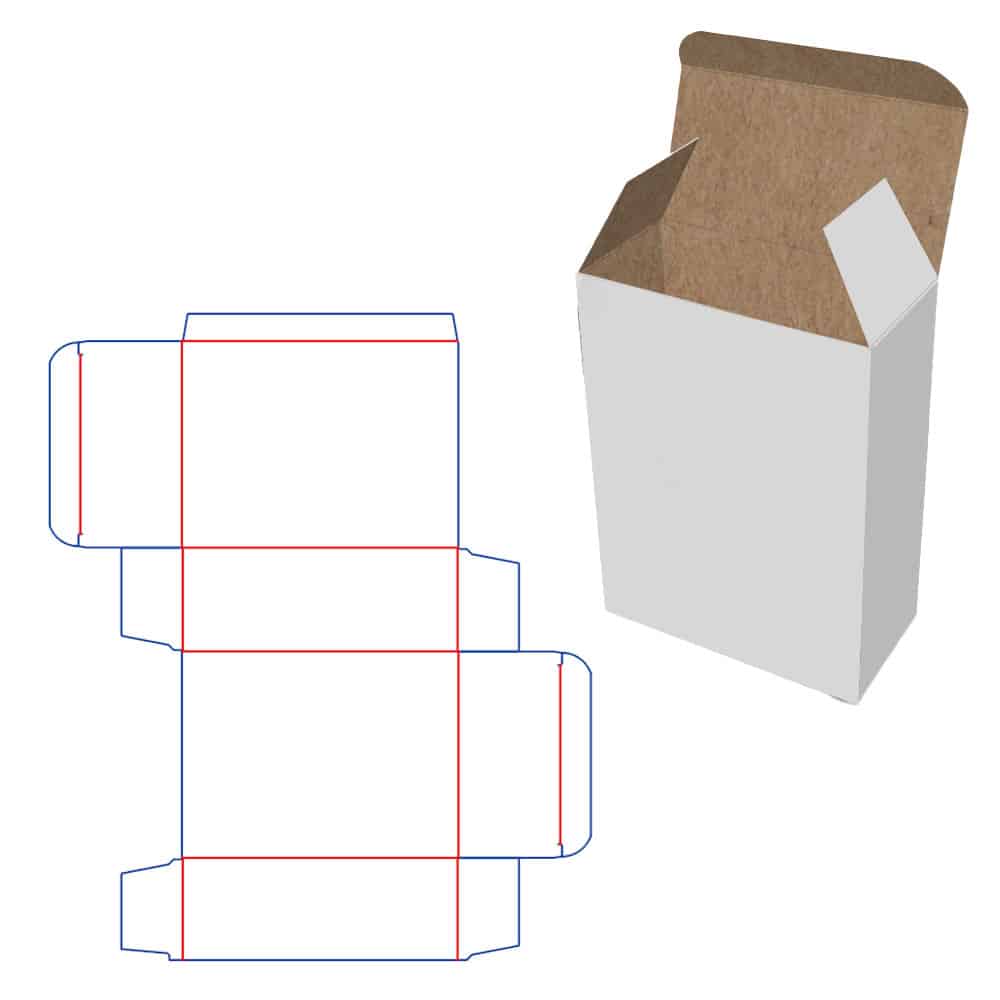
The strength of any box depends on how accurate its parts are. In box engineering, every piece must meet strict measurements. A box has four main panels and two side panels. The most important part is the “tuck,” which is the flap that closes the box. The engineer must set the right gap for the “dust flaps.” These are the small inner flaps that sit under the tuck. In good tuck box design, dust flaps are set slightly back. This stops them from bunching up or bulging when the tuck is closed. It also keeps the top panel flat and neat.
Another key part is the “score line.” This is the crease that lets the paperboard fold without cracking. The depth and width of this crease must match the board thickness. This helps the box snap together cleanly on fast packing machines. Engineers also add small slits or special scores to hold the tuck flap in place. These create a friction fit, so the box stays closed without glue. Packaging experts say these locks are important. They help the box stay shut during shaking and vibration in shipping.
The “glue tab,” also called the manufacturer’s joint, is also very important. It helps keep the box square. This tab is sealed with cold glue or hot glue. It must be placed with great care. If it dries at the wrong angle, the box can twist. Even a small error can stop the tuck flap from lining up with the side slits. Then the locking feature will not work. This shows why tuck box engineering needs high accuracy. Small details make a big difference in how well a box works.
The Geometry of the Straight Tuck End (STE) Dieline
When we look at folding carton design from a practical view, the Straight Tuck End is a clear example of good box engineering. In this design, the top and bottom flaps are attached to the same panel, usually the front of the box. Both flaps close in the same direction, toward the back. This creates a clean front look. No raw paperboard edges show at the top or bottom of the front. Because of this, it is a popular choice for products that need a neat and flush display.
From an engineering point of view, this design needs special care during cutting and folding. Both side panels fold in the same way. This creates a “draw” of material on one side. If the paperboard is too thick, the box can lean or tip. To fix this, engineers adjust the depth of the score lines. Technical guides also note that Straight Tuck End boxes are often made for manual assembly. This is because the flaps are the same and easy to fold. However, this design does not stack as efficiently on large sheets. This can raise the cost per unit in large production runs.
The Mechanics of the Reverse Tuck End (RTE) Dieline
Unlike the Straight Tuck End, the Reverse Tuck End, or RTE, is known as a very cost-efficient tuck box design for large production runs. In this design, the top flap closes toward the back, while the bottom flap closes toward the front. The flaps move in opposite directions. This simple change allows the box shapes to fit closer together on the printing sheet. As a result, less paperboard is wasted, and material costs go down.
The RTE design also works well on automated packing lines. Its balanced shape helps the box stay square while it is being filled. This makes it more reliable at high speeds. Industry guides note that RTE boxes are a standard choice for light to medium products, such as cosmetics and medicines. Brands choose this style because it is fast to run, saves money, and still offers good strength and appearance. There is a visible seam on one side of the package, but it does not seem to be considered problematic.
Because the flaps face in opposite directions, an RTE tuck box must have balanced friction locks on both ends. This balance keeps the box from twisting when pressure is applied. It also helps stop a problem called “parallelogramming,” where a box leans or shifts to one side when pressed.
The RTE design uses the push from both the top and bottom flaps to hold the box in shape. This opposing force makes the box more stable. It helps the box stay strong, even when many boxes are stacked inside a shipping container.
Nesting and Imposition: Material Yield Efficiency Calculations
In mass production, the main goal of Tuck Box engineering is to get the most “units per sheet” from a printing press. This means fitting as many box designs as possible onto one sheet of paperboard. The choice between a Straight Tuck End (STE) and a Reverse Tuck End (RTE) affects how well the designs can be nested together. With an RTE design, flaps are on both sides, so the dust flaps of one box can fit into the empty space of the next box. This smart nesting helps reduce waste and saves material.
Engineers also must allow space for the “gripper edge” and “gutter” areas. These are needed for the press to hold the sheet and for the die-cutting blades to work properly. When placing the designs, there must be enough space between boxes to keep the steel rule die strong and accurate. The International Association of Diecutting and Diemaking (IADD) warns that poor nesting can cause “nicking,” where edges are not cut cleanly. This makes the box look rough and weak. Tuck Box engineering is a careful balance. Designers must pack boxes tightly to save material, but still leave enough room for clean cuts and smooth production.
Substrate Selection: Caliper, GSM, and Burst Strength
The strength of a box depends on the material it is made from. That is why choosing the right paperboard is a key part of Tuck Box engineering. Engineers select from materials like SBS, CUK, or CCNB based on how stiff and strong the box needs to be. They also look at the “caliper,” which means the thickness of the board. A thinner board, like 16pt, needs different creasing settings than a thicker board, like 24pt. This helps the box fold cleanly without cracking the outer layers.
Grain direction is another very important factor. The paper fibers must run in the right direction compared to the score lines. In most cases, the grain should run parallel to the vertical folds of the box. This gives better stacking strength and keeps the panels from bending outward. Research by TAPPI shows that if the grain is placed the wrong way, the box can lose up to 30% of its vertical strength. This can cause problems when boxes are stacked in stores or during shipping.
Engineers also study the surface friction of the paperboard. This is called the “coefficient of friction.” If the surface is too slippery, the tuck flaps may open during handling. If it is too sticky, boxes may cling together on fast packing lines and cause jams. To avoid this, engineers test the “slide angle” of the surface. This helps them choose the right coating so the box closes well and runs smoothly on machines.
Friction-Fit vs. Locking Slits: Mechanical Closure Security
The way a box closes is a very important part of Tuck Box engineering. It affects how well the box stays shut when there is pressure from the product inside. The simplest method is called a “friction-fit” tuck. In this design, the tuck flap stays closed only because it fits tightly between the sides of the box. To make this work, engineers make the tuck flap slightly wider than the opening. This extra width creates tension and keeps the flap in place. It looks clean and neat, but it must be very precise. If the size is off even a little, the box can open by itself.
For added strength, engineers often use “lock slits,” also known as slit locks or pie-crust locks. These are small curved cuts made where the tuck flap meets the top panel. When the flap slides in, these cuts catch onto the dust flaps inside the box. This creates a small “click” that helps lock the box shut. Studies by PMMI show that slit locks are common for heavier products. They stop the weight inside the box from pushing the bottom flap open.
Good Box engineering makes sure these lock slits are cut just right. They must be deep enough to hold the dust flap firmly. At the same time, they should not be so deep that they weaken the fold of the main panel. When done correctly, this design keeps the box strong, secure, and easy to use.

The “Gaping” Phenomenon: Structural Weakness in Flap Alignment
One of the most common technical failures in Tuck Box engineering, related to structural defects, is “gaping”: the failure of the top or bottom panel to sit flush against the dust flaps. This occurs when tolerances are not correctly calculated for the thickness of the board during folding, and the main tuck flap “bows,” or arches upward. In engineering Tuck Boxes, gaping is more than just an aesthetic issue; the inability to properly exclude dust and contaminants seriously compromises a utility requirement critical to pharmaceutical or food-contact packaging. To fix this, engineers bring in “pre-breaking” of the scores during folding-gluing so that the fibers are loosened sufficiently to lay flat. A contributing factor in the occurrence of “gape” in Tuck Box design is the improper design size of the “dust flaps”. If the “dust flaps” are of improper length, they will meet in the middle and overlap, generating what is called the “hump”, which pushes out the main “tuck flap”. One of the most important principles of Tuck Box design is the computation of what is called “a clearance gap between the two internal “dust flaps”. This is done depending on the size of the case, usually between 1/32 and 1/16 inch. This allows the “main tuck flap” to “glide into the throat of the box”. According to TAPPI guidelines for structural integrity, “a flat horizontal configuration is required for secondary custom packaging, and even small ‘gape’ will cause the box to ‘snag and tear’ while being inserted into a larger corrugated shipping case”.
Moreover, the “memory” of paperboard—a return of the fiber to its flat state after being pressed into the box—needs to be counteracted by clever design of the Tuck Box. Utilizing the “reverse score” or “double crease” on the principal hinge, one can decrease the “spring back tension of the flap.” This guarantees that once the Tuck Box is closed, it will remain that way through its own weight, which is the basic functionality purpose of ensuring that the items inside are protected without using additional tape or shrink wrap.
Automation Compatibility: STE vs. RTE on the Filling Line
In the industrial area, the effectiveness of Tuck Box engineering is gauged by “throughput,” which translates to the number of successfully filled and closed units per minute. In high-speed carton packing machines, there is a need for the carton to “square up instantly via mechanical fingers, resisting buckling.” According to Tuck Box engineering, “the reverse tuck end is preferable to other types of ends for automation applications because the flaps reverse, creating an equal resistance to keep the box rectangular when the product is inserted.”
Unfortunately, according to Tuck Box engineering, when a Tuck Box is not engineered properly regarding “opening force,” which is “the amount of pressure needed to open the flat packaging material to its 3D shape,” the machine may fail to pick or open the package, which results in line stops and is expensive. The technical requirements for the automated Tuck Box engineering should, furthermore, include the “tuck-in” speed of the mechanical tucker arms. According to the Packaging Machinery Manufacturers Institute (PMMI), the vacuum cups, which remove the boxes from the magazine, act through the porosity and smooth surface of the board. If the Tuck Box engineering is not done in regard to the special suction requirement of the machine, the boxes may either skip a cycle and feed twice, or vice versa. Lastly, the “dust flaps” must be designed with a subsidiary “lead-in” angle, usually a 15-degree tapered surface, to prevent them from jamming as the goods are pushed through by the automated plunger.
Load-Bearing Limits: Vertical Compression and Stacking Strength
One of the principal service functions for which Tuck Box engineering is applied is the capacity of the box to carry weight when stacked on a pallet. This is known technically as the ‘Box Compression Test’ (BCT) value. Though the vertical strength comes from the paperboard, it is the Tuck Box engineering that decides its distribution. If done in the Straight Tuck End (STE), then the double-layered paperboard in the front and back corners does have an added advantage in vertical column strength. But for larger products, ‘internal supports’ or ‘fifth-panel’ extensions of the Tuck Box are usually employed to reduce the bulging of the side walls caused by the weight of the stacked boxes above.
The association between “caliper” and “stiffness” is basic to Tuck Box engineering calculations. For instance, when working with 20pt SBS media, there is its “Taber Stiffness,” which specifies how much the material can flex when bent 15°. If the Tuck Box design is not successful in equating the board rigidity to product weight, the bottom flap can “smile” (curve downwards), which can cause the product to fall out. As reported by Smithers the weight distribution needs to be aligned below the vertical score lines because “the corners of the Tuck Box contribute 60% to 80% of its total stacking strength.”
For maximizing the carrying capacity, the engineering at Tuck Box must also factor in other environmental aspects of the supply chain. For example, a high water content deteriorates the flexibility of paperboard by more than 50%, thus converting a hard box into a soft paper wrapper. It must be countered by applying water-resistant coatings or increasing its sizing while pulping. Thus, the application engineering utility of the pack will not get compromised at any point from its factory till it reaches the hands of the final customer.
Grain Direction and Its Impact on Score Line Integrity
Of the key, yet commonly improperly addressed elements of Tuck Box engineering, paperboard grain orientation to the folds of the box is perhaps the most important. Paperboard is a textured paper substance, which, during its processing, orients its wood pulp parallel to the paperboard machine direction. In properly done Tuck Box engineering, “Grain Direction is always mostly vertical, or parallel to the first side seam and vertical scores.” This is important because the pulp is, of course, much stronger when stretched, not when crossed. To properly orient paperboard, failing to address this issue in specific Tuck Box engineering requirements can lead to “crack or burst” horizontal scores, also known as the “tuck flaps’ scores,” which can leave the interior visible white wood pulp, effectively shortening the hinge’s life cycle.
“Technical trade-off” is another way of expressing the challenge that Tuck Box engineers face, where they have to “trade off” stiffness and foldability. Even if a vertical grain is more advantageous from the point of view of overall stacking strength, the tuck flaps will spring back or resist the force of the fold since the fiber is being folded against the grain. This is the technical problem for the engineers, who have to determine the exact crease depth necessary for the breakout of the internal fiber bind without damaging the liner. This will cost the carton 20% of its stiffness if the grain is not properly aligned, as per the TAPPI technical specifications.
Dust Flap Engineering: Protecting Internal Contents from Contaminants
Though the main tuck flap is the main closure point, “dust flaps” are the unsung heroes of Tuck Box design. The secondary flaps, found on the side panels, fold inward, thereby forming a “bridge” between the side walls and the top panel. The first purpose of a dust flap is the exclusion of “environmental contaminants” (dust, lint, or light) from the package. More refined designs for Tuck Boxes involve “stepping or tapering” the dust flaps for a smoother transition. This is necessary to prevent the main tuck from catching on the edge of the dust flap when inserted, thus eliminating common problems found on automated high-speed wrapping lines.
Protection aside, the dust flaps are importantly related to “squareness” and the support provided by the box. From a Tuck Box engineering perspective, the length of a dust flap must be considered as a factor, such that when flaps are not long enough, they no longer offer a seal that completely prevents the “void corners” entry of debris. On the other hand, a “crowning” occurs in a top panel such that when they are long enough, these will overlap in the middle, resulting in a bulged top panel, a condition known in Tuck Box engineering as crowning. As depicted in the PMMI packages article in the archive story, a dust flap that completely covers 60-75% of the box width will be ideal in fully supporting the top tuck.
Finally, the “shoulder” on the dust flap is commonly utilized as a mechanical landing for the main tuck’s locking slits. With the “notch” created in the dust flap by Tuck Box Engineering, a specific area is designed for the slit-lock to land in. Such interaction results in the creation of a multi-point locking system that provides increased pulling force against opening the flap. Such a level of utility ensures that in case the Tuck Box is tipped over or falls, the weight of the product will be evenly distributed through the dust flaps instead of being concentrated at a friction point.
Die-Cutting Tolerances: Ensuring Repeatable Assembly Precision
The translation of a digital dieline into a tangible object demands a degree of Tuck Box engineering that is simply not possible by hand, and requires a degree of precision during the die-cutting stage that is simply unattainable by human hand. Steel rule dies need to be arranged with a tolerance of less than 0.005 inches to guarantee that every fold, every slit, and every tuck is perfectly in line over a run of thousands. The “make-ready” stage in the Tuck Box engineering process, where the pressman needs to adjust the cutting blades’ pressure, is a problem area, where excessive force would merely crunch the edges of the paperboard, and inadequate force creates “hanging chads” that make the top flaps impossible to open.
Logistics and Shipping: Flat-Packed Volume and KDF Analysis
From the logistics point of view, the primary utility of the folding carton is to be shipped “Knock-Down Flat” (KDF). Successful Tuck Box engineering has to account for the total volume of these flat-packed units to optimize palletization and reduce carbon footprints during transport. Because a Tuck Box is essentially a two-dimensional object until it is erected, engineers can pack thousands of units into one shipping case. As noted in the Logistics Management technical reports, the “stacking height” of KDF cartons is one critical metric in Tuck Box engineering because even a minor variation in board caliper can give a pallet several inches taller than predicted, leading to issues with standard shipping container clearances.
Technical Summary: Decision Matrix for Engineers
In all, Tuck Box engineering is a complex discipline that bridges the divide between material science and mechanical functionality. When deciding between Straight Tuck and Reverse Tuck, for example, an engineer must weigh the RTE’s superior material yield and automation compatibility against the STE’s arguably cleaner visuals. Every component-from the grain direction of the paperboard to the taper of the dust flaps-must be calculated to ensure the Tuck Box fulfills its primary duty: product protection. By meeting the technical standards set forth by organizations like TAPPI and PMMI, manufacturers can ensure that their Tuck Box engineering results in a package that’s as efficient to produce as it is reliable to use.
Final Technical Comparison Table
Engineering Variable | Straight Tuck (STE) | Reverse Tuck (RTE) |
Material Yield | Lower (Less efficient nesting) | Higher (Maximum nesting efficiency) |
Assembly Style | Ideal for Manual/Hand-loading | Ideal for High-speed Automation |
Front Edge Appearance | Clean (No raw edges visible) | One raw edge visible on front panel |
Primary Utility | Best for Luxury/Heavier Items | Best for High-volume/Mass-market |
Conclusion: The Future of Tuck Box Engineering
A package’s structural integrity is never an accident-it’s a function of the rigorous Tuck Box engineering, accounting for every Newton of force and every micron of paperboard thickness. As global supply chains increasingly move toward sustainable, plastic-free alternatives, high-performance folding cartons will be more relied upon, making precision in Tuck Box engineering more vital than ever. Engineers can ensure that their package remains a functional asset instead of a structural liability by focusing on prioritizing the relationship that exists among mechanical locks, grain orientation, and material yield. Mastering the technical nuances of Tuck Box engineering allows the brands to strike the perfect balance between manufacturing economy and product security.
Technical Q&A: Tuck Box Engineering
Q1: What is the technically superior type of tuck for heavy mechanical components?
From an engineering point of view, the Straight Tuck End (STE) box with slit locks reinforced to withstand heavier objects is the most commonly used design for heavier products. This is because the flaps can be aligned on the same side to provide a stiffer vertical column, making the box less susceptible to “bulging” when containing metal parts.
Q2: How does the board caliper influence Tuck Box design in automated lines?
Caliper is everything. Board thickness needs to be within the specified range. This would result in an “opening force” that’s too high, ultimately leading to the vacuum arms failing. The “crease matrix” of the die-line needs to be adjusted according to the board thickness to engineer a clean crease at 90 degrees.
Q3: Can the engineering done by Tuck Box remove the requirement for security seals and/or tape?
Yes. Using “tamper-evident” locks and friction dust seals, Tuck Box engineering can develop what is termed “frangible” closure systems that provide visible indications of opening. But for maximum security, most technical specifications still advocate the use of a spot glue application or the installation of what is termed a “zip strip” into the dieline.
Q4: Why is “spring-back” a failure in Tuck Box engineering?
Spring-back takes place if the paperboard fibers have not been sufficiently underscored in the scoring process. In Tuck Box Engineering, this is a failure because it will not keep the tuck flap in place, resulting in what is called ‘gaping,’ which may either catch on machinery or allow dust to seep into the package.
Q5: Are there any costs involved in using STE and RTE in engineering in Tuck Box?
Technically, the cost-effectiveness of the RTE (Reverse Tuck) packaging design is superior. Since the flaps are on opposite sides, it enables the “nested” dieline design of the Tuck Box. This design consequently helps in reducing the expenses of the paperboard by up to 15-20%, considering that the design helps in reducing the paperboard wastage.