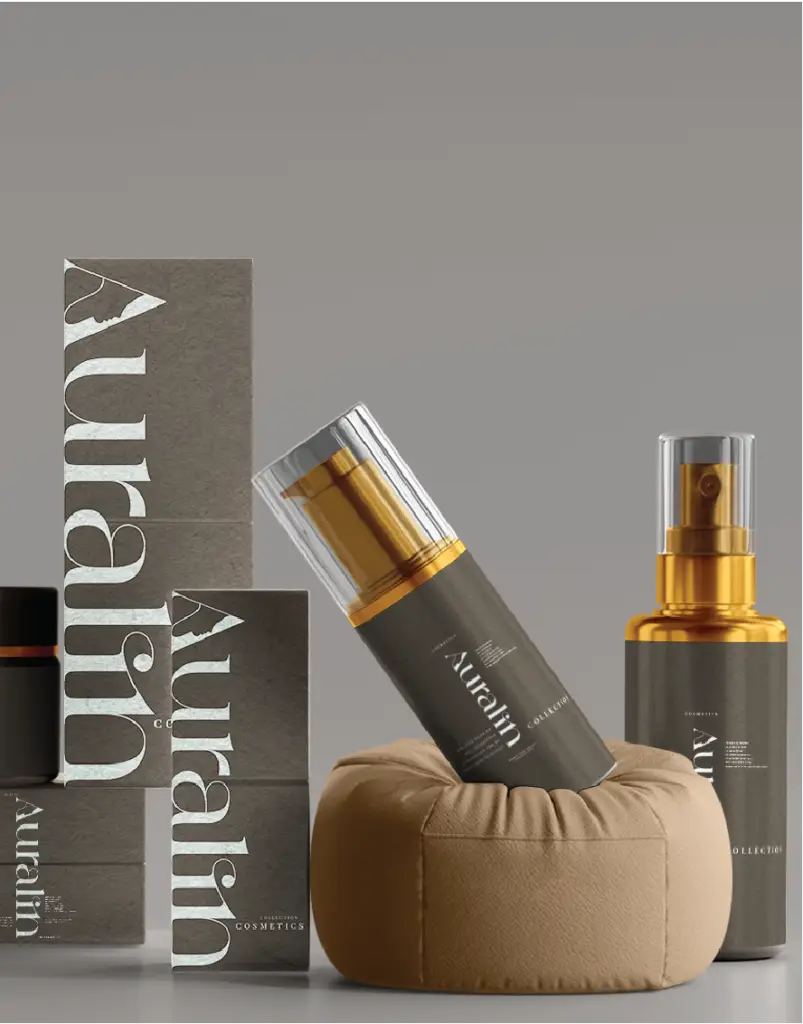


8 Exclusive Rigid Box Packaging Styles That Instantly Transform Luxury Brand Perception and Drive Premium Sales
Every premium brand dreams of that unforgettable moment when a customer lifts a perfectly crafted rigid box, feels its solid weight, admires its flawless finish, and instantly senses the value hidden inside. That feeling is never accidental, it is carefully designed through every detail of the packaging, from the structure and materials to the texture, finishing, and interior presentation. Luxury rigid box packaging does far more than protect a product, it creates anticipation, communicates exclusivity, and transforms the unboxing experience into an emotional moment that makes customers believe they are holding something truly exceptional.
Rigid boxes are the gold standard of premium product packaging. Used by the world’s most prestigious brands across jewellery, cosmetics, fine food, gifting, CBD products, and luxury retail, they communicate quality, protect high-value products, and create unboxing experiences that customers remember and share. In a market where consumers are increasingly sceptical of brand claims made in advertising, a rigid box makes the quality claim physically, tangibly, undeniably.
This guide presents eight exclusive rigid box packaging styles that are delivering measurable commercial results for premium and luxury brands right now. You will also find guidance on materials, finishing techniques, structural specifications, and the most costly design mistakes to avoid — plus clear answers to the most frequently searched questions about sourcing and using rigid box packaging. For a foundational overview of why rigid packaging commands a premium position in the market, see our comprehensive guide Rigid Box Packaging Explained: Luxury Packaging for Premium Brands.
Why rigid box packaging styles define luxury brand perception in 2026
Premium brands face a fundamental challenge: how do communicate product quality before the customer has touched, tasted, worn, or experienced what is inside? In physical retail, the product sits on a shelf and the packaging makes the first impression. In e-commerce, the box arrives at the door and the unboxing moment is the first physical brand experience the customer has. In both contexts, rigid box packaging delivers a quality signal that no other packaging format can replicate. According to the U.S. Small Business Administration, consistent premium brand presentation across all customer touchpoints — including physical packaging — measurably increases perceived value and customer willingness to pay a price premium (SBA: Strengthen Your Brand).
Rigid boxes achieve this effect through three physical properties that folding cartons, tuck boxes, and flexible packaging simply cannot match. First, structural rigidity: a rigid box packaging does not flex, crumple, or deform when handled — it holds its shape under pressure, communicating permanence and solidity. Second, weight: a well-constructed rigid box has a satisfying heft that subconsciously signals substance and investment.
Third, surface quality: the wrapped exterior of a rigid box packaging accepts finishing treatments — soft-touch lamination, foil stamping, embossing, linen wrapping — that produce tactile and visual richness impossible on a standard folding carton. These three properties combined are why we argued in Why Rigid Packaging Builds Instant Trust With Customers that rigid packaging is the single most powerful trust-building tool available to a premium brand.
How rigid box structure communicates product value before it is opened
The structural language of a rigid box packaging communicates a specific message: this brand does not cut corners. The greyboard core — typically 1,200 to 3,000 gsm depending on the box size and weight requirements — gives the box its characteristic solidity. The wrapping paper, fabric, or laminated stock applied over the greyboard provides the visual and tactile surface quality.
The combination of these two layers creates a packaging object that feels fundamentally different from a printed folding carton, regardless of how elaborate that carton’s print design might be. We examined the structural mechanics behind this perception in detail in Rigid Box Structural Integrity: Why Luxury Brands Use Rigid Packaging, including the greyboard specifications used by different product categories.
The proven link between rigid packaging quality and premium customer trust
The Federal Trade Commission identifies truthful, transparent, and professionally presented brand experiences as foundational to the consumer trust that drives premium pricing and repeat purchase behaviour (FTC: Truth in Advertising). In packaging terms, this means the physical quality of box must match the quality promise of product. A luxury perfume in a flimsy box creates immediate cognitive dissonance — the customer questions whether they paid the right price. A luxury perfume in a perfectly constructed, soft-touch laminated rigid box packaging with a satin-lined interior confirms their decision. Rigid boxes eliminate that dissonance entirely because their physical quality is self-evident.
This trust mechanism extends beyond the first purchase. Customers who receive products in premium rigid boxes are significantly more likely to keep the box — using it for storage, display, or regifting — extending the brand’s presence in their home and reinforcing their positive association with the brand over time. We explored this loyalty-building mechanism in Why Rigid Boxes Are Ideal for Luxury Brands and our analysis of the 10 Rigid Packaging Advantages That Build Premium Perception.
8 exclusive rigid box packaging styles for luxury and premium brands
- Magnetic closure rigid boxes for a dramatic, high-impact opening experience
The magnetic closure rigid box packaging is the most commercially successful luxury packaging format in the premium market today. Two embedded rare-earth magnets — one in the lid, one in the base — create a satisfying, definitive closing action that communicates precision engineering and premium construction. The opening experience is equally compelling: the lid lifts smoothly and falls open at a natural angle, revealing the interior in a single, controlled gesture that feels rehearsed and intentional.
Magnetic closure boxes are ideal for cosmetic box products, high-end gift box sets, jewellery presentation, premium CBD box lines, and any product where the unboxing moment is a key part of the brand experience. They photograph and film exceptionally well, making them the preferred choice for brands whose customers create unboxing content for social media. The magnetic mechanism adds a small cost premium over standard lid-and-base constructions, but consistently delivers a disproportionate return in perceived value. For a complete technical and design guide to this format, see our dedicated article Rigid Boxes with Magnetic Closures: Premium Packaging Explained and our guide to the Elegant Custom Magnetic Rigid Box for Luxury Packaging.
- Rigid two-piece lid and base boxes — the timeless standard of luxury presentation
The two-piece rigid box — a separate lid that sits over a base — is the oldest and most widely recognised luxury packaging format in the world. It is the format used for the Tiffany blue box, the Cartier red box, the Chanel white box. Its longevity is not coincidental: the two-piece construction creates a moment of revelation — the lid is lifted and the product is revealed — that is simple, elegant, and universally understood as a signal of premium quality. There is no mechanism to navigate, no zipper to pull, no tape to remove. Just the lift of a well-fitted lid.
The two-piece format is suitable for virtually every premium product category: jewellery boxes, luxury food box sets, premium candle box packaging, high-end soap box gifting, cosmetic box collections, and rigid gift box presentations. The fit between lid and base is critical — too tight and the box is difficult to open; too loose and the box rattles and feels cheap.
A correctly engineered two-piece rigid box packaging has a smooth, controlled resistance that opens and closes with exactly the right amount of effort. We covered the construction standards and material specifications for this format in Luxury Rigid Two-Piece Box Packaging: The Ultimate Premium Branding Solution.
- Rigid drawer boxes with ribbon pull for effortless, theatrical product reveals
The rigid drawer box — also known as a sliding box or matchbox-style rigid box — features an inner tray that slides out of an outer sleeve, typically assisted by a ribbon pull tab. This format creates an amazing theatrical product reveal: the customer holds the outer sleeve, pulls the ribbon, and the inner drawer glides smoothly out to reveal the product inside. The gesture is unhurried and deliberate — it is physically impossible to open a drawer box quickly, which forces the customer to slow down and experience the reveal rather than rushing to the product.
This is why drawer boxes are matter effective for jewellery packaging, premium tincture box products, luxury candle box presentations, and any product where the individual item deserves a slow, focused reveal. The outer sleeve provides a full branding canvas — typically wrapped in printed paper, fabric, or soft-touch laminate — while the inner drawer can be lined with velvet, satin, or foam to create a contrasting interior luxury.
For inspiration on rigid box packaging styles that create this kind of theatrical impact, see our guide to 9 Rigid Box Styles That Instantly Elevate Product Value and our overview of 7 Rigid Packaging Styles That Add Instant Prestige to Luxury Products.
- Rigid shoulder boxes with contrast neck for layered luxury brand storytelling
The shoulder rigid box is a sophisticated three-component construction: an outer lid, an inner shoulder (a recessed collar that sits inside the lid), and a base tray. When the lid is removed, it reveals the shoulder — often in a contrasting colour or material — before the product itself is visible. This layered reveal creates a moment of anticipation between opening the lid and seeing the product that is unique to the shoulder box format and extremely effective at generating the emotional engagement that drives sharing behaviour.
Shoulder boxes are widely used in premium perfume packaging, luxury cosmetic box presentations, high-end gift box sets, and prestige CBD box lines where brand story and product origin narrative are central to the purchase decision. The contrast between the outer lid material and the shoulder material is a design element in its own right — a black outer lid with a gold foil-stamped inner shoulder communicates a specific luxury language that customers associate with prestige brands. For the full range of creative rigid box styles available to premium brands, see our articles on 5 Creative Rigid Box Styles That Elevate Luxury Branding and 5 Rigid Box Luxury Styles That Add Prestige to Any Brand.
- Rigid book-style boxes that open like a story for immersive unboxing moments
The rigid book-style box — hinged on one side and opening like a hardcover book — is one of the most immersive rigid box formats available. The opening gesture is deeply familiar and culturally loaded: opening a book is an act of beginning a story, and this association transfers powerfully to the product inside. For brands whose products carry a strong narrative — a single-origin chocolate with a provenance story, a craft spirit with a heritage identity, a luxury skincare line with a scientific origin narrative — the book-style rigid box packaging is the format that most naturally accommodates and amplifies that story.
The interior of a book-style box offers extraordinary design freedom. The left panel — the equivalent of a book’s opening page — can carry brand copy, product story, ingredient information, or a founder’s letter. The right panel presents the product itself, nestled in a custom foam or fabric insert. This two-panel interior creates a structured narrative space that no other rigid box packaging format offers. For premium gift box brands, luxury food box collections, and high-end candle box sets, the book-style format consistently delivers the highest customer satisfaction scores of any rigid box style. See our article on 10 Eye-Catching Rigid Box Design Secrets That Elevate Luxury Brands for specific interior layout techniques that maximise the impact of this format.
- Rigid boxes with linen and soft-touch finishes for sensory brand differentiation
While most rigid box styles are defined by their structural format, linen-wrapped and soft-touch laminated rigid boxes are defined by their tactile quality — and in luxury packaging, touch is as important as sight. A rigid box packaging wrapped in natural linen fabric has a texture that is immediately distinctive: slightly rough, organic, warm, and unmistakably premium. It communicates craft, authenticity, and a connection to natural materials that printed paper or laminated stock cannot replicate. For artisan food box brands, natural cosmetic box lines, craft candle box collections, and premium soap box gifting, linen wrapping is the most powerful material choices available.
Soft-touch lamination — a matte polyurethane coating applied over printed paper wrapping — creates a different but equally distinctive tactile experience: velvety, smooth, and almost impossibly soft. It is the material used on the packaging of prestige cosmetics and luxury technology products precisely because it triggers an immediate association with quality and sophistication.
We dedicated a full article to the design and material science of these finishes in The Art of Touch: Elevating Luxury Rigid Box Design with Linen and Soft-Touch Finishes, covering the specific material combinations, greyboard weights, and printing specifications that achieve the best results.
- Rigid boxes with custom foam or velvet inserts for jewellery and high-value products
A rigid box without an interior insert is a box that holds a product. A rigid box packaging with a precision-cut custom insert is a box that presents a product. The distinction matters enormously in luxury packaging. A custom foam insert — cut to the exact dimensions of each product component — holds every item in a fixed, beautiful arrangement that cannot shift during transit. A velvet-lined tray elevates jewellery, watches, and luxury accessories to the level of museum presentation. A satin pillow insert creates a soft, cushioned reveal that makes even a small product feel significant.
For jewellery packaging specifically, the insert is not just a presentation element — it is the product experience. The ring, the bracelet, or the pendant sits in its insert and the customer’s first sight of it is perfectly staged. For tincture box products, CBD box presentations, and luxury skincare, custom foam inserts protect fragile glass components while creating a visual order that communicates clinical precision and product confidence.
We explored the full range of insert materials, construction methods, and design principles in Rigid Boxes with Custom Inserts: Maximum Protection, Maximum Appeal and our earlier guide Rigid Boxes with Inserts: Maximum Protection, Maximum Appeal.
- Eco-conscious rigid boxes with sustainable materials and luxury appeal
The fastest-growing segment in luxury rigid box packaging is eco-conscious construction — rigid boxes made from recycled greyboard, wrapped in FSC-certified papers, printed with soy-based inks, and finished with water-based coatings rather than plastic lamination. For a growing proportion of premium consumers, sustainability credentials are now a prerequisite for luxury brand loyalty, not merely a nice-to-have. A brand that presents its premium product in a genuinely sustainable rigid box is making a values statement that resonates with this audience as powerfully as a foil-stamped logo resonates with a traditional luxury buyer.
The challenge for eco-conscious rigid boxes has historically been achieving the visual and tactile quality associated with luxury packaging using sustainable materials. That challenge has largely been resolved. Recycled greyboard is now available at the same grammage and rigidity as virgin board. Water-based soft-touch coatings are visually and tactilely indistinguishable from plastic-laminated equivalents. FSC-certified papers accept embossing, foil stamping, and spot UV as readily as standard papers. The U.S. Environmental Protection Agency provides detailed guidance for businesses seeking to make their packaging choices more sustainable without compromising product quality (EPA: Sustainable Packaging Guidance). For the latest trends driving luxury brands toward sustainable rigid packaging, see our article on Rigid Packaging Trends: Why Luxury Brands Are Switching.
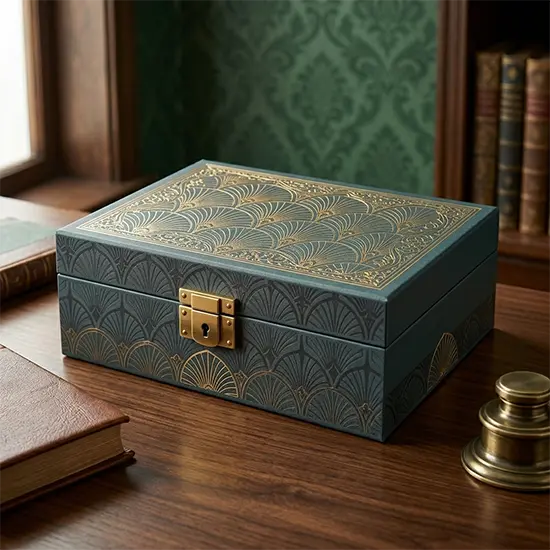
How to choose the right rigid box style for product and brand
With eight distinct rigid box styles available — each with different structural, material, and cost profiles — choosing the right format requires a systematic approach that matches packaging to product, brand positioning, and commercial objectives.
- Matching rigid box structure to product weight, fragility, and dimensions
The structural specification of rigid box — greyboard thickness, base depth, lid overhang — must be determined by the physical properties of product before any aesthetic decisions are made. Products weighing over 500 grams require a greyboard core of at least 2,000 gsm to maintain structural integrity under load. Fragile products — glass tincture bottles, ceramic candle vessels, crystal gift items — require a base depth sufficient to accommodate a custom foam or pulp insert that holds the product clear of the box walls. Products with irregular dimensions — jewellery sets, multi-component cosmetic box collections — require a custom interior layout designed specifically for that product configuration.
The two-piece lid-and-base format is the most versatile structural choice across weight ranges and product dimensions. The magnetic closure format adds a mechanism that requires sufficient lid depth and wall thickness to seat the magnets correctly. The drawer format requires a sleeve-to-tray tolerance that is tight enough to create resistance but loose enough to slide freely. For the full structural specification framework used by professional rigid box manufacturers, see our technical guide The Ultimate Guide to Rigid Boxes: Strength Meets Elegance.
- Rigid box materials: greyboard weight, wrapping paper, and lining options
Every rigid box is built from three material layers: the greyboard core, the external wrapping material, and the interior lining. The greyboard core — available from 800 gsm (lightweight, suitable for small cosmetic or soap box packaging) to 3,000 gsm (heavyweight, suitable for large gift box sets or heavy product categories) — determines structural rigidity and box weight.
The external wrapping material determines visual and tactile surface quality: coated art paper for full-colour printing, soft-touch laminated paper for a velvety exterior, natural linen for an artisan finish, or specialty papers (metallic, pearlescent, duplex-coated) for distinctive visual effects.
The interior lining — typically a lighter weight paper, fabric, or foam — determines the interior experience. A plain white paper lining is standard for most commercial rigid boxes. A printed interior lining — with brand colours, product story copy, or a signature pattern — transforms the box opening into a branded experience. Velvet, satin, or foam lining is used for jewellery, watches, and other high-value items where the product must be held and displayed rather than simply contained. We explored the full material matrix for luxury rigid boxes in How Rigid Boxes Enhance Product Value and our guide to How to Add Premium Touches to Your Rigid Packaging Without Overspending.
Rigid box finishing techniques that amplify luxury brand perception
The finishing treatment applied to a rigid box exterior is what separates a good-looking box from a genuinely luxurious one. Finishing techniques add visual depth, tactile interest, and brand specificity that printing alone cannot achieve.
- Foil stamping, embossing, and spot UV on rigid boxes
Foil stamping applies a metallic or holographic foil layer over the box surface using heat and pressure — the result is a crisp, reflective brand mark that catches light and communicates prestige. Gold and silver foils are the most traditional choices for luxury brands; rose gold and holographic foils are increasingly popular with contemporary premium brands targeting younger affluent consumers. Embossing creates a three-dimensional raised relief in the box surface — a logo, a pattern, or a decorative border — that is visible in changing light and immediately felt when the box is handled. Spot UV coating applies a clear high-gloss varnish over specific design elements, creating a contrast between the matte box surface and the gloss-coated detail that is both visually striking and tactilely interesting.
These three techniques are most powerful when used in combination: a soft-touch matte exterior with a foil-stamped logo and an embossed border creates a layered sensory experience that references luxury across multiple modalities simultaneously — touch, sight, and the subconscious acoustic of running a fingertip across the embossed surface. For specific finishing combinations and their commercial impact across different product categories, see 9 Stunning Rigid Packaging Finishes That Create Premium Appeal, 10 Premium Rigid Box Finishes That Define Modern Luxury Branding, and our guide to 5 Premium Rigid Box Finishes That Elevate Product Value.
- Soft-touch lamination and linen wrapping for tactile luxury
Of all the finishing treatments available for rigid boxes, soft-touch lamination and linen wrapping generate the strongest and most immediate positive response from customers. Soft-touch lamination — a thin polyurethane coating applied over the printed exterior — creates a surface that feels warm, velvety, and distinctly unlike standard printed paper. It is the tactile equivalent of a brand statement: this box cost more to produce than a standard box, and that investment is intentional.
Linen wrapping produces a different but equally powerful effect — the natural texture of woven fabric communicates craft, heritage, and authenticity that no printed finish can replicate.
Both finishes photograph beautifully — soft-touch laminated surfaces absorb light evenly without glare, while linen-wrapped boxes have a natural texture that adds depth to product photography. For brands whose packaging appears in editorial photography, brand lookbooks, or social media content, this photogenic quality is a significant commercial advantage. For detailed guidance on applying these finishes correctly and cost-effectively, see our specialist guide The Art of Touch: Elevating Luxury Rigid Box Design with Linen and Soft-Touch Finishes and our broader overview of Rigid Box Luxury Finishes That Boost Perceived Value.
- Rigid box packaging mistakes that undermine luxury brand positioning
Even premium brands with strong products and substantial packaging budgets make avoidable rigid box design and specification mistakes that undermine the very luxury positioning they are trying to create. Here are the most common and most damaging errors.
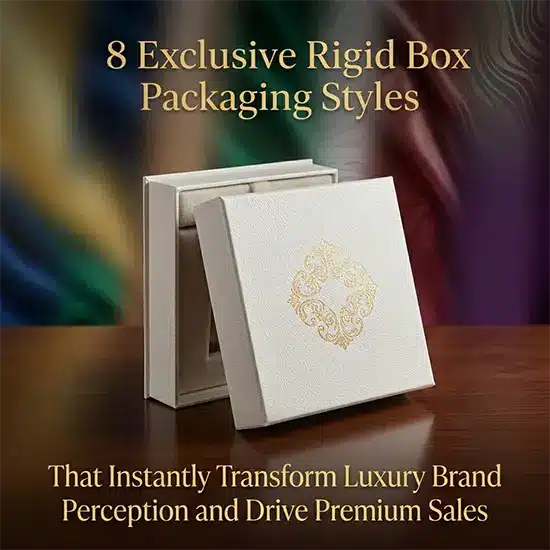
Choosing style over structural integrity and product protection
The most expensive rigid box design mistake is prioritising visual impact over structural performance. A beautifully finished box that fails to protect its contents — a lid that warps in transit, a base that collapses under the product’s weight, an insert that allows fragile items to shift — destroys the luxury brand promise at the exact moment it should be confirmed.
A customer who opens a premium rigid box to find a damaged product does not blame the courier: they blame the brand. The perception of quality created by the box exterior is immediately and completely demolished by what is found inside.
Always specify rigid box greyboard weight based on the product’s weight and fragility requirements — not on cost reduction. Always prototype and drop-test filled boxes before committing to production runs. Always design interior insert to hold every component securely with no movement possible. For the full structural specification and testing framework, see Rigid Box Structural Integrity: Why Luxury Brands Use Rigid Packaging and our comparison of Rigid Boxes vs. Folding Cartons: Which is Best for Luxury Packaging?.
- Ignoring the interior experience and insert design
Many rigid box buyers invest carefully in the exterior — the wrapping paper, the finish, the foil stamp — and then accept a generic plain white paper interior with no custom insert. This is the luxury packaging equivalent of furnishing the front of a house beautifully and leaving the interior empty. The interior of a rigid box is the space where the customer’s emotional peak occurs: the moment the lid opens and they see the product for the first time.
A beautifully designed, correctly fitted interior insert makes that moment extraordinary. A plain paper interior makes it ordinary.
Interior design investment does not need to be expensive. A printed interior paper in brand colours costs almost nothing more than a plain white lining. A custom-cut foam insert is a modest per-unit cost that eliminates the need for void fill and dramatically elevates the presentation. A single branded insert card sitting on top of the product adds a personal touchpoint at zero structural cost. For the full range of insert types, their costs, and their impact on customer experience across different product categories — from tuck box products to gift box sets to rigid jewellery boxes — see Rigid Boxes with Custom Inserts for Product Protection and our comprehensive guide to 11 Powerful Rigid Box Packaging Ideas That Instantly Boost Luxury Brand Appeal.
Frequently asked questions
Where can I buy custom rigid boxes for my luxury brand?
Custom rigid boxes are available through specialist luxury packaging suppliers who offer full structural customisation, custom interior inserts, and premium finishing treatments. packifyme.com offers custom rigid boxes across all major styles — two-piece lid and base, magnetic closure, drawer, book-style, and shoulder formats — with low minimum order quantities, full-colour printed wrapping papers, and a complete range of finishing options including foil stamping, embossing, soft-touch lamination, and linen wrapping.
Sample boxes are available before production commitment, which is essential when specifying premium finishing treatments. When sourcing rigid boxes for food box or CBD box products, confirm that the interior lining and insert materials meet food-safe standards — the U.S. Food and Drug Administration provides packaging material safety guidance at FDA: Food Labeling and Packaging.
For a comprehensive buyer’s guide to rigid box types, materials, and customisation options, see The Ultimate Guide to Rigid Boxes: Strength Meets Elegance.
How much do custom rigid boxes cost?
Custom rigid box pricing is determined by box style, greyboard weight, dimensions, wrapping material, finishing treatment, interior insert specification, and order quantity. As a general guide: standard two-piece rigid boxes with a single-colour printed wrapping paper and no premium finishing at 100-unit quantities typically cost $4.00 to $9.00 per unit. With full-colour printing and soft-touch lamination, costs rise to $6.00 to $14.00 per unit. Magnetic closure boxes add $1.50 to $3.00 per unit for the mechanism. Foil stamping adds $0.50 to $1.50 per unit.
Custom foam inserts add $1.00 to $3.00 per unit depending on complexity. At 500 units, all per-unit costs drop by 30 to 45 percent. Minimum order quantities for custom rigid boxes typically start at 50 to 100 units with digital printing and 300 to 500 units for offset-printed wrapping papers.
What is the difference between a rigid box and a folding carton?
A rigid box is constructed from thick greyboard (typically 1,200 to 3,000 gsm) that is cut, formed, and permanently assembled — it cannot be collapsed flat and maintains its shape under significant load. A folding carton is made from lighter paperboard (typically 250 to 450 gsm) that is die-cut, scored, and designed to fold flat for storage and shipping, then erected at the point of packing. Rigid boxes offer significantly higher structural strength, a much more substantial tactile feel, and a broader range of premium finishing options, but cost more per unit and take up more storage space.
Folding cartons are more cost-effective at scale and better suited to automated packing lines, but cannot match the perceived luxury of a well-constructed rigid box. We compared these formats in detail — including specific use cases, cost profiles, and brand positioning implications — in Rigid Boxes vs. Folding Cartons: Pros and Cons and our follow-up analysis Rigid Boxes vs. Folding Cartons: Which is Best for Luxury Packaging?.
Are rigid boxes suitable for cosmetic, food, candle, and gift box products?
Yes — rigid boxes are used across all of these product categories and many more. For cosmetic box products, a two-piece rigid box with a custom foam insert is the standard format for premium skincare and fragrance collections. For food box gifting, a magnetic closure rigid box with a printed interior and a velvet or satin base lining creates a premium hamper presentation that justifies a significant price premium.
For candle box products, a rigid drawer box or two-piece box with a foam insert that holds the candle vessel securely is both protective and visually striking. For gift box presentations across all product categories, rigid boxes are the definitive luxury choice. For CBD box and tincture box products sold at premium price points, a rigid box signals product quality and brand investment in a category where consumer trust is still being established. When using rigid boxes for food or CBD products, always verify that interior lining materials and insert specifications comply with applicable FDA packaging safety standards (FDA: Food Labeling and Packaging Guidance).
What rigid box style is best for jewellery packaging?
For jewellery packaging, three rigid box styles consistently outperform the alternatives. The two-piece lid-and-base box with a velvet or satin insert is the classic jewellery packaging format — it is widely recognised as a luxury presentation, it opens dramatically, and it keeps the jewellery piece perfectly positioned and protected.
The magnetic closure box is increasingly popular for higher-value jewellery collections where the opening mechanism adds a layer of theatre to the presentation. The rigid drawer box with a ribbon pull is excellent for watch and bracelet packaging where a horizontal sliding reveal suits the product’s dimensions. For the full jewellery packaging specification guide — covering insert materials, greyboard weights, and finishing treatments specific to this product category — see Jewelry Packaging with Rigid Boxes: A Luxe Approach and our detailed guide Rigid Box Packaging for Jewelry: A Luxe Presentation Guide.
How do rigid boxes compare to plastic packaging for premium brands?
Rigid boxes outperform plastic packaging across every dimension that matters for premium brand positioning. Tactile quality: a rigid box feels substantial and crafted; plastic packaging feels lightweight and manufactured. Visual richness: a rigid box wrapped in premium paper with foil stamping and embossing communicates sophistication; plastic packaging communicates commodity. Environmental perception: a rigid box made from recycled or FSC-certified board aligns with sustainability values; plastic packaging increasingly triggers a negative environmental association in premium consumer segments.
Brand retention: customers keep beautiful rigid boxes; they discard plastic packaging. We examined this comparison in detail — including lifecycle analysis and brand perception data — in Rigid Boxes vs. Plastic Packaging: Which Adds More Value?.
Can rigid boxes be eco-friendly and still look luxurious?
Absolutely — and this combination is now the fastest-growing specification request from premium brands. Recycled greyboard at 2,000 gsm is structurally identical to virgin board. FSC-certified wrapping papers are available in the full range of finishes used on standard luxury boxes, including soft-touch lamination alternatives made from water-based coatings rather than plastic film. Soy-based inks deliver colour depth and accuracy equivalent to standard petroleum-based inks. The result is a rigid box that is genuinely eco-conscious in its material composition while being visually and tactilely indistinguishable from a standard luxury specification.
The EPA’s sustainable packaging guidance is a useful resource for brands seeking to formalise their eco-packaging commitments (EPA: Sustainable Packaging Resources). For the specific material combinations and finishing treatments that achieve luxury results with sustainable inputs, see our analysis of Rigid Packaging Trends: Why Luxury Brands Are Switching.
Building a complete rigid box packaging strategy for luxury brand
The eight rigid box packaging styles in this guide each serve a specific commercial and brand function. Magnetic closure boxes maximise unboxing drama and social sharing. Two-piece lid-and-base boxes deliver timeless luxury recognition. Drawer boxes create theatrical reveals. Shoulder boxes enable layered brand storytelling.
Book-style boxes provide narrative space. Linen and soft-touch finishes create sensory differentiation. Custom inserts transform presentation quality. Eco-conscious specifications align brand values with product values. The right choice — or the right combination — depends on product, customer, and brand’s unique positioning in the premium market. For a comprehensive overview of the full commercial and strategic case for rigid box investment, see Rigid Boxes That Wow: Why Premium Brands Swear by Them.
Creating a scalable rigid box system across product tiers and categories
The most efficient approach to rigid box packaging strategy is a tiered system with a consistent brand identity applied at different specification levels. Entry-tier product might use a two-piece rigid box with a printed wrapping paper and a standard paper interior lining. Mid-tier product uses the same box format with soft-touch lamination and a custom foam insert. Premium tier uses a magnetic closure box with foil stamping, embossing, and a velvet interior. The brand identity — colours, typography, logo placement — is identical across all three tiers. Only the specification level changes. This system keeps brand recognition consistent while communicating clear product hierarchy to the customer.
For guidance on implementing this approach across different packaging categories — including gift box, candle box, cosmetic box, tuck box, tincture box, soap box, food box, and CBD box product lines — see Elegant Luxury Rigid Box for Premium Packaging That Elevates High-End Product Presentation.
Measuring the commercial return on rigid box packaging investment
Rigid box packaging investment generates commercial return across four measurable dimensions. First, price premium justification: products presented in premium rigid boxes consistently achieve higher average selling prices than equivalent products in folding cartons or flexible packaging — the box participates in the price communication.
Second, return rate reduction: a rigid box that protects its contents perfectly and creates a positive unboxing experience significantly reduces returns driven by product disappointment or transit damage. Third, repeat purchase rate: customers who receive a premium unboxing experience are measurably more likely to repurchase within 90 days. Fourth, organic marketing reach: customers who find their rigid box beautiful enough to photograph and share generate free brand impressions that have a calculable advertising equivalent value.
Track these four metrics — average selling price, return rate, 90-day repeat purchase rate, and social media mention rate — for 90 days before and after a packaging upgrade to a rigid box specification. In most cases, the commercial return on the packaging investment is positive within the first quarter. For the complete commercial case for rigid packaging investment — with specific data points and brand case studies — see 10 Rigid Packaging Advantages That Build Premium Perception and our analysis of Rigid Packaging Advantages: Build Trust and Protect Products Like Never Before