
9 Remarkable Custom Paper Bag Design Ideas That Skyrocket Retail Sales and Build Unforgettable Brand Identity
Every time a customer walks out of store carrying paper bag, they become a moving billboard for brand. That bag travels through streets, shopping centres, offices, and homes — seen by dozens of potential new customers at zero extra cost. Yet most retail businesses treat their paper bags as an afterthought, ordering the cheapest available option with a small logo stamp and missing is the most powerful and affordable branding tools available to them.
This guide presents nine remarkable custom paper bag design ideas that are delivering real commercial results for retail businesses right now. Whether run a boutique clothing store, a gourmet food shop, a cosmetics brand, a candle business, or a gift box retailer, the same design principles apply. Practical guidance will also be available on materials, handle types, printing techniques, and the most damaging design mistakes to avoid — plus answers to the most frequently searched questions about buying and using custom paper bag design for business.
By the end, will have everything need to turn paper bag from a packaging cost into a brand-building revenue driver.
Why custom paper bag design ideas are most underrated retail marketing asset
In an era where digital advertising costs are rising and consumer attention is increasingly fractured, physical packaging has quietly become one of the most cost-effective marketing channels available to retail businesses. A custom branded paper bag reaches every person who sees it carried in public — with no pay-per-click cost, no algorithm to navigate, and no ad blocker to evade. According to the U.S. Small Business Administration, consistent brand presentation across all customer touchpoints — including physical packaging — can measurably increase revenue for small and medium retail businesses. For retail brands specifically, the paper bag is unique among packaging formats.
Unlike a mailer box that goes directly to a home, or a gift box that is wrapped and hidden, the paper bag is carried openly through public spaces. It is social packaging — designed to be seen. This is the insight behind our article Paper Bags as a Marketing Tool: How to Turn Them into Walking Ads, where we showed how smart bag design can generate the equivalent of thousands of branded impressions per day at a fraction of the cost of any paid media channel.
How a paper bag becomes a moving billboard for brand
The average retail paper bag is carried for between 15 minutes and several hours after purchase — through high-footfall areas like shopping streets, transport hubs, car parks, and offices. During that time, it is seen by an average of 20 to 30 people, according to industry estimates. Multiply that by weekly sales volume and the brand exposure generated by bags every week is extraordinary. A well-designed bag with a bold colour, a recognisable logo, and a clean typographic layout turns every customer into an unpaid brand ambassador.
We explored this outdoor advertising effect in depth in Paper Bags in Branding: Are They Still Effective?, where the answer was an emphatic yes — particularly for retail businesses in competitive high-street environments.
The proven link between packaging quality and repeat customer visits
There is a direct and measurable relationship between packaging quality and customer return rates in retail. When customers receive their purchase in a well-designed, premium-feel paper bag, the perceived value of the entire transaction increases.
They feel better about what they bought, better about where they bought it, and more likely to return. The Federal Trade Commission notes that truthful, transparent, and professionally presented brand experiences — which extend to physical packaging — are foundational to the consumer trust that drives repeat business (FTC: Truth in Advertising). A paper bag that looks cheap communicates that the brand behind it does not pay attention to details. A bag that looks considered and premium communicates exactly the opposite.
This psychology is why luxury brands invest heavily in paper bag design and why their bags are often kept and reused by customers long after the purchase — becoming long-duration brand ambassadors in homes and offices. We covered the specific design strategies used by premium brands in Luxury Paper Bags: How Premium Brands Elevate Retail Experience.
9 remarkable custom paper bag design ideas that boost retail sales
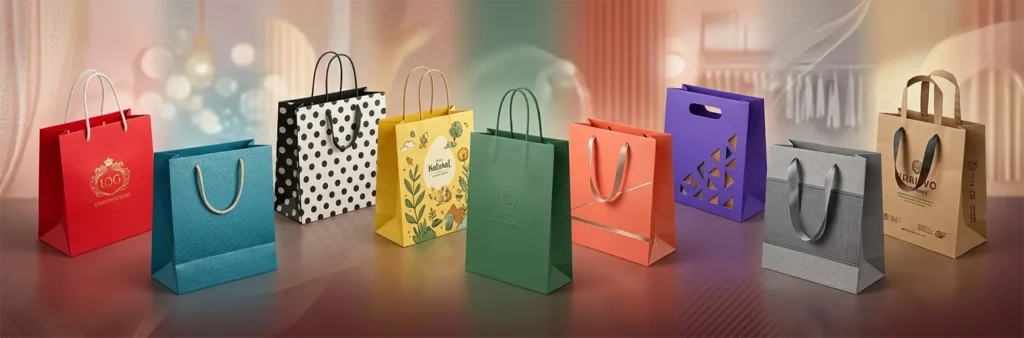
- Full-wrap graphic designs that turn every bag into a brand canvas
The most visually striking custom paper bag design idea is the full-wrap print — where colour, illustration, or pattern covers the entire exterior surface of the bag rather than just the front panel. This approach transforms the bag from a container with a logo into a branded object in its own right. Think of the way a Selfridges yellow bag or a Bloomingdale’s brown bag is instantly recognisable from across a street — that recognition comes from full-wrap colour commitment, not from a small logo on a plain background.
For boutique and independent retail brands, a full-wrap illustration that tells brand story — origin, ingredients, craft — is an extremely powerful differentiator.
Customers who feel they are carrying something beautiful are more likely to keep the bag and reuse it, extending brand’s reach. For specific design principles that work at boutique scale, see our guide 7 Brilliant Paper Bag Design Tips for Boutique Stores and our broader collection of 10 Eye-Catching Paper Bag Design Ideas That Boost Boutique Branding.
- Minimalist kraft paper bags with a single bold logo that signal premium quality
Sometimes restraint is the most powerful design choice. A natural brown kraft paper bag with a single well-executed logo — printed in white, black, or a single brand colour — communicates artisan quality, sustainability, and confidence. This approach works exceptionally well for food box brands, candle box retailers, soap box businesses, and any brand whose product story centres on natural ingredients, handmade processes, or eco-conscious values.
The key to making minimalist bag design work is logo quality. A poorly drawn or badly scaled logo on a plain kraft bag looks amateur rather than artisan. The logo must be designed specifically for single-colour reproduction at the bag scale — which means clean lines, sufficient weight, and no fine detail that disappears at small sizes.
We covered the exact logo design specifications that work best on paper bags in Paper Bag Logo Design Best Practices, including the most common scaling and colour mistakes that undermine otherwise strong brand identities.
- Seasonal and limited-edition paper bag designs that create purchase urgency
One of the highest-return custom paper bag design strategies is seasonal packaging. A Christmas paper bag in deep green with gold foil, a Valentine’s edition in blush pink with a debossed heart, or a summer-exclusive tropical print — these limited-edition designs create urgency and excitement that standard year-round bags simply cannot generate.
Customers who know a seasonal bag is available only for a limited window are more motivated to visit the store during that period, and more likely to share the bag on social media because it feels special and time-limited.
Seasonal bag designs also give retail brand a natural content calendar for social media. Each new seasonal design is a launch event — something to announce, photograph, and promote. The bag itself becomes news. For brands running event-based or campaign-based marketing, seasonal paper bag designs are a physical anchor for the broader campaign. We mapped out how to build marketing campaigns around seasonal packaging in 7 Paper Bag Marketing Campaigns That Strengthen Brand Identity, including the lead times and promotional strategies that consistently deliver the strongest uplift in footfall and sales.
- Die-cut handle paper bags that combine function with standout visual identity
A die-cut handle — where the handle is cut directly into the top of the bag rather than being a separate attached cord or ribbon — creates a clean, modern aesthetic that works particularly well for gift box brands, cosmetic box retailers, and fashion boutiques. Die-cut handle bags have a structural elegance that rope or ribbon handle bags do not: the entire bag is a single material, giving it a cohesive, premium feel while also being more cost-effective to produce (no separate handle attachment step).
The die-cut opening can be shaped to reinforce brand identity — a circular cut-out for a brand that uses a circular logo motif, a wave shape for a coastal or organic brand, or a simple rectangular slot for a clean minimalist aesthetic. The handle shape is itself a design element.
For a comprehensive guide to handle types, their structural load ratings, and their visual brand implications, see our dedicated article Paper Bag Handle Design Inspiration: Twisted vs Flat Handles for Premium and Creative Packaging.
- Luxury paper bags with ribbon handles and premium finishes for high-end retail
For brands in the luxury retail, high-end cosmetics, premium gift box, or fine jewellery space, a ribbon-handle paper bag with premium finishing treatments is the definitive packaging choice. Ribbon handles — typically made from satin or grosgrain ribbon in a brand colour — immediately communicate prestige. They feel different in the hand from twisted paper or flat tape handles, and they look different being carried: they drape elegantly rather than bunching or folding.
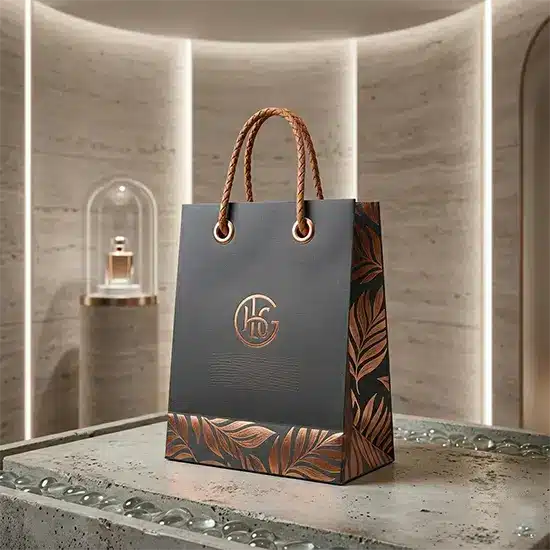
The bag itself should be made from heavyweight coated paper or laminated stock, with a matte soft-touch exterior that feels luxurious to the touch. Finishing treatments — foil stamping on the logo, embossing on the brand name, spot UV coating on a key design element — add the sensory richness that justifies premium pricing.
These are the specific techniques used by the luxury brands whose bags customers keep and reuse for years. We documented these approaches in detail in Luxury Paper Bag Styles That Elevate Every Shopping Experience and our broader guide to Luxury Paper Bags: How Premium Brands Elevate Retail Experience.
- Eco-friendly reusable paper bags that attract sustainability-conscious shoppers
Sustainability is now a purchasing criterion for a significant and growing proportion of retail customers. Eco-friendly paper bags — made from recycled or FSC-certified paper, printed with soy-based inks, and designed to be reused rather than discarded — directly appeal to this segment while also reducing brand’s environmental footprint. For food box brands, organic product retailers, candle box businesses, and natural cosmetic brands, eco-friendly packaging is not just a nice-to-have — it is an expected alignment between the product’s values and its packaging.
The U.S. Environmental Protection Agency provides detailed guidance for businesses seeking to reduce packaging waste as part of a broader sustainability commitment (EPA: Sustainable Packaging Resources). From a design perspective, eco-friendly paper bags do not need to look rough or utilitarian.
A well-designed brown kraft bag with a two-colour soy-ink print, a flat paper handle, and a recycled content statement on the base is both environmentally responsible and visually premium. We covered the full range of eco-friendly bag types, materials, and design approaches in our guides Eco-Friendly Paper Bags: Types and Benefits and Eco-Friendly Brown Paper Bags for Sustainable Everyday Packaging That Elevate Your Brand.
- Event and trade show paper bags designed to maximise brand recall
Custom paper bag design for events and trade shows serve a different branding function from retail carry bags. At a trade show, bag will likely be carried alongside bags from dozens of competitors — often stacked, dropped, or crammed into tote bags. The design challenge is to create a bag that is immediately distinguishable in a crowded visual environment. This means bold colour choices, large logo placement, and a clear single-sentence brand statement that can be read at a glance from several metres away.
Event bags also benefit from practical design considerations: a wider gusset accommodates brochures, catalogues, and product samples without distorting; a reinforced base handles heavier loads from merchandise and print materials; a longer handle allows the bag to be carried over the shoulder when both hands are occupied.
For boutique events, product launches, and trade show participation, branded paper bags are often the most memorable takeaway a visitor receives — and the one most likely to be carried home and seen by others. We covered the full design and production strategy for event paper bags in Paper Bags for Events and Trade Shows: Design and Branding Tips.
- QR code paper bags that connect physical shoppers to digital brand
One of the most underused custom paper bag design ideas is the integration of a QR code into the bag design. A QR code printed on the bag exterior — linking to website, loyalty programme sign-up, an exclusive discount, a product story video, or social media profile — bridges the gap between the physical retail experience and digital brand. In the post-pandemic retail environment, QR code literacy is near-universal: customers know what they are and how to use them.
The key to QR code bag design is integration rather than addition. A QR code that is bolted onto an existing design as an afterthought looks technical and uninviting. A QR code that is incorporated into the bag design as a deliberate element — perhaps with a clear, benefit-led call to action printed alongside it (‘Scan for 10% off next visit’ or ‘Scan to meet the maker’) — becomes a conversion tool. For brands that also ship products in mailer boxes, gift boxes, rigid boxes, or tuck boxes, the QR code approach creates a consistent digital touchpoint across all packaging formats. We explored conversion-focused paper bag marketing techniques in Paper Bag Marketing Hacks That Turn Every Shopper into a Brand Ambassador and 9 Paper Bag Branding Tips That Turn Shoppers into Promoters.
- White-on-kraft printed paper bags for a bold, high-contrast artisan look
Printing white ink on natural kraft paper produces a high-contrast, visually striking result that is increasingly popular with artisan food brands, natural cosmetic businesses, craft candle box retailers, and independent boutiques.
The natural brown kraft surface provides a warm, organic background that no manufactured colour can fully replicate, and white ink printed over it creates a clean, crisp contrast that reads beautifully in both bright retail environments and natural light.
White-on-kraft printing has specific technical requirements that standard printing processes cannot always accommodate. The paper must be uncoated kraft (coating repels water-based white inks), the ink application must be heavier than standard to achieve full opacity, and multiple passes are sometimes required for maximum brightness. We documented the complete technical process, common challenges, and best-practice solutions in our specialist guide Printing White on Kraft Paper: Process, Challenges, and Best Results. When executed correctly, white-on-kraft bags have a distinctive artisan aesthetic that is genuinely difficult to replicate with any other print method or material combination.
How to choose the right paper bag size, material, and handle type for business
With so many paper bag options available — from small boutique jewellery bags to large grocery carry bags, from twist-handle kraft bags to ribbon-handle luxury bags — choosing the right combination of size, material, and handle requires matching the packaging to specific product category, customer profile, and brand positioning.
- Paper bag sizes and load capacity: what every retail brand needs to know
Paper bags are typically available in four size ranges. Extra-small bags (approximately 15 x 8 x 20 cm) are suitable for jewellery, small cosmetics, gift vouchers, and single-item purchases. Small bags (20 x 10 x 25 cm) work well for cosmetic box products, single bottles, small candle boxes, and tincture or CBD box products. Medium bags (25 x 12 x 30 cm) are the most versatile retail size, accommodating folded clothing, multiple small items, or medium gift box sets.
Large bags (35 x 15 x 40 cm) are suitable for bulkier fashion items, multi-product food box hampers, or trade show collateral.
Load capacity is determined by paper weight and handle type. Standard retail paper bags use 100 to 120 gsm paper and handle loads of up to 5 kg. Heavy-duty bags use 150 to 200 gsm paper with reinforced handles and can handle up to 10 to 15 kg — appropriate for grocery food box products, heavy gift box sets, or bulky rigid box packaging.
For the full engineering specifications behind heavy-duty paper bag design, see our technical guide Engineering Durable Paper Bags: A Technical Guide for Heavy-Duty Design.
- Twisted handle vs flat handle vs ribbon handle: which is right for brand
Twisted paper handles are the most common and cost-effective option for retail paper bags. Made from twisted kraft or coated paper cord, they are durable enough for standard retail loads and give a clean, natural look that suits food box brands, eco-friendly product retailers, and casual boutiques.
Flat paper tape handles offer a slightly more modern aesthetic with a flatter, wider grip that some customers find more comfortable — they are popular for medium-weight fashion and cosmetic bags.
Ribbon handles — made from satin, grosgrain, or nylon ribbon — are the premium choice for luxury retail, high-end cosmetic boxes, fine jewellery, and prestige gift box products. They add significant perceived value and are the handle type most associated with luxury shopping in the customer’s mind.
Cotton rope handles offer a different premium aesthetic — more artisan than luxury — that suits craft food brands, natural soap box retailers, and independent candle box businesses. For a full visual and structural comparison of all handle types and their brand implications, see Paper Bag Handle Design Inspiration: Twisted vs Flat Handles for Premium and Creative Packaging.
- Kraft, white, and coated paper: choosing the best material for print quality
Natural brown kraft paper is the most eco-friendly and most versatile base material for custom paper bag design. It accepts flexographic, digital, and screen printing well, has excellent structural integrity, and communicates sustainable values that resonate with a growing proportion of retail customers. White paper bags — made from bleached kraft or coated white stock — offer a brighter, more vibrant print surface that suits brands with complex full-colour artwork or photography-based designs.
Coated paper bags — with a gloss or matte laminate applied to the exterior — offer the highest print quality and the most premium tactile feel, but at a higher cost and with reduced recyclability.
For most retail brands, the right starting point is a natural kraft bag for everyday carry and a coated or laminated white bag for premium purchases or special occasions. This tiered approach gives cost efficiency on standard transactions while delivering a premium experience for higher-value sales. We explored the sustainability credentials and practical performance of different paper bag materials in Paper Bag Sustainability: Myths vs. Facts and our comparison guide Paper Bags vs. Plastic Bags: What’s Best for Your Brand?.
Paper bag printing techniques that maximise brand visibility
The printing method choose for custom paper bag design determines colour accuracy, print quantity flexibility, cost per unit, and finish quality. Understanding the key differences allows to choose the right technique for brand’s volume, budget, and design requirements.
- Flexographic, digital, and screen printing: cost and quality compared
Flexographic printing — which uses rubber printing plates to apply ink at high speed — is the most cost-effective option for paper bags at quantities above 500 units. It delivers consistent colour reproduction across long runs and is particularly well-suited to simple designs with one to four colours. For brands with stable designs shipping at volume, flexographic printing offers the best cost-per-bag economics.
Digital printing requires no plates and handles full photographic colour and complex gradients with no setup cost, making it the right choice for small runs (50 to 500 units), designs with frequent updates, or personalised seasonal editions. Screen printing applies thick layers of ink through a mesh stencil, producing vivid, opaque colour that is particularly effective for white-on-kraft applications — exactly the technique we detailed in 7 Paper Bag Printing Techniques That Strengthen Brand Recall.
- Foil stamping, embossing, and spot UV for luxury paper bag finishes
For brands in the luxury, premium cosmetic, fine food, or high-end gift box space, post-print finishing techniques dramatically elevate the perceived quality of a paper bag. Foil stamping applies a metallic or holographic foil layer over the printed surface using heat and pressure — it is the gold standard for luxury bag branding and the technique most associated with high-end retail in the consumer’s mind. Embossing creates a three-dimensional raised effect on the bag surface, adding a tactile richness that photographs beautifully and feels genuinely premium in the hand.
Spot UV coating applies a clear high-gloss finish selectively over specific design elements — typically the logo or a key illustration — creating a contrast between the matte background and the gloss-coated element that is both visually and tactilely distinctive.
These finishing techniques are not limited to large luxury brands. Digital short-run foil stamping and embossing are now available at quantities as low as 100 units, making premium finishes accessible to independent boutiques, artisan food producers, and small cosmetic brands. For design guidance on combining these techniques cost-effectively, see our guide to 6 Paper Bag Design Secrets That Boost Retail Visibility and our detailed breakdown of Paper Bag Logo Design Tricks That Instantly Strengthen Branding.
Paper bag design mistakes that weaken brand and lose customers
Even strong retail brands with great products make avoidable paper bag design mistakes that undermine brand perception, reduce customer loyalty, and miss key commercial opportunities. Here are the most common and costly errors.
- Logo design errors that reduce brand recognition on paper bags
The most common paper bag design mistake is treating the bag as a smaller version of a business card or website header. Paper bags require design that works at scale, at distance, and in motion — under variable lighting conditions and often being seen peripherally rather than head-on. Fine-detail logos lose their clarity when printed at bag scale. Low-contrast colour combinations (light grey on white, pale yellow on cream) disappear entirely in bright outdoor light. Fonts that work beautifully on screen become unreadable at 30 metres.
These are precisely the errors we documented and illustrated in Paper Bag Logo Design Mistakes That Weaken Branding, along with the specific corrections that consistently improve brand visibility and recognition.
The solution is to design paper bag logo treatment as a standalone exercise — not as a derivative of other brand assets. Choose most legible typeface, highest-contrast colour combination, and simplest logo variation. Test it at actual bag size before committing to a production run. The investment in a correctly designed bag template pays back across every unit ever print.
- Choosing the wrong size and handle type for product category
An oversized bag for a small purchase looks careless and wastes material. An undersized bag that strains to hold the product looks cheap and creates a poor customer experience at the most important moment — the handover at the counter. A twisted paper handle on a bag carrying a luxury perfume or a premium gift box communicates a mismatch between the product value and the packaging quality. These mismatches are noticed by customers even when they cannot articulate why they feel slightly disappointed with a purchase.
Always size bag to most common purchase unit, with one size up available for larger purchases. Match handle type to product category and price point: twisted paper for everyday retail and food box brands, flat tape for mid-range fashion and cosmetic boxes, ribbon for premium and luxury products.
For the full sizing and handle selection framework, see our practical guide Paper Bag Design Tips for Boutique and Retail Stores and our overview of Custom Paper Bags: Affordable Yet Powerful Branding Tools.
Frequently asked questions about custom paper bag design ideas
Where can I buy custom printed paper bags for my retail business?
Custom printed paper bags for retail businesses are available through specialist packaging suppliers who offer branding, printing, and structural customization. packifyme.com offers fully custom paper bag design across all major size ranges, handle types, and paper materials — with low minimum order quantities, digital and flexographic print options, and full-colour exterior and interior printing.
Request on printed samples before committing to a production run, which is strongly recommended for new designs or new material combinations. When sourcing custom paper bag design, always verify that the supplier uses food-safe inks and coatings if bags will be used for food box products, and that they can provide FSC certification documentation for kraft and recycled paper options. For a comprehensive overview of bag types, materials, and customisation options available to retail businesses, see our guide Eco-Friendly Paper Bag Guide: Types, Benefits, and Business Uses.
How much do custom paper bag design cost for small businesses?
Custom paper bag design pricing depends on size, paper weight, handle type, print method, finishing treatment, and order quantity. As a general guide: digitally printed small kraft bags at 100-unit quantities typically cost $0.80 to $2.00 per unit.
Medium bags at the same quantity cost $1.20 to $3.00 per unit. At 500 units with flexographic printing, costs drop significantly — small bags fall to $0.40 to $0.90 per unit, medium bags to $0.70 to $1.50 per unit. Premium finishes such as ribbon handles, foil stamping, or soft-touch lamination add $0.30 to $1.20 per unit depending on the treatment. Large luxury bags with ribbon handles, heavyweight coated stock, and foil-stamped logos typically cost $2.00 to $5.00 per unit at 250-unit quantities — still extremely cost-effective relative to the brand impression they generate.
What is the most eco-friendly paper bag option for retail stores?
The most eco-friendly paper bag option combines three elements: recycled or FSC-certified paper stock, soy-based or water-based inks, and a paper or cotton handle (no plastic components). Uncoated kraft paper bags made from 100 percent recycled content are the gold standard for sustainability — they are fully recyclable, biodegradable, and require no lamination or plastic coating to produce. Avoid bags with gloss laminate or metallic foil finishes if sustainability is a core brand value, as these coatings significantly reduce recyclability. The U.S. Environmental Protection Agency provides clear guidance for businesses seeking to minimise packaging waste and choose certified sustainable materials (EPA: Sustainable Packaging and Waste Reduction).
For a full sustainability analysis of different paper bag options — including a myth-busting comparison of paper vs plastic lifecycle impacts — see our guide Paper Bag Sustainability: Myths vs. Facts.
Are paper bags better than plastic bags for branding?
For branding purposes, custom paper bag design is significantly more effective than plastic bags in almost every retail context. Paper bags offer a larger print surface, better colour reproduction, a more premium tactile experience, and a much stronger association with quality and sustainability in the consumer’s mind. They are also reused more frequently than plastic bags — customers are more likely to keep and repurpose a well-designed paper bag — which extends the brand exposure duration.
From an environmental perspective, paper bags made from recycled content have a lower long-term environmental impact than single-use plastic bags, though the comparison is nuanced when full lifecycle analysis is applied. We examined both the branding and the environmental dimensions of this comparison in detail in Paper Bags vs. Plastic Bags: What’s Best for Your Brand?.
What paper bag size is best for boutique and retail stores?
The right paper bag size depends on most common purchase unit. For jewellery boutiques and small cosmetic brands, an extra-small bag (approximately 15 x 8 x 20 cm) handles most single-item purchases elegantly. For fashion boutiques carrying folded clothing items, a medium bag (25 x 12 x 30 cm) is the most versatile choice. For gift box retailers, gourmet food shops, or candle box businesses where customers often purchase multiple items or larger products, a large bag (35 x 15 x 40 cm) with a reinforced base is appropriate.
Most retail businesses benefit from stocking two sizes — a small for single purchases and a medium for multi-item sales — rather than trying to accommodate all purchase sizes with a single bag format.
How do I make my paper bags Instagram-worthy on a small budget?
Creating a social-media-ready paper bag does not require a luxury budget. Three affordable changes make the biggest visual difference. First, commit to a single strong brand colour on the bag exterior — even a one-colour flexographic print on kraft creates a recognisable, photographable identity. Second, ensure logo is large enough to read clearly in a photograph — it should occupy at least 30 percent of the bag front panel. Third, add a short, quotable brand statement or hashtag to the bag design — something customers can include in their social post caption without any effort. A bag carrying logo, colour, and hashtag at the correct scale photographs beautifully even in average light conditions.
For more budget-conscious brand visibility strategies, see Paper Bag Branding Hacks That Turn Shoppers into Marketers and our guide to Paper Bags That Sell: Smart Branding Tips for Retail Success.
Can paper bags be used as packaging for cosmetic, food, and gift box products?
Yes — custom paper bag design are widely used across cosmetic box, food box, gift box, candle box, soap box, tincture box, CBD box, and rigid box product categories, with the specific bag specification varying by product type. For cosmetic and tincture box products, a medium-weight coated paper bag with a ribbon handle and a tissue paper interior lining creates a premium retail presentation. For food box products, an uncoated kraft bag with food-safe soy-ink printing is appropriate — always confirm food-safe ink certification with supplier and check FDA labelling requirements for food-contact packaging.
For gift box and rigid box retail, a heavyweight luxury bag with ribbon handles, foil stamping, and a reinforced gusseted base handles the weight and dimensions of typical gift packaging. For CBD box and herbal tincture products sold in retail environments, the bag design should include clear compliance labelling space on the interior or an attached insert card, consistent with applicable state regulations.
How many custom paper bag design should I order for my first run?
For a first custom paper bag design order, 250 to 500 units is the practical sweet spot for most independent retail businesses. This quantity is large enough to qualify for meaningful per-unit cost reductions compared to minimum-run digital printing, but small enough to allow to test the design in real retail conditions before committing to a larger stock holding. If design includes seasonal elements (a holiday colour or a campaign-specific message), keep the first run to 100 to 200 units and plan the next production run for updated design.
For brands just launching their retail packaging, our guide Custom Paper Bags: Affordable Yet Powerful Branding Tools covers the full first-order decision framework — including how to balance design investment against print quantity to achieve the lowest total cost per brand impression.
Building a complete custom paper bag design branding system for retail business
The nine custom paper bag design ideas in this guide are most powerful when they work together as part of a coherent packaging system rather than as isolated experiments. Start with the foundation: choose the right paper weight, bag size, and handle type for primary product category.
Then build brand layer — consistent colour, logo placement, and print treatment that customers can recognise from a distance. Then consider the finishing level: a matte laminate and foil-stamped logo for a premium tier, a plain kraft and single-colour print for everyday carry bag. Finally, plan seasonal and campaign-specific overlays — the elements that change with each season or marketing push while keeping core bag identity consistent.
Creating a scalable paper bag design that grows with brand
The most sustainable approach to paper bag branding is a modular design system with a fixed core identity and flexible seasonal or campaign layers. Core bag — base colour, logo placement, handle colour — stays constant across all orders. Seasonal belly bands, different tissue paper colours inside the bag, or campaign-specific stamps or stickers applied at the point of sale add variety without requiring a complete bag redesign and reprint. This approach keeps per-unit costs predictable as scale while giving the flexibility to respond to seasonal opportunities and marketing campaigns.
For guidance on building this kind of scalable bag design system, see our overview of 8 Impactful Paper Bag Branding Ideas That Amplify Retail Identity and our detailed guide to Premium Custom Printed Paper Bags for Branding and Eco-Friendly Packaging.
Measuring the ROI of paper bag branding investment
Paper bag branding ROI is measured across four dimensions: repeat visit rate (do customers who receive a premium bag return more frequently?), social media organic reach (how often does bag appear in customer posts?), referral rate (do customers mention brand to others because the bag impressed them?), and brand recall (can customers describe bag design when asked, weeks after a purchase?).
Track these metrics before and after a packaging upgrade — even informally through customer conversations and social media monitoring — and the commercial case for investing in great paper bag design becomes clear very quickly.
For retail businesses just starting their custom paper bag design journey, and for established brands looking to elevate their current packaging, packifyme.com offers a full range of custom paper bag design options with design support, sample ordering, and flexible minimum quantities.
Explore the full resource library across all packaging categories — from paper bags and mailer boxes to gift boxes, rigid boxes, candle boxes, cosmetic boxes, food boxes, tuck boxes, and CBD packaging — to build a cohesive, brand-consistent packaging system across every customer touchpoint.