
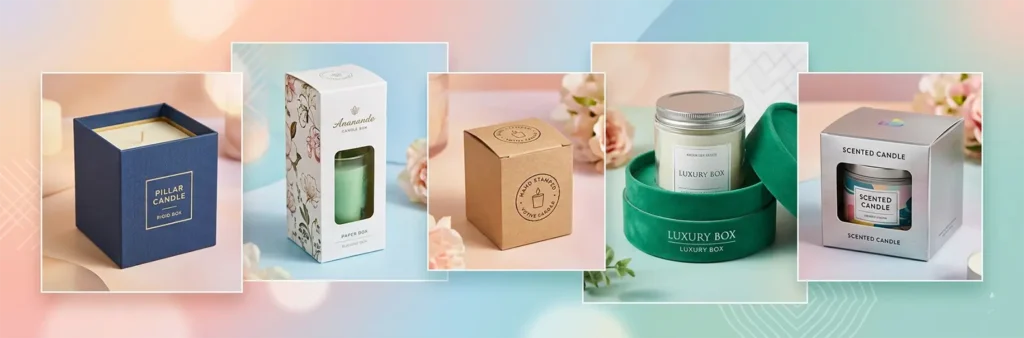
7 Smart Custom Candle Box Sizes and Materials That Maximize Product Value
Introduction
Most candle brands focus first on beautiful designs and eye-catching visuals, but the real foundation of great packaging begins with something far more important: the size and material of the box itself. These two elements quietly determine everything from product protection and shipping performance to the way customers perceive quality the moment they hold the package in their hands. A perfectly sized box with the right material does more than support the design, it creates the premium feel, durability, and overall experience that makes every branding detail truly stand out. In the world of candle packaging, strong design may capture attention, but the right structure is what makes the entire experience feel complete and unforgettable.
A beautifully designed custom candle box that is the wrong size for the product it holds creates operational problems, shipping damage, poor shelf presentation, and a customer experience that undermines the brand rather than supporting it. A custom candle box made from the wrong material for its price point, retail environment, or customer demographic sends contradictory signals that confuse rather than convert. Getting size and material right is the structural foundation on which every other packaging decision rests.
Yet sizing and material selection are the least discussed topics in candle packaging content. Most brands make these decisions based on supplier defaults, general industry habit, or a vague sense of what looks right, without a clear understanding of how these choices affect their product’s commercial performance, transit safety, shelf presence, environmental footprint, and customer experience.
This guide changes that. It covers 7 smart approaches to custom candle box sizing and material selection, each grounded in the practical realities of candle product formats, retail distribution, e-commerce logistics, and brand positioning. Whether produce jar candles, pillar candles, votive sets, travel tins, luxury multi-wick candles, or seasonal gift collections, the guidance here will help make packaging decisions that genuinely maximize product’s value at every stage of its journey from production to customer. The principles in this guide apply across the full range of packaging categories, from soap boxes, cosmetic boxes, and gift boxes to food boxes, tuck boxes, rigid boxes, CBD boxes, and tincture boxes, making it equally useful for brands managing a diverse product portfolio with multiple packaging formats.
Why Custom Candle Box Size and Material Are Most Important Packaging Decisions
Size and material are the two packaging decisions that affect everything else. They determine structural integrity during transit. They determine print quality and finish compatibility. They determine the weight and therefore the shipping cost of every unit dispatch. They determine the amount of waste material generated per unit. They determine whether product can be stocked in the retail environment are targeting. And they determine, before a single design element is applied, how product feels in the customer’s hand.
The candle category presents particular challenges in size and material selection because the physical variety of candle products is enormous. A 30g travel tin candle and a 400g three-wick glass jar candle have almost nothing in common from a packaging engineering perspective, yet both are described simply as candles and both need a custom candle box. The travel tin needs a compact, lightweight box with a close-fitting structure. The large jar candle needs a heavy-duty board weight, a well-engineered base, and structural reinforcement or an insert to prevent the glass from shifting during transit. Understanding these requirements and how to match them to the right box size and material is what separates brands that have packaging problems, damage in transit, product returns, poor shelf performance, from brands whose packaging works quietly and effectively in the background, protecting the product, presenting it well, and never giving the customer a reason to question the brand’s professionalism.
For a full overview of candle packaging strategy and why these decisions matter commercially, see Why Candle Packaging Matters: From Safety to Shelf Appeal.
According to the U.S. Consumer Product Safety Commission (CPSC), packaging that inadequately protects candle products during transit or storage can contribute to product damage that creates safety risks for end consumers. Properly sized and structurally appropriate candle packaging is therefore not only a commercial consideration but a consumer safety one. CPSC guidance on candle product safety is available at: https://www.cpsc.gov/Safety-Education/Safety-Education-Centers/candle-safety
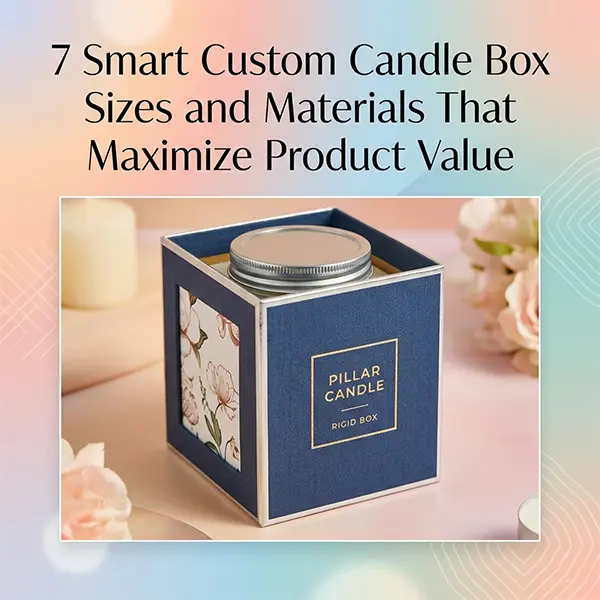
7 Smart Custom Candle Box Sizes and Materials That Maximize Product Value
- Right-Size Box to Candle’s Exact Dimensions
The single most impactful sizing decision can make is to ensure custom candle box fits product with no more than 5mm of clearance on each side. This is not merely an aesthetic preference. It is a structural and commercial requirement with real consequences if ignored.
A box that is too large for its contents allows the candle to move during transit. For glass jar candles, this movement creates impact stress on the glass that can cause cracking, chipping, or outright breakage before the product reaches the customer. For pillar candles, shifting inside an oversized box causes surface damage, fragrance contamination from the box interior, and wax deformation that makes the product look unsellable. For tin candles, movement creates denting and lid misalignment that communicates careless handling even if the candle itself is undamaged.
A box that is too small compresses the candle, distorts the packaging structure under pressure, and prevents the product from being placed in or removed from the box cleanly. For jar candles with decorative lids, a box that is too tight can scratch or chip the lid during packing and unpacking. For pillar candles with textured or botanical surfaces, excessive compression can damage the surface detail that is often part of the product’s premium appeal. The correct approach is to take precise measurements of candle product, including the widest point of any lid, handle, or decorative element, and specify box dimensions with a clearance allowance of 3 to 5mm on each side and 5 to 8mm on the height.
This allows the product to sit securely without movement while leaving enough space for any tissue paper or insert material that is part of packaging presentation. For structural guidance on how different box formats handle candle product dimensions, see Candle Jar vs. Candle Box: Choosing the Best Packaging for Your Product. For engineering guidance on how to prevent product damage through correct box sizing and insert design, see How to Package Fragile Candles for Safe Delivery.
- Match Board Weight to Candle’s Weight and Fragility
Board weight is the packaging specification that most directly determines structural strength. It is measured in grams per square meter (gsm) and refers to the weight of the paperboard used to construct custom candle box. Choosing the correct board weight for candle product’s weight and fragility is as important as choosing the correct box dimensions. For lightweight candles, typically under 150g including jar or tin, a board weight of 300 to 350 gsm is generally sufficient for a folding carton format. This weight provides adequate structural rigidity for retail handling and modest e-commerce transit requirements. It is appropriate for travel tin candles, small votive sets, and sample or gift bag candles.
For medium-weight candles, typically 150g to 300g including vessel, a board weight of 350 to 400 gsm is recommended. This range covers the majority of standard single-wick jar candles and mid-size pillar candles. At this weight range, the board provides reliable structural rigidity for retail shelf stacking, e-commerce transit in protective outer packaging, and the physical handling associated with gift retail.
For heavy candles, typically 300g and above including vessel, a board weight of 400 to 450 gsm or above is required. Large three-wick glass jar candles, luxury decorative vessel candles, and heavy ceramic or stone vessel candles fall into this category. At these weights, a standard folding carton structure should also be paired with a structural insert, either foam, pulp molded, or scored paperboard, to distribute the product weight across the base rather than concentrating it at a single point. For the highest-tier luxury candle products, a rigid chipboard construction rather than a folding carton format is the appropriate choice.
Rigid chipboard boxes, constructed from thick, laminated board and assembled as a lid-and-base or drawer format, provide a level of structural strength that folding carton formats cannot match at equivalent visual quality. They are also physically reusable, which adds to their appeal for premium candle brands where the box becomes part of the product’s lifestyle appeal.
For a detailed guide to luxury rigid box formats for premium candle brands, see Luxury Two Piece Candle Box Packaging: Premium Rigid Solutions for Modern Candle Brands.
For heat-resistance considerations in board and material selection for candle transit in warm climates, see Thermal-Insulated Candle Box Engineering: Heat-Resistant Packaging for Safe Transit.
- Choose SBS Board for Maximum Print Quality and Color Accuracy
SBS (Solid Bleached Sulfate) paperboard is the industry standard for printed folding carton custom candle box where print quality is the primary design driver. SBS is produced from bleached virgin wood pulp, giving it a bright, clean white surface on both sides. This white surface provides the ideal base for full-color CMYK printing, ensuring that brand colors reproduce accurately and design elements appear crisp, saturated, and sharp. For candle brands where the packaging design is the primary brand-building tool, including brands with complex color palettes, photographic imagery, gradient backgrounds, or detailed illustrative work, SBS is the material that delivers the highest print fidelity. No other standard paperboard substrate matches its combination of white surface brightness, surface smoothness, and ink hold-out.
SBS is also the best substrate for premium print finishes including matte lamination, gloss lamination, soft-touch coating, spot UV, foil stamping, and embossing. Because its surface is smooth and consistent, these finishes adhere evenly and produce the cleanest possible results. On a rougher or more fibrous substrate, the same finishes can appear uneven, patchy, or less well-defined. SBS board is available in weights from 250 gsm to 450 gsm, covering the full range of candle packaging requirements from lightweight travel formats to heavy glass jar candles.
For most candle brands producing in folding carton format, SBS at 350 to 400 gsm is the default recommendation, offering a reliable combination of print quality, structural rigidity, and cost efficiency.
For guidance on print finishing options that work best with SBS board in the candle packaging category, see Candle Box Printing Techniques That Add Luxury Without Extra Cost and 5 Creative Candle Box Finishes That Add Luxury Without High Cost.
- Use Kraft and Recycled Board for Eco-Positioned Candle Brands
For candle brands positioned around natural ingredients, sustainable values, artisan production, or eco-conscious lifestyle appeal, kraft and recycled paperboard are not just material choices. They are marketing decisions. The warm, unbleached tone of natural kraft board, its slightly textured surface, and its association with sustainability and natural craftsmanship communicate brand values before a single word of copy is read. Kraft board is produced from unbleached wood pulp, giving it a characteristic warm brown color on the outer surface. It is available in a range of weights suitable for candle packaging, from 300 gsm for lighter products to 450 gsm for heavier formats. Kraft board prints well with dark inks, particularly black, navy, and forest green, and can accept matte lamination, water-based coatings, and foil stamping effectively.
Recycled paperboard is produced from post-consumer or post-industrial waste paper and board. It typically has a grey or mottled interior surface and is available in coated or uncoated variants. Coated recycled board accepts print and lamination well. Uncoated recycled board has a more textured surface that suits hand-lettered or rough-print design aesthetics and is appropriate for brands where a raw, honest material quality is part of the brand personality. Both kraft and recycled board qualify for FSC (Forest Stewardship Council) certification when sourced from certified supply chains, allowing brands to print the FSC logo on their packaging and make a verified, credible sustainability claim. This claim is increasingly valuable to candle consumers who are making purchasing decisions based partly on the environmental credentials of the brands they support.
According to the U.S. Environmental Protection Agency (EPA), paperboard packaging, including kraft and recycled board variants, is among the most successfully recovered and recycled material categories in the U.S. waste stream, with recovery rates consistently exceeding 90%. For candle brands making sustainability claims on their packaging, EPA data provides an authoritative, government-backed reference point. Full data is available at: https://www.epa.gov/facts-and-figures-about-materials-waste-and-recycling
For a comprehensive guide to sustainable candle packaging strategy including material sourcing, certification, and design for eco brands, see The Ultimate Sustainable Packaging Guide: Custom Printed Kraft Candle Box Solutions for Eco-Friendly Luxury Brands.
For design inspiration for eco-positioned candle packaging, see Sustainable Candle Packaging Ideas for Eco-Conscious Shoppers.
- Select Rigid Chipboard for Luxury Candle Lines Where the Box Is Part of the Product
For candle brands operating in the luxury segment, where retail prices are in the premium tier and the customer expects an experience as much as a product, rigid chipboard box construction is the material that delivers the required level of perceived quality. A rigid chipboard custom candle box is not a packaging container. It is a product component. Rigid chipboard is a thick, dense board material that does not fold or crease in normal use. It is used to construct the inner shell of a lid-and-base box, a drawer box, or a clamshell format, which is then wrapped in a decorative paper, fabric, or specialty material to create the finished exterior surface. The result is a box that feels substantial, opens and closes with a precise, quality-communicating fit, and maintains its shape indefinitely.
Luxury candle brands choose rigid chipboard because the box itself becomes a product feature that customers value, use, and display. A well-constructed rigid custom candle box, lined with fabric or velvet and finished with a specialty wrap paper or foil stamping, is kept and reused by customers as a storage vessel, a display piece, or a gift container. This extended product life means that the brand’s packaging continues to communicate quality and brand identity in the customer’s home long after the candle has been used.
The cost per unit of rigid chipboard custom candle box is significantly higher than folding carton formats, typically three to five times the per-unit cost at equivalent order quantities. This cost is appropriate for candles retailing at premium price points, where the packaging investment is a necessary component of justifying and communicating the product’s value. For mid-range candle products, a premium-finished folding carton in SBS board with matte lamination and foil accents delivers comparable perceived quality at a fraction of the cost.
For a complete design and manufacturing guide for luxury rigid custom candle box formats, see Custom Luxury Candle Box Packaging for Premium Brands: Complete Guide to Design, Materials & Sustainability.
For jar candle specific packaging in rigid and premium folding carton formats, see Custom Jar Candle Box Packaging for Luxury Candle Brands: Complete Design & Manufacturing Guide.
- Size Candle Gift Box for the Full Gifting Experience
When sizing a custom candle box for gifting occasions, the calculation is different from standard retail sizing. A gift box must accommodate not just the candle product itself but the full gifting presentation: tissue paper, a message card, a ribbon or bow, potentially a candle care card or brand booklet, and any complementary products included in a gift set. Sizing a candle gift box to the candle’s dimensions alone, without accounting for these additional elements, produces a box that is too tight to present beautifully.
As a practical guide, a candle gift box intended to hold a single jar candle with tissue paper and a message card should be sized to provide approximately 20 to 30mm of additional depth beyond the candle height and 10 to 15mm of additional width and length beyond the candle diameter. This allows tissue paper to be folded generously around the candle, a card to sit neatly beside or on top of it, and the lid or tuck flap to close cleanly without compressing the contents. For candle gift sets containing multiple products, a custom insert is the correct approach to sizing and presentation. The insert should be designed first, with recesses sized precisely for each product, and the outer box sized around the insert dimensions rather than around the products directly. This ensures a precise, organized presentation with every product sitting securely in its designed position.
Seasonal and occasion-specific sizing also matters. A candle gift box designed for a retail shelf display during the holiday season should be sized to stack efficiently within a standard retail shelf bay, to fit into a standard shipping carton at quantities that minimize wasted space, and to accommodate any seasonal insert or decorative element specific to the occasion packaging.
For creative gift box ideas and structural options across candle gifting occasions, see Candle Gift Packaging Ideas That Delight and Inspire Sharing, 6 Candle Gift Box Styles That Make Every Occasion Special, and 12 Candle Gift Packaging Ideas That Wow Customers Instantly.
For wedding and event candle gift sizing and presentation guidance, see Candle Packaging for Weddings & Events: A Complete Guide.
- Design Box Dimensions for Retail Channel and Shipping Environment
The retail channel and shipping environment candles travel through should have a direct influence on how size candle boxes. A candle sold exclusively through a single boutique retailer has different packaging dimension requirements from a candle sold through a national supermarket chain, a pharmacy, an online marketplace, or a direct-to-consumer subscription service. Getting this right reduces operational cost, damage rate, and retailer compliance issues. For physical retail, box dimensions should be sized to fit efficiently within standard retail shelf bays and pegboard display systems. Standard retail shelf depths are typically 300mm or 400mm. A candle box sized deeper than the shelf depth overhangs the shelf edge, which retailers consider a stocking problem and a safety risk.
Box height should allow stacking without instability for planogram compliance. Width should allow the intended number of facings to sit side by side without gap or forced compression.
For e-commerce and direct-to-consumer shipping, box dimensions should be sized to fit efficiently within standard outer shipping carton formats. Candle boxes that create significant void space within a shipping carton require additional void fill material, adding cost and waste to every shipment. Box dimensions that allow a specific number of candle boxes to fill a standard shipping carton completely reduce per-unit shipping cost and packaging material waste simultaneously. For subscription box distribution, where candle products are included alongside other items in a curated subscription package, box dimensions should be coordinated with the subscription curator’s master box dimensions.
A candle box that fits neatly within the subscription master box without requiring additional void fill or repositioning reduces packing labor time and damage risk. For smart packaging approaches and distribution channel strategies, see 9 Smart Candle Packaging Ideas That Boost Retail Appeal. For innovative packaging solutions across different retail and distribution formats, see Candle Packaging Innovations That Keep Products Safe and Stylish.
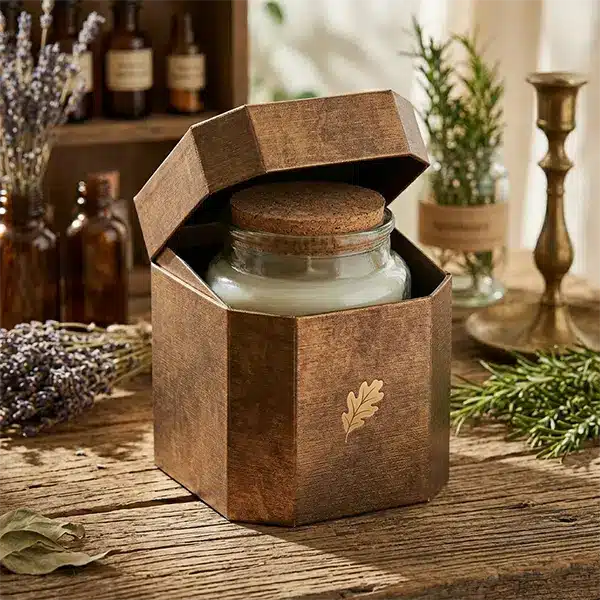
Candle Box Material Comparison: Choosing the Right Option for Brand
To summarize the material options covered above, here is a practical comparison of the four main candle box material categories and where each one performs best:
- SBS Paperboard (300–450 gsm): Best for brands prioritizing vibrant, color-accurate print quality. Ideal for cosmetic-adjacent candle brands, seasonal gift packaging, and any candle line where design complexity requires a premium print surface. Compatible with all premium finishes including foil, embossing, and soft-touch coating.
- Kraft and Recycled Board (300–450 gsm): Best for eco-positioned, artisan, natural, and sustainability-led candle brands. The material itself communicates brand values before any design is applied. Excellent for soy wax, beeswax, and plant-based candle brands targeting environmentally aware consumers.
- Coated Duplex Board (300–400 gsm): A cost-effective option with a coated white front surface and grey back. Suitable for mid-range candle brands where print quality is important but budget constraints make SBS less viable. Widely used for food boxes, soap boxes, and value-tier retail packaging across multiple categories.
- Rigid Chipboard (2mm–3mm thickness): Best for luxury candle brands where the box is part of the product experience and the customer expects a reusable, premium-quality container. Appropriate for candles retailing above premium price thresholds where the packaging cost is justified by the product’s retail margin.
Selecting the wrong material for brand tier is one of the most common packaging mistakes candle brands make. A budget-tier candle in a rigid chipboard box creates a price expectation that the product cannot meet. A luxury candle in a lightweight SBS folding carton undermines the premium positioning the brand is trying to establish. Material alignment with brand tier is not a secondary consideration. It is a fundamental brand strategy decision.
How Candle Box Sizing and Material Principles Apply Across Packaging Categories
The sizing and material selection principles covered in this guide apply directly across other packaging categories. For brands managing a full product range, applying these principles consistently across all formats creates a coherent packaging system that operates reliably at every level.
- Soap boxes: The right-sizing principle is equally critical for soap packaging. A soap bar in an oversized box shifts during transit, causing surface damage and an untidy presentation. Kraft board is particularly popular for artisan soap boxes for the same brand alignment reasons it serves eco-positioned candle brands.
- Cosmetic boxes: Board weight selection for cosmetic boxes follows the same logic as candle boxes. Lightweight powder products need lighter board. Heavy glass serum bottles need heavy board and inserts. SBS is the dominant material for print-quality-driven cosmetic packaging.
- Gift boxes: Gift box sizing must account for presentation elements, tissue paper, cards, and multiple products, exactly as candle gift boxes do. The gifting sizing principle of building the box around the insert rather than the product directly applies across all gift packaging categories.
- Food boxes: Food boxes must meet FDA food contact material requirements when in direct contact with food products. Material selection for food packaging therefore has a compliance dimension that does not apply to candle packaging, making supplier communication about food-safe inks and coatings essential.
- Tuck boxes: Tuck box sizing follows the same right-sizing principle as candle boxes. A tuck box that is too large for its product creates the same transit damage and presentation problems. Board weight selection for tuck boxes matches the product weight rules established for candle packaging.
- CBD boxes and tincture boxes: Glass tincture bottles share the fragility characteristics of glass jar candles. The board weight and insert requirements for tincture packaging are therefore very similar to those for heavy jar candle packaging.
- Rigid boxes: The rigid chipboard guidance for luxury candle boxes applies identically to rigid box formats across jewelry, accessories, and premium cosmetic packaging. Material thickness, wrap paper selection, and interior lining choices follow the same quality tier logic in all rigid box categories.
For a comprehensive overview of candle packaging strategy across formats, see Candle Packaging Ideas: Creative Designs That Sell More.
Where to Buy Custom Candle Box in the Right Size and Material
- Specialist Custom Packaging Suppliers
The most reliable source for custom candle box in precisely specified sizes and materials is a specialist custom packaging supplier. A specialist supplier offers structural consultation that matches candle format to the correct box size and board weight, material sampling so can assess board quality before committing to a production run, and full customization across print design, finish options, and insert specifications. Packifyme.com provides all of these services with expert support at every stage of the packaging development process.
- What to Confirm Before Ordering
Before placing a custom candle box order, confirm the following with supplier: the exact internal dimensions of the box and how they relate to candle measurements, the board weight and material grade being used, whether the material is FSC-certified if sustainability credentials are required, the minimum order quantity for both digital and offset print runs, and whether a physical sample or proof will be provided before full production commences. Also confirm the supplier’s tolerance standards for box dimensions. A reputable supplier will hold dimensional tolerances of plus or minus 1 to 2mm on all measurements.
Suppliers who cannot specify their dimensional tolerances should be approached with caution, as inconsistent box dimensions at scale create assembly, packing, and presentation problems that are expensive to resolve after production.
- Small Batch and Short-Run Options
For candle brands at the startup or small-batch stage, digital printing allows custom candle box to be produced in quantities as low as 50 to 100 units with full size and material specification at no plate setup cost. This makes it possible to test the correct sizing, board weight, and material for product before committing to a full offset production run. Investing in a correctly specified sample run at digital print volumes is always more cost-effective than discovering a sizing or material problem after a large offset order has been completed.
For guidance on designing and ordering candle packaging at small-batch volumes, see 11 Proven Custom Candle Box Ideas to Boost Luxury Branding & Customer Sales.
For current trends in candle box design and material innovation, see Smart Candle Packaging Trends That Dominate 2025 and 25 Candle Packaging Trends for 2025 That Will Captivate Every Shopper.
Frequently Asked Questions About Custom Candle Box Sizes and Materials
What is the standard size for a candle box?
There is no single standard candle box size because candle products vary enormously in format and dimensions. The correct approach is to size the box to specific candle’s dimensions with a 3 to 5mm clearance on each side and 5 to 8mm clearance on the height. Common candle box dimensions for popular formats range from approximately 70mm x 70mm x 80mm for small tin or votive candles up to 120mm x 120mm x 130mm for large three-wick jar candles, but exact candle measurements should always determine box specification.
What board weight should I use for a glass jar candle box?
For a standard single-wick glass jar candle weighing 150g to 250g including the jar, a board weight of 350 to 400 gsm in SBS or coated kraft board is appropriate for a folding carton format. For heavier three-wick or decorative vessel candles weighing 300g or above, a board weight of 400 to 450 gsm is recommended, paired with a structural insert to prevent the glass from shifting during transit. For luxury formats, rigid chipboard construction is recommended regardless of weight.
What is the best material for eco-friendly candle boxes?
FSC-certified kraft board or recycled paperboard are the best material choices for eco-friendly candle boxes. Both qualify for FSC certification, allow recycled content claims, and communicate natural, sustainable brand values through their material aesthetic. Pair eco-friendly board with water-based inks and coatings rather than solvent-based alternatives, and avoid plastic film lamination in favor of water-based matte coatings to maintain the full recyclability of the finished box.
Where can I buy custom candle box in small quantities?
Custom candle box in small quantities, starting from as low as 50 to 100 units, are available from specialist packaging suppliers that offer digital printing. Digital print runs have no plate setup cost, making them cost-accessible at low volumes. Packifyme.com offers custom candle box production in small quantities with full size specification, material choice, and print customization, allowing brands to access professional packaging at startup and small-batch production volumes.
How do I choose between SBS and kraft board for my candle boxes?
Choose SBS board if brand design relies on vibrant full-color printing, complex design elements, photographic imagery, or gradient backgrounds, and if brand positioning is in the mid-to-premium segment without a specific eco-conscious identity. Choose kraft board if brand is positioned around natural ingredients, sustainable values, artisan production, or an eco-conscious lifestyle identity, and if design works well with dark inks on a warm brown surface. Both materials can accept premium finishes including foil stamping and matte lamination.
Can I get custom candle box with inserts included?
Yes. Custom inserts in foam, pulp molded, or scored paperboard can be specified alongside the outer candle box from most specialist custom packaging suppliers. The insert should be designed and sized first, with the outer box sized around the insert dimensions. This ensures a precise fit for both the insert within the box and the candle product within the insert. Inserts are particularly important for heavy glass jar candles, gift sets with multiple products, and luxury candle formats where presentation quality is a core product value.
What size candle box is best for gifting?
A candle gift box should be sized to accommodate not just the candle but the full gifting presentation: tissue paper, a message card, and any complementary items. As a guide, add 20 to 30mm to the candle height for depth clearance and 10 to 15mm to the candle width and length for side clearance. For gift sets with multiple candles or complementary products, design the insert first and size the outer box to the insert dimensions. The result should be a box that closes cleanly without compressing the tissue paper and opens to reveal a beautifully organized presentation.
How does box size affect candle shipping costs?
Box dimensions directly affect shipping costs through two mechanisms. First, dimensional weight pricing, used by most major carriers, calculates shipping cost based on the volume of the package rather than its actual weight when the dimensional weight exceeds the actual weight. An oversized candle box, with significant empty space inside, may trigger a higher dimensional weight charge than a correctly sized box containing the same candle. Second, box dimensions determine how many units fit in a standard outer shipping carton, which affects the per-unit cost of outbound bulk distribution. Right-sizing candle boxes reduces both dimensional weight charges and outer carton packing inefficiency.
Conclusion: Size and Material Are the Foundation of Custom Candle Box Success
Every successful candle packaging strategy is built on two foundational decisions that are often overlooked in favor of more visible design choices: the right box size for the candle it contains, and the right material for the brand it represents. Get these two decisions right, and every subsequent investment in print design, surface finish, brand storytelling, and retail presentation is built on a solid foundation. Get them wrong, and even the most beautiful packaging design will underperform in transit, on shelf, and in the customer’s hands.
The 7 approaches covered in this guide, from precise right-sizing and board weight matching through SBS selection for print quality, kraft and recycled board for eco-positioning, rigid chipboard for luxury formats, gift box sizing for full presentation, and dimension planning for retail and shipping channels, give a complete framework for making candle packaging decisions that maximize product’s value at every stage of its commercial journey.
Whether sell soap boxes, cosmetic boxes, gift boxes, food boxes, tuck boxes, CBD boxes, tincture boxes, or rigid boxes alongside candle range, these sizing and material principles apply across full packaging portfolio, helping build a coherent, professionally specified packaging system that supports brand consistently across every product and every customer encounter.
At packifyme.com, we work with candle brands at every stage, from first-run small-batch orders to large-scale retail supply, to specify, design, and produce custom candle box that are correctly sized, correctly materialed, and built to perform. Contact our team for expert packaging consultation and a custom quote tailored to candle product and brand.