
8 Proven Mailer Box Branding Strategies That Skyrocket E-Commerce Sales and Build Lasting Customer Loyalty
Why mailer box branding is most powerful e-commerce marketing tool
In e commerce, mailer box branding is not just packaging, it is a direct and undivided interaction between brand and customer. Unlike retail shelves crowded with endless competitors, package arrives alone, capturing complete attention the second it is delivered. That moment is pure marketing gold, yet many businesses waste it with plain and forgettable brown boxes. A beautifully branded mailer box transforms a simple delivery into an unforgettable experience that builds excitement, strengthens brand identity, and makes customers instantly feel they are receiving something special before they even open the package.
According to the U.S. Small Business Administration, consistent brand presentation across all customer touchpoints can increase revenue by up to 23 percent — and mailer box is one of the most visible touchpoints in the entire customer journey (USPS Packaging Guidelines).
Beyond aesthetics, the mailer box branding serves a functional role: it must protect product through every step of transit, from warehouse to doorstep. The best mailer box branding strategies never sacrifice structural integrity for visual appeal. When both are done right, the result is packaging that protects, impresses, and converts customers into repeat buyers.
How the mailer box branding becomes brand’s first physical touchpoint
For most e-commerce customers, the mailer box is the first physical object they associate with brand. Everything before that — the website, the social media ads, the email confirmation — was digital. The box is real. It has weight, texture, colour, and smell. That physical reality creates an emotional response that digital interactions simply cannot match. We explored this in detail in our guide Branded Mailer Boxes That Tell Your Story, where we showed how brands use exterior colour, typography, and messaging to communicate their entire brand identity before the box is even opened.
This is why unboxing videos attract millions of views on YouTube and TikTok. People are not watching to see the product — they are watching to experience the packaging. A mailer box branding that photographs well, opens dramatically, and reveals a beautifully arranged interior is a content creation opportunity customers will share for free.
The direct link between packaging quality and repeat purchase rates
Research consistently shows that customers who receive a premium unboxing experience are significantly more likely to make a repeat purchase and to recommend the brand to friends. The Federal Trade Commission notes that truthful, transparent product presentation — which extends to packaging — builds the brand trust that drives long-term customer relationships (FTC: Truth in Advertising). A mailer box branding that matches the quality promise of product reinforces the customer’s confidence that they made the right purchase decision. A box that disappoints — flimsy, poorly printed, or poorly structured — creates immediate doubt about the product inside, regardless of how good that product actually is.
The numbers back this up. Brands that invest in premium mailer box branding design consistently see lower return rates and higher repeat purchase frequency, a relationship we explored fully in Mailer Box Durability Tips: Stronger Packaging, Lower Returns.
8 Proven Mailer Box Branding Strategies That Drive E-Commerce Sales
- Consistent colour and logo placement that builds instant brand recognition
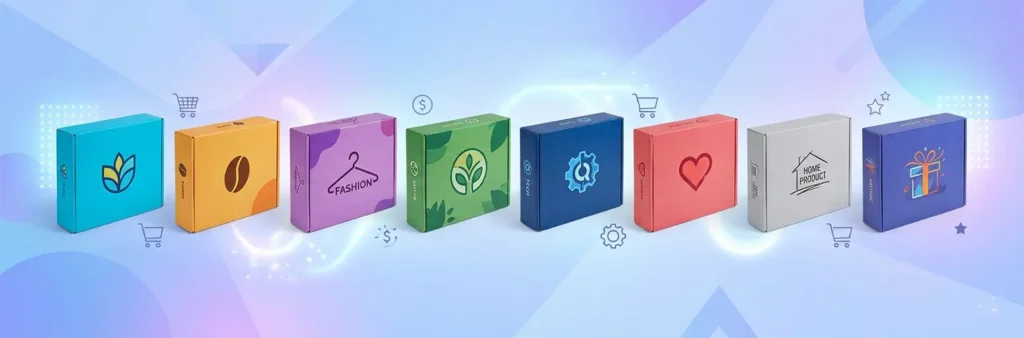
The most fundamental mailer box branding strategy is also the most overlooked: consistency. Brand colours, logo placement, and typography must be identical across every box ship, every season, every year. When customers see box arrive, they should recognise it before they read a single word. Think of the way Amazon’s smile logo or the Tiffany blue box is instantly recognisable — that recognition is built through relentless consistency over time, not through clever one-off designs. For a practical guide to building this consistency into custom packaging, see our article Creative Ways to Customize Mailer Boxes.
Logo placement on mailer boxes follows a hierarchy: the top panel (lid) is the primary mailer box branding surface, as it is the first thing customers see when the box arrives. The front panel and sides are secondary surfaces ideal for brand messaging, social media handles, or product category information. The interior lid — often overlooked — is prime real estate for a brand story, a thank-you message, or a promotional offer.
- Interior printing that turns the inside lid into a brand story canvas
Most brands stop at the exterior. The interior of mailer box branding is an untouched canvas that competitors are almost certainly ignoring. Interior printing — a full-colour design or brand message printed on the inside lid and interior walls — creates a genuine surprise moment when the box opens. The customer lifts the lid expecting to see their product and instead sees a bold brand statement, a striking illustration, or a warm personal message. This element of surprise is what transforms a delivery into a memorable brand experience. We covered the full range of interior design techniques in our guide Mailer Box Designs That Stand Out in the Mailroom.
For cosmetic box, soap box, candle box, and gift box brands, interior printing has an additional benefit: it makes every product photograph look professionally styled. When a customer places their candle, tincture, or CBD product against a beautifully printed interior and takes a photo for Instagram, brand gets free, organic marketing reach.
- Custom mailer box branding finishes that signal premium quality at first touch
The finish on mailer box branding exterior communicates quality before a single word is read. A matte soft-touch laminate feels luxurious and photographs beautifully. A gloss UV coating makes colours pop under light and adds a premium shine. Spot UV coating applies a high-gloss finish selectively — typically over logo — creating a tactile contrast between matte and gloss that is instantly memorable. Foil stamping adds a metallic sheen that signals prestige. Each of these techniques has a specific use case and cost profile, which we mapped out in detail in Mailer Box Finishes That Elevate Unboxing Experiences and our guide to Using UV Coating in Mailer Boxes for Extra Appeal.
For rigid box, food box, and luxury product categories, a combination of soft-touch exterior lamination with spot UV on the logo is the most cost-effective way to achieve a premium look at mid-range price points. For cosmetic box and tincture box products where perceived value is directly tied to purchase price, investing in foil stamping on the brand name consistently justifies the higher unit cost through improved conversion rates.
- Seasonal and limited-edition mailer box branding designs that create urgency
One of the highest-return mailer box branding strategies is seasonal packaging. A Christmas mailer box branding in deep forest green with gold foil, a Valentine’s edition in blush pink with a debossed heart, or a summer-exclusive design with a bold tropical pattern — these limited-edition runs create urgency and exclusivity that standard packaging simply cannot match.
Customers who know seasonal boxes are available for a limited time are more likely to purchase during that window and less likely to delay the decision.
Seasonal packaging also gives social media presence a natural content calendar. Each new seasonal design is a launch event. For a complete playbook on planning, producing, and marketing seasonal mailer box branding campaigns — including lead times, print planning, and promotional strategies — see our guide 10 Mailer Box Branding Tricks That Drive E-Commerce Success.
- Die-cut window mailer boxes that build product trust before opening
For products where visual appeal is a primary purchase driver — artisan food products, candle boxes, cosmetic boxes, or any product with strong visual identity — a die-cut window on the mailer box exterior lets customers see the product without opening the packaging. This builds immediate trust: the product matches the listing image, it is undamaged, and it looks exactly as expected.
For e-commerce brands with high return rates driven by customer expectation mismatch, die-cut window mailer boxes are one of the most effective structural interventions available. We explored the psychology and practical applications of this technique in Mailer Boxes with Die-Cut Windows: Transparency Builds Trust.
Die-cut windows also solve a specific problem for subscription box brands: customers who receive monthly deliveries often become desensitised to the unboxing experience over time. A window that reveals a glimpse of this month’s featured product — without revealing everything — recreates the curiosity and anticipation that drives ongoing subscription retention.
- Personalised mailer boxes with names, messages, and QR codes
Personalisation is the single most powerful driver of emotional connection in e-commerce packaging. A mailer box that has the customer’s first name printed on the exterior, or a personalised message on the interior insert card, transforms a commercial transaction into a personal relationship. Digital printing technology has made this affordable even at small batch quantities. QR codes printed inside the lid can link to a personalised landing page, a how-to video, a loyalty programme sign-up, or an exclusive discount for the next purchase — turning packaging into an active sales tool.
For the full range of personalisation options and implementation guidance, read our article Mailer Box Personalization: Names, Messages & Limited Editions.
For CBD box, tincture box, and supplement brands where regulatory information must be included, personalised insert cards allow to customise the messaging while keeping compliance text standardised. This gives a premium feel without compromising legal requirements.
- Sustainable kraft mailer boxes that attract eco-conscious customers
Sustainability is no longer a niche positioning strategy — it is a mainstream expectation. A growing segment of e-commerce customers actively prefer brands that use eco-friendly packaging, and they are willing to pay a price premium for it. Kraft mailer boxes, made from recycled or FSC-certified corrugated board, immediately signal environmental responsibility.
Combined with soy-based inks, water-based coatings, and paper-based void fill instead of plastic bubble wrap, a fully sustainable mailer box system dramatically reduces brand’s packaging waste footprint. The U.S. Environmental Protection Agency provides detailed guidance for businesses seeking to reduce packaging waste as part of a broader sustainability strategy (EPA: Sustainable Management of Food and Packaging). For practical packaging applications, our comprehensive guide Kraft Mailer Box With Sleeve — Sustainable and Premium Packaging Solution covers material choices, structural options, and mailer box branding techniques that keep kraft packaging looking premium rather than low-cost.
Eco-friendly mailer boxes also serve brands in the food box, soap box, and candle box categories particularly well, where natural and artisan brand positioning is central to the product story. A kraft mailer box with a two-colour logo print and a ribbon closure communicates handcrafted quality at a fraction of the cost of a rigid gift box.
- Strategic inserts inside mailer boxes that drive repeat orders
The mailer box interior is a direct marketing channel. Every insert place inside — a thank-you card, a product care guide, a referral discount code, a loyalty programme invitation, or a sample of a complementary product — is a touchpoint that occurs at the highest moment of customer satisfaction: when the product they wanted has just arrived.
Inserts that offer genuine value (a 15 percent discount on the next order, a free sample of a new product) consistently deliver strong redemption rates because they reach customers at the precise moment when their enthusiasm for brand is at its peak.
For a comprehensive breakdown of insert types, costs, and ROI across different product categories — from tuck box products to rigid box luxury items — see our guides 12 Smart Mailer Box Inserts That Protect and Delight Customers and Mailer Box Inserts That Protect and Delight Customers. Both articles cover structural inserts (foam, pulp, dividers) and marketing inserts (cards, samples, loyalty collateral) in detail.
How to choose the right mailer box size, material, and structure
With so many mailer box types available — standard corrugated mailer boxes, rigid mailer boxes, kraft sleeve mailer boxes, self-locking mailer boxes, and more — choosing the right structure requires matching the packaging product’s specific dimensions, weight, and fragility profile.
Single-wall vs double-wall corrugated mailer boxes: which is right
Single-wall corrugated board (a single fluted layer between two liners) is suitable for most standard e-commerce shipments: clothing, books, small consumer electronics, cosmetic products, and lightweight food items. Double-wall corrugated board (two fluted layers) provides significantly more structural strength and crush resistance, making it the right choice for heavier items, fragile products like glass tincture bottles or ceramic candle vessels, and shipments travelling long distances or through multiple handling points. We covered structural specifications, load capacity ratings, and material options in our comprehensive Mailer Box Packaging Guide: Specifications, Materials, Load Capacity, and Applications.
For CBD box and tincture box products shipped in glass, double-wall corrugated combined with a custom foam or pulp insert is the minimum standard for avoiding transit damage. For cosmetic box products in plastic or cardboard primary packaging, single-wall with a tissue paper wrap and a card divider is typically sufficient.
Standard mailer box sizes and load capacity guidelines
The most common mailer box sizes for e-commerce are: small (20 x 15 x 10 cm, suitable for single cosmetic or food items), medium (30 x 20 x 10 cm, suitable for multi-product bundles or small clothing items), and large (40 x 30 x 15 cm, suitable for subscription boxes, gift sets, or bulkier soft goods). Load capacity varies by board grade: a standard B-flute single-wall box handles up to 20 kg, while a double-wall BC-flute handles up to 40 kg.
When designing for e-commerce, always account for the dimensional weight calculation used by courier services such as USPS, FedEx, and UPS (USPS Packaging and Shipping Guidelines). A box that is larger than necessary adds dimensional weight charges that significantly increase per-shipment costs. We explored cost-optimised size selection in detail in How to Design Mailer Boxes That Reduce Shipping Costs.
Mailer box printing techniques that maximise brand impact
The printing method choose for mailer box determines colour accuracy, minimum order quantity, and per-unit cost. Understanding the differences between the main printing methods allows to match the right technique to brand’s volume, budget, and quality requirements.
- Digital printing vs flexographic printing: cost and quality compared
Digital printing — the same technology used in high-end office printing, adapted for corrugated and kraft board — is the most flexible option for small-run custom mailer boxes. It handles full photographic colour, complex gradients, and detailed artwork with no plate setup costs, making it cost-effective from as few as 50 units. Flexographic printing uses physical printing plates to apply ink at high speed, making it significantly cheaper per unit at quantities above 1,000 but requiring a plate setup investment (typically $300 to $800 per colour) that makes small runs expensive.
For new brands testing packaging designs, digital printing is almost always the right starting point. For established brands with stable designs shipping at volume, flexographic printing offers the best cost-per-unit economics. We mapped the full comparison in Top Mailer Box Printing Techniques Every Brand Should Know.
- UV coating, foil stamping, and embossing for luxury mailer box finishes
For brands in the luxury, cosmetic, candle, or gift box segments where packaging is a direct reflection of product value, post-print finishing techniques dramatically elevate the perceived quality of a mailer box. UV coating — applied as a full flood coat or as spot UV over specific design elements — adds gloss depth and tactile interest. Foil stamping applies a metallic or holographic foil layer over the printed surface, creating a premium metallic finish ideal for brand names and logos. Embossing creates a three-dimensional raised effect on the box surface, adding tactile luxury that photographs beautifully.
For detailed guidance on combining these techniques cost-effectively, see our article 5 Luxury Mailer Box Designs That Create Unforgettable Unboxing Moments.
Mailer box branding mistakes that cost e-commerce brands sales
Even brands with strong products and beautiful packaging make avoidable mistakes that undermine the unboxing experience, damage products in transit, or miss key revenue opportunities. Here are the most common and costly errors.
- Ignoring the unboxing sequence and interior design
The unboxing sequence — the order in which a customer opens and discovers the contents of mailer box — is a narrative control entirely. Most brands give it no thought at all, resulting in products that tumble out when the box is opened, void fill that looks like an afterthought, and no clear visual hierarchy inside the box. A well-designed unboxing sequence starts with the lid: it should open smoothly and reveal the interior immediately. The top layer — whether tissue paper, an insert card, or a branded sleeve — should be the first thing the customer sees.
The product should be revealed beneath, perfectly positioned. Details matter: the fold of the tissue paper, the placement of the insert card, even the smell of the packaging materials. We documented the full design principles in Unboxing Experience: Making Your Mailer Boxes Instagram-Worthy.
- Choosing style over structural durability and safe shipping
A beautiful mailer box that arrives crushed or with a damaged product is worse than a plain box that arrives intact. The box is the last thing a customer remembers positively — and the first thing they blame when something goes wrong. Structural integrity must always be the baseline. Mailer Box Branding is applied on top of a sound structure, not instead of one. This means selecting the right board grade for product weight, using a self-locking base for heavier items, and testing filled boxes through a drop-test simulation before committing to a full production run.
For the complete durability framework, see How to Design Mailer Boxes for Safe Shipping and 5 Powerful Mailer Box Designs That Reduce Shipping Damages.
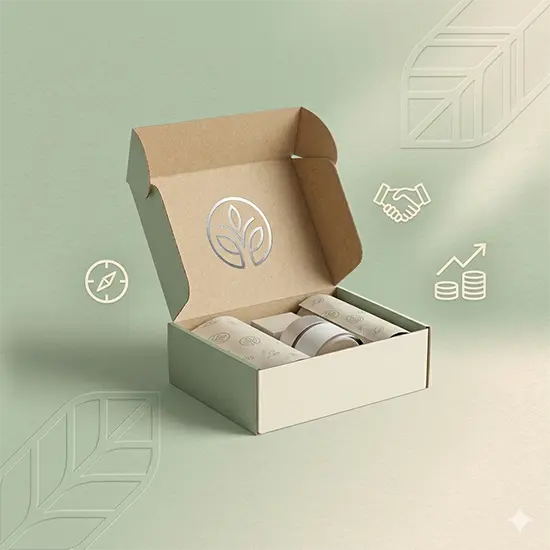
Frequently asked questions about mailer box branding strategies
Where can I buy custom branded mailer boxes?
Custom branded mailer boxes are available through specialist packaging suppliers who offer digital or flexographic printing on corrugated or kraft board. packifyme.com offers fully custom mailer boxes with low minimum order quantities, a range of structural options (standard flip-lid, self-locking, sleeve-style, window), and full-colour exterior and interior printing.
You can also request samples before committing to a production run, which is strongly recommended for new designs. When choosing a supplier, verify that they offer food-safe ink and coating options if mailer box will be used for food box, CBD box, or tincture box products — compliance with FDA food contact material standards (FDA Food Labeling & Nutrition) is essential for these categories.
How much do custom mailer boxes cost?
Custom mailer box pricing depends on size, board grade, print method, finishing, and quantity. As a general guide: digitally printed single-wall mailer boxes in small quantities (50 to 100 units) typically cost $2.50 to $6.00 per unit. At 500 units, costs drop to $1.20 to $3.50 per unit. At 1,000+ units with flexographic printing, costs can fall to $0.60 to $1.80 per unit for standard sizes and specifications. Premium finishes (foil stamping, soft-touch lamination, interior printing) add $0.30 to $1.50 per unit depending on coverage. Double-wall corrugated for heavier or fragile products adds approximately 20 to 30 percent to the base cost.
What is the most cost-effective way to brand a mailer box?
The most cost-effective entry point for branded mailer boxes is a two-colour flexographic print on a standard kraft corrugated box at quantities of 500 or more. This gives a consistent, professional brand presentation at the lowest possible per-unit cost. For brands not yet at that volume, a single-colour digital print on a kraft mailer box achieves a clean, minimalist branded look at 50 to 100 unit minimums. Adding a branded belly band or sleeve is another low-cost option: print the band digitally in full colour and wrap it around a standard unprinted box, giving a fully branded exterior for the cost of a sleeve print rather than a full box print.
For budget-conscious mailer box branding strategies across different volume levels, see our guide Mailer Box Branding Tricks to Increase Customer Loyalty.
How do mailer box inserts improve customer retention?
Mailer box inserts improve customer retention by creating additional value touchpoints at the highest-engagement moment of the customer journey — when the product arrives. A discount card for the next purchase, a referral code that rewards both the existing customer and a friend, or a product care guide that reduces the chance of misuse and subsequent returns — all of these inserts serve a retention function that justifies their small per-unit cost many times over.
The key is relevance: an insert that feels generic is ignored; an insert that feels personalised to the customer’s purchase creates a sense of being understood and valued. For category-specific insert ideas across cosmetic box, food box, candle box, and subscription box products, see 12 Smart Mailer Box Inserts That Protect and Delight Customers.
What mailer box size is best for e-commerce shipping?
The best mailer box size is always the smallest size that fits product with adequate protection material. Oversized boxes increase dimensional weight charges, use more void fill, and create a poor unboxing experience (a small product rattling in a large box signals low value). The standard medium mailer box (approximately 30 x 20 x 10 cm) is the most versatile size for single-product e-commerce shipments. For subscription box brands shipping multiple products, a large format (40 x 30 x 15 cm) with internal compartments or dividers is typically the right structure.
Always check courier’s dimensional weight formula — the USPS publishes clear dimensional weight guidelines at usps.com/ship/packaging-guidelines.htm — and size boxes to minimise overage charges.
How can I make my mailer box Instagram-worthy on a small budget?
Do not need a luxury budget to create an Instagram-worthy mailer box. Three low-cost changes make the biggest visual difference: first, branded tissue paper in brand colour (adding as little as $0.15 per box) instantly transforms the interior reveal; second, a printed insert card with a clean design and a short personalised message creates the human connection that drives customers to photograph and share; third, a consistent colour scheme on the exterior — even a single-colour print on kraft board — gives box a recognisable, shareable identity. For a full guide to high-impact, low-cost mailer box design, see Unboxing Experience: Making Your Mailer Boxes Instagram-Worthy.
Are kraft mailer boxes strong enough for fragile products?
Kraft mailer boxes made from double-wall corrugated board are fully suitable for fragile products when combined with the right internal protection. A double-wall kraft corrugated box provides excellent crush resistance and structural integrity for glass bottles (tincture boxes, CBD boxes, sauce bottles), ceramic candle vessels, and other breakable items. The key is the internal insert system: custom-cut foam, moulded pulp trays, or card dividers hold the product in place and absorb shock during transit.
A kraft box with no internal support is no safer than any other unprotected box, regardless of board grade. For a complete guide to sustainable corrugated mailer box construction, see Custom Corrugated Mailer Box Packaging: The Ultimate Guide.
How do I reduce shipping damage with better mailer box design?
Reducing shipping damage requires addressing three structural variables: board grade, internal protection, and box fit. On board grade: upgrade from single-wall to double-wall corrugated for any product weighing more than 1 kg or containing fragile components. On internal protection: use custom-cut foam inserts, moulded pulp trays, or corrugated card dividers to prevent product movement — the majority of transit damage is caused by product-to-product or product-to-wall impact during handling, not by external crush force. On box fit: design box dimensions to match product with no more than 2 to 3 cm clearance on each side, which minimises movement and reduces the volume of void fill required.
For a comprehensive guide to structural durability across different product categories, see Mailer Box Durability Secrets: How to Cut Returns and Build Trust.
Building complete mailer box branding system
The eight mailer box branding strategies in this guide are most powerful when they work as a system rather than as isolated tactics. Start with the structure: choose the right board grade, size, and closure type for product. Then build brand layer: consistent exterior colour, logo placement, and finish treatment that customers recognise immediately. Then design the interior experience: tissue paper, inserts, and personalised messaging that make every delivery feel intentional.
Finally, measure what works: track return rates, repeat purchase frequency, and social sharing metrics to understand which elements of packaging are driving the most commercial impact.
Creating a scalable mailer box design that grows with brand
The most sustainable mailer box branding approach is a modular system with a fixed core and flexible seasonal or campaign-specific elements. Core box — exterior colour, logo, finish — stays constant. Seasonal belly bands, different tissue paper colours, or campaign-specific insert cards add variety without requiring a full reprinting of core box stock. This approach keeps costs predictable at volume while giving the flexibility to create limited-edition experiences that drive urgency and social sharing.
For design guidance on building a flexible, scalable mailer box system, see 7 Stunning Mailer Box Designs That Win Customer Loyalty and our overview of How to Design Mailer Boxes for E-Commerce Brands.
Measuring packaging ROI: what to track after launch
Packaging investment pays off in ways that are not always immediately visible in a standard P&L. The metrics worth tracking are: return rate (a well-packed, well-presented product has lower returns), repeat purchase rate in the 30 to 90 days after first delivery (premium unboxing directly influences this), social media mention rate (track how often box appears in customer posts), and customer acquisition cost via referral (insert cards with referral codes give a direct attribution mechanism). Track these metrics for 90 days after a packaging upgrade and compare them against the equivalent period before. In most cases, the improvement in retention and referral alone justifies the packaging investment within two to three months.
For more strategies on turning mailer box into a revenue driver across every product category — from food box and candle box to cosmetic box, rigid box, CBD box, and tuck box — explore the full mailer box resource library at packifyme.com. Key starting points include Mailer Boxes That Sell: Powerful Branding Ideas to Win E-Commerce Customers and E-Commerce Mailer Boxes: Balancing Protection and Style