
Kraft Food Packaging: Benefits, Uses, and Why It’s So Popular
What Is Kraft Food Packaging?
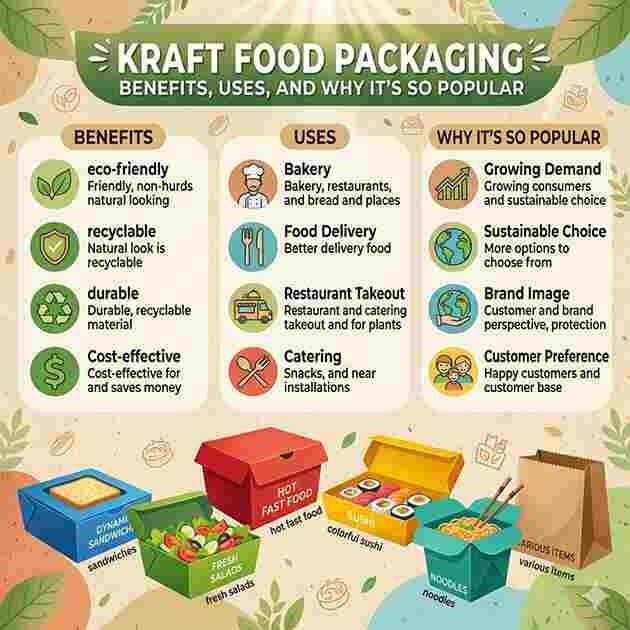
Kraft food packaging has become a symbol of simplicity, strength, and sustainability — a perfect blend of function and visual appeal that instantly catches the eye. That natural earthy brown look isn’t just aesthetically pleasing; it reflects a growing global preference for eco-friendly and reliable packaging solutions. From street food vendors to premium brands, kraft packaging has carved its place as a trusted choice across the food industry.
Made from durable kraft paper, these packages are designed to be strong, versatile, and highly practical. They securely hold food items, maintain freshness, and are easy to carry — making them ideal for a wide range of products. Whether it’s takeaway meals, baked goods, or fast food, kraft packaging delivers both protection and presentation without unnecessary complexity.
In today’s world, where packaging is as important as the product itself, kraft food packages stand out as a smart and stylish solution — proving that sometimes, the simplest materials can make the strongest impression.
Packages made using kraft food wrapper packaging kraft paper, a material manufactured from wood via the “kraft process,” a chemical method that transforms wood into high-strength paper pulp. Indeed, the word “kraft” itself is taken from a German term that means “strength,” referring to the durability and sturdiness of this material.
Kraft food packaging is one of them, which refers to a specific paper-based combination developed for food, keeping the product safe while maintaining good health and freshness. You find it widely on everything from sandwiches and baked goods to takeaway meals and dry food products.
How Kraft Paper Is Made
Sodium hydroxide and sodium sulphide then break the pulp down further. These trains go off lignin (a natural polymer in wood), producing much more powerful and far/get better paper fibers.
The key steps include:
- Wood Chipping: Whole logs are converted into small pieces
- Chemical Processing: Chips are boiled in a chemical liquid to make pulp
- Pulp washing and screening: Impurities are removed
- Sheet Formation: The pulp is spread out and allowed to dry in paper sheets.
This process strengthens the paper much more than any other kraft food packaging, which is great for handling food.
Types of Kraft Food Packaging Materials
Kraft food packing materials are available in so many types as per the requirements of the food industries:
Natural Brown Kraft Paper: Unbleached, green, and wrapping sacks
White Kraft paper (bleached white Kraft) — used for a cleaner appearance, and in higher-grade food
Coated Kraft Paper: Intermediate layer to resist grease, oils, or moisture
Different, either basic wrapping or high-performance food packaging applications are required for this class of freeze-dried products.
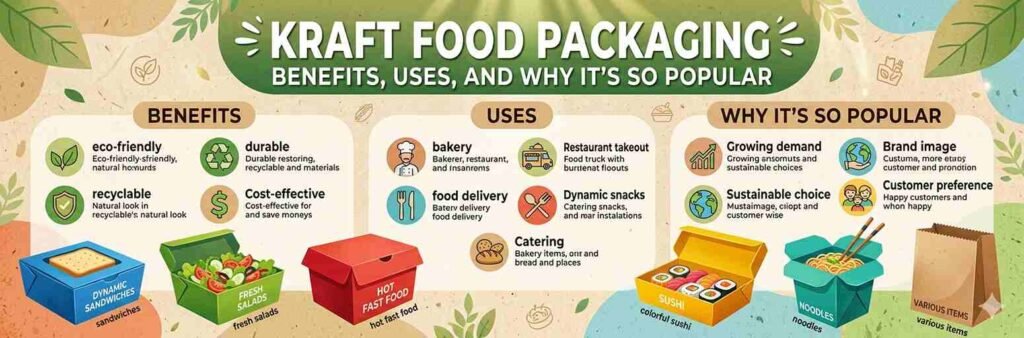
Key Benefits of Kraft Food Packaging
Kraft food packaging is well-known for its usability as well as being environmentally friendly. It is becoming popular in businesses across the food industry as a Consistent Packaging option.
- Eco-Friendly and Sustainable Solution
There are numerous benefits of Kraft food packaging, and being eco-friendly is one of them. Biodegradable, recyclable, and compostable. Made out of natural wood pulp
Kraft packaging materials are biodegradable & naturally decompose in the environment, unlike plastic packaging. This is good for businesses that want to reduce their carbon footprint and attract eco-conscious customers.
- Strong and Durable for Food Safety
It has high tear-resistance as well as tensile strength. It allows Kraft food packaging to contain heavy or oily food without leaking or breaking.
It’s difficult enough to safeguard food as it is being stored or moved, delivering the products intact to customers. When coupled with food-grade coatings, it can render the packaging waterproof and resistant to oils.
- Cost-Effective Packaging Option
Kraft food packaging is one of the low-cost packaging options. A special advantage of kraft paper is its low cost, both to manufacture and buy in bulk, when compared with many other packaging materials.
This is a very affordable solution for both small businesses and startups without compromising on quality or performance. Its light weight also translates to lower shipping costs.
- Customizable for Branding Needs
Customizing Kraft food packaging is a great option for your branding. This makes it easier for businesses to print logos, designs, and product information on kraft paper surfaces.
Moreover, the natural and rustic look makes it attractive for branding due to its ability to add aesthetic value for organic, handmade, and eco-friendly products. They help companies take their winning message into a crowded marketplace through their extensive (but personalized) food packaging – all without compromising the company’s green ethos.
Common Uses of Kraft Food Packaging
Kraft food packaging has gained immense popularity in the food industry due to its durability, safety, and eco-friendliness. Businesses, small and big, from small food businesses to the renowned retail chains, use kraft material to serve their food efficiently without compromising on product quality.
- Kraft Packaging for Takeaway and Delivery
Takeaway and food delivery service providers often use Kraft packaging. Packing for a burger, sandwich, and rice meal that often uses Kraft paper bags, food box, and wraps.
This, in turn, makes it tough enough to withstand transportation without ripping, and grease-resistant coatings (when applied) help prevent leaks. One of these widespread food packaging materials out there in the world is Kraft Food Packaging, which proves to be more effective for delivering food integrity at the time of delivery.
- Use in the Bakery and Fast-Food Industry
Industries, like the bakery and fast-food sectors, use significant amounts of Kraft packaging. Bakeries use Kraft paper for wrapping bread, pastry, cookies, and cakes; fast-food outlets use Kraft boxes and wraps for fries, burgers, and wraps.
Kraft packaging alone keeps food fresh and also allows for shipping with enough air circulation to prevent the product from getting wet, especially baked products. It is also used to support product presentation due to its natural appearance.
- Kraft Packaging for Organic and Natural Products
Brands associated with natural and organic food products also prefer Kraft packaging due to their eco-friendly values. The recent pouches or bags are generally made of Kraft, where you can pack organic snacks, dry fruits, coffee, and grains.
Kraft food packaging’s natural, earthy look lends itself seamlessly to the brand’s sustainability ethos and helps appeal very much to sustainable shoppers.
- Applications in Retail Food Packaging
Kraft wrapping is widely used in retail stores for packing prepared food, fresh produce products, and dry goods. Supermarkets and grocery stores pack fruits, vegetables, and deli products in Kraft paper bags, trays, and containers.
It is how you explain the material, both practical and sustainable for retailers as well as consumers, due to its recyclability and strength.

Why Kraft Food Packaging Is So Popular
The increasing focus of consumers and manufacturers on specific functional features, along with high consumer awareness towards the benefits that these offer in terms of eco-friendliness and lowering carbon footprints, is expected to drive market growth as well. Businesses are increasingly switching to kraft solutions as regulatory and market requirements rise.
- Growing Demand for Sustainable Packaging
Whether it’s the food and beverage or DTC e-commerce industries, sustainability is one of those topics that’s been sweeping across sectors, and more companies are actively choosing to change, and packaging is the key to this shift. Kraft paper is a great solution for eco-friendly, biodegradable, and recyclable plastic packaging.
For the European Commission, growing piles of packaging waste are a huge part, and not promoting folding cartons that can be reused or recycled is one such central aspect in our environmental policies.
- Consumer Preference for Natural Materials
Nonetheless, modern consumers are more conscious of the environment and favour goods that come wrapped in natural or green materials. Kraft packaging gives trust and elevates the branding as it has a more organic and raw appeal.
“65% of consumers are willing to pay more for sustainable packaging,” according to a report by Nielsen.
- Versatility Across Different Food Businesses
Kraft food packaging is a culmination of various food branches like Restorative, Bakery, Grocery, eCommerce foods Brand, and more.
It can be easily formed into bags, boxes, wraps, and pouches, making it a versatile option for packaging everything from dry products to ready-to-eat meals.
- Compliance with Food Safety Standard
In fact, Kraft food packaging can be manufactured to be food-grade safe for direct contact. With the right formulations and treatments, it can withstand moisture, grease, and contamination.
Industry guides, such as the U.S. Food and Drug Administration guidelines for food packaging, guide materials to protect consumers.
Types of Kraft Food Packaging Products
The following are the top-selling Kraft Food Packaging Products. To design packaging with the best option, enterprises collaborate with their industry characteristics and strategize.
- Kraft Paper Bags
Widely used for kraft food packaging are the kraft paper bags. People use these a lot because restaurants, bakeries & grocery stores pack their takeaway items & dry the food in them also.
These bags weigh very little, possess good strength, and are non-toxic, such that they can be utilized for holding items like a loaf of bread, snacks, fruits, and vegetables. They are also portable, and they can be customized with logos and branding factors.
- Kraft Food Box
Kraft food box: Kraft paper boxes for burgers, fries, rice bowls, and takeout combos. These boxes are meant to hold food tightly, and they’re coated with grease-resistant layers to keep oils from seeping inside.
They are also popular in fast food trucks and delivery services because they provide good usability and maintain the quality of the food during transport. They also offer a clean, natural appearance that enhances product presentation.
- Kraft Wrapping Paper
Kraft paper (an abstract paper commonly used for sandwiches, pastries, and fast food). This provides a safe method of packing food in addition to sanitation.
(Wax-coated paper and greaseproof paper, for example, are types of kraft food packaging that stop oil and moisture from passing through.) It is cost-efficient and user-friendly for bulk food businesses.
- Kraft Stand-Up Pouches
Kraft Stand Pouch Packaging at Its Best for New Age Packing Solutions. Often, these pouches will have zip locks or resealable closures to keep food fresh longer.
Many have inner linings that serve as a barrier to moisture and oxygen, which enable long-term storage. They are premium at retail and eCommerce food brands.
How to Choose the Right Kraft Food Packaging
Hence, the choice of Kraft food packaging should be given immense importance for securing product safety, customer satisfaction, and brand success. What kinds of things do businesses have to think about before choosing the right type of packaging?
- Consider Food Type and Storage Needs
Food items are unique in their own way, and therefore, the method of packaging them properly will differ from one food item to another. Grains or snacks are generally considered dry foods that can go into a Kraft bag or pouch, but hot and greasy foods must use coated Kraft boxes or wraps.
Determining the characteristics of your food, including whether it should be served hot or cold, dry or wet, dairy- or meat-based, will all help you select packaging that will protect its freshness and prevent spoilage.
- Check Coating and Barrier Requirements
You don’t have to protect the food from moisture, grease, or air completely. This extreme waterproofing is normally made possible through the use of special coatings or inner linings that render the normal kraft packaging contaminated.
Greaseproof paper is the go-to for oily foods, but laminated pouches are better suited to products in need of a long shelf life. Choosing the appropriate barrier ensures food quality and safety.
If so, this could be a suitable time for you to develop your branding process.
Packaging plays a vital role in brand identity. Kraft packaging twigs that crisp, earthy look, which can be further magnified with digital printing, die cuts, and custom designs.
Businesses should consider how their packaging reinforces brand values. Kraft food packaging is bound to engage the customers by creating a purpose-driven attitude.
- Evaluate Cost and Bulk Options
Price is one factor, especially for small businesses. The price of Kraft packaging is quite low, but this price varies depending on its quality, dimensions, and personalization.
Buying in bulk can significantly reduce costs and ensure a steady supply. When opting for packaging that gives a solid return on investment without compromising quality, businesses must find the sweet spot between quality and budget.
Is Kraft Food Packaging Safe for Food?
Kraft Certifications: Packaging of Kraft food, which is done by using food-grade packaging as per the guidelines, is certified as suitable for food. Its use in the food industry is wide-ranging because of its natural structure, strength, and ability to protect food against high levels of environmental contamination. However, its safety depends on the type of kraft material used and whether appropriate coatings or treatments for specific food applications are incorporated.
- Food-Grade Certification and Standards
Kraft packaging has to be direct food contact safe are that.
These institutions also help ensure that packaging materials do not leach harmful substances into food. Q: What is certified food-grade kraft paper for and why? A: The main feature of food-grade kraft paper is that it is certified safe and hygienic, making it suitable for parceling baked goods, takeaway foods, or any dry items.
- Moisture and Grease Resistance
Normal kraft is a porous material, but it can be coated for better resistance against moisture, oil, and grease. Because of this property, Kraft food packaging can be used for various types of products, from oily to hot products.
Greaseproof, or wax-coated Kraft paper, for fast food packaging. These modifications help retain quality and prolong the shelf life of food.
- Limitations to Consider
Kraft food packaging has a lot of benefits, starting from non-toxic to eco-friendly, yet it comes with disadvantages as well. Due to its untreated nature, as a general rule, kraft paper would not be recommended for food products that are very moist or liquid and can directly come into contact with the food because it can absorb moisture and break down over time.
Coated kraft, while appearing similar to paper, is often made of multiple thin layers of plastic or chemicals that can affect recyclability. So, businesses need to find the right type of kraft packaging as per their food requirements.
Future Trends in Kraft Food Packaging
While sustainability is becoming a global talking point, Kraft food packaging has its own evolution to take on as newer innovations and technologies prevail. These are the trends that are shaping yesterday into tomorrow while making the packaging industry more useful and environmentally friendly.
- Innovations in Sustainable Packaging
Packaging organizations such as the World Packaging Organization are advocating for sustainable packaging practices and innovations, encouraging businesses all around the world to go eco-friendly.
- Rise of Biodegradable Coatings
Biodegradable and compostable coatings are some of the latest breakthroughs related to kraft packaging. These coatings will remove the need for plastic laminations, which are a major driver in eco-safe packaging.
This technological advance enables a high degree of moisture and grease resistance to be achieved with kraft packaging while preserving the recycling mechanism, without sacrificing sustainability in line with international goals.
- Smart and Functional Packaging Designs
Coming up next: A future of Kraft food packaging based on smart and functional designs. Therefore, user comfort is maintained through design elements like easy-open mechanisms, resealable closures, and enhanced structural designs.
And, in some cases, sophisticated packaging solutions come with QR codes or tracking capabilities that can help brands boost customer engagement and visibility of the supply chain. Hence, all of these upgrades actually turned Kraft food packaging into sustainable and pocket-friendly for today’s day business.
Conclusion
Since it possesses the greatest sustainability, strength, and flexibility, Kraft food bundles are one of its best decisions in the food industry. Whether it be takeaway containers and bakery wraps, through to retail pouches and custom-branded boxes, it supplies practical solutions for almost every food packaging solution available.
The eco-conscious nature, in addition to the economical and custom-made nature of kraft food packaging, makes it especially appealing to new-age companies and eco-friendly customers. As overall demand for kraft packaging continues to grow, and innovators increasingly develop more sustainable solutions — from biodegradable coatings, to smarter designs — it’s likely that kraft will shoulder an even larger share of the future of sustainable food packaging.
For businesses looking for more and better from their packaging strategy, though, the move to kraft solutions is not a trend — it’s an intelligent long-game commitment to growing brand value, as well as green makes sense.
FAQ Regarding Kraft food packaging
Are KRAFT food plans biodegradable?
Indeed, the Kraft food packaging is biodegradable as they are made out of natural wood pulp. It biodegrades naturally in the environment within weeks under ideal conditions. But if the packaging is coated with plastic or wax, they aren’t fully biodegradable. To play it safe, choose unbleached kraft or compostable business cards.
Can Kraft packaging be used for hot food?
Yes, Kraft packages are generally safe for hot food to use unless they have added on some heat-resistant layer and a grease-proof layer. Burgers, fries, takeaway meals, etc., are mostly packed in Kraft boxes and wraps. This has proven to reduce leakage and enhance food quality, which is the reason that Kraft food packaging is often suggested for hot food applications.
Can Kraft food wrappers be recycled?
And we would encourage you not to try to recycle Kraft product packaging we get at home, like tubed products, for example. Natural brown kraft paper is accepted in most recycling systems. However, certain materials, like heavily soiled or laminated kraft, cannot be recycled. For the most sustainable use, keep coatings to a minimum and apply them to encourage best disposal practices.
Where to Get Kraft Food Packaging?
You can buy Kraft food packaging from a UK-based packaging supplier, wholesaler, or manufacturer. Check out this popular source for customizable and durable alternatives, PackifyMe — a one-stop solution to all your eco-friendly packaging needs. So always choose a food-grade accredited material supplier.
What are Safety of Kraft food packaging for direct food contact?
Kraft food packaging will not harm food because its manufacture meets food-grade standards. Treated kraft materials that are certified do not release harmful chemicals to your food. Before using, check the packaging to ensure it meets appropriate safety standards.
Which food products can be packed using Kraft materials?
Kraft packaging can be used in a wide range of food items such as bakery, fast foods, dry snacks, fruits & veggies, and takeaway. With the right coatings, it can even handle oily and greasy foods. This nature makes the Kraft food packages suitable for different types of food industries.
Does Kraft packaging retain food freshness?
Yes, Kraft packaging protects the food from dust, sunlight, and some environmental conditions, which protect the contents. Furthermore, try wholly renewable kraft packaging solutions, like coated papers and resealable pouches that keep food fresh by limiting moisture and air contact.
Can Kraft food packaging be customized for brands?
Absolutely. Kraft Packaging they are quick and simple to customize and offers printing, labeling, and special design features. Strong brand identity: Businesses can customize logos, colors, and product information. Another important feature of wholesale kraft food packaging digital printing is customer interaction — it not only protects the product but also increases consumer engagement.
Is Kraft packaging clean for oily food?
Kraft lined with a grease-resistant coating is used for oily or greasy foods. Greaseproof kraft paper and coated boxes are designed to resist oil leakage; nothing seeps through it, so no surface or hands are going back oily, they are therefore perfect for fast food and fried food products.
What is eco-friendly about Kraft food packaging?
Kraft food packaging is considered more eco-friendly than other types of packaging because it consists of renewable materials and can be biodegradable, recyclable, or even compostable. Its production process, too, is more sustainable than that of plastic alternatives. This results in the lower ecological impact of kraft food packaging, rendering it assistance for environmentally friendly company functions.