
Soap Packaging: Complete Guide to Ideas, Materials, Design & Branding (2026)
Soap packing is not simply a means to wrap up a product, but rather functions as an integral part of any successful business strategy. It impacts not only your brand image – much important in this age of social media – but also how well your products are protected as well as sold at the checkout. The skincare and handmade product market is a competitive one, with people looking for products that work but also have a nice appearance, feel luxurious, and reflect consumers’ values like sustainability and quality.
From handmade soaps to organic skincare bars to herbal products to luxury bath items, your product is only as good as how it looks because its packaging is the first thing customers see. When a customer does not smell your soap or feel the texture of your soap, they judge it on the design and material of its packaging and how it is presented. In this way, packaging becomes a 24/7 silent salesperson who works for your brand.
Soap packaging trends are rapidly moving up to 2026. With marketplaces such as local retail stores and eCommerce platforms getting noisier, businesses are attempting minimalism through eco-conscious materials and client branding. There are so many options available, from kraft paper wraps and rigid boxes to custom-printed sleeves and biodegradable packaging—all things that may make or break your brand.
A Complete Guide To Get You Started Packaging Soap
You will learn about packaging materials, creative and economical ideas, environmentally friendly options, high-end design concepts, and branding that will help you take your product to the next level in the market. No matter if you are a startup or an established business, mastering the art of packaging will separate you from your competition and allow you to create an indelible image for your brand.
Why Soap Packaging Matters for Your Business
Your packaging tends to become your marketing weapon in a crowded marketplace where customers are faced with too many options. This is about functionality, communication, and emotional connection.
Key Benefits Explained
- Covers soap from moisture, dust, and destroys
Soap is an equally fragile product that may easily lose its form, scent, and high quality if remaining outside unprotected from the elements. Good quality packaging will protect the product from rain, moisture, dirt, and physical damage during warehousing and transit. This is crucial for handmade soaps and organic soaps since they are usually free from preservatives, making them more vulnerable to external conditions.
- Enhances product appearance
Awesome-looking packaging instantly amps up your soap, making it pop on retail shelves or e-commerce listings. Sleek designs with beautiful colors and high-quality materials create a good visual impression, prompting customers to make the pick.
- Builds brand identity
Your packaging represents your brand. Things like logo positioning, typography, colours, and messaging that can bring your brand story and values to life. Good packaging is essential because it reinforces your brand’s identity — whether you are selling a green product, a luxury item, or simply a fun and vibrant product — consistently across all products.
- Increases perceived value
Premium products are less price sensitive. The price of the product inside may be normal, but high-quality packaging creates a luxury and professional perception. This makes it possible for businesses to raise profit margins while still keeping customers happy.
- Attracts customers instantly
Whether it’s on the shelves of physical stores or on an online marketplace, you have a tiny window (a few seconds) to attract the attention of a customer. Custom and visually attractive packaging is a great way to distinguish your product from dozens of options. If designs are unique, it could be in the cut-out portion of the window, or the use of some textured material, or keeping it very minimal creates a better visual appeal.
The Psychology Behind Packaging
Buying decisions are made based on emotions first, logic second. Triggering those emotions comes from packaging. For example:
- That is, packaging that hints at being organic and nature-friendly.
- Luxurious and minimalistic design that expresses elegance.
- Daring graphics and bright packaging give a sense of fun and freshness
As a result, your customers tend to evaluate the quality of your soap by its packaging before they even have an opportunity to sample it. Knowing that your packaging can present trust, quality, and value already makes you one step closer to the sale.
Long story short, investing in soap packaging is not a liability but an asset. It safeguards your product, enhances your brand, and dramatically increases the likelihood [and speed] of success in a competitive landscape.
Types of Soap Packaging
It is very important and essential to understand that there are different kinds of soap packaging in order to choose the right one for your product, target market, and brand positioning. Silver & gold fertilizers: Each packaging type offers a range of benefits when it comes to costs, protection, sustainability, and appearance. Selecting an apt one can profoundly influence how your product performs not only in retail stores but also on online channels.
- Paper Wrap Packaging
One of the oldest and simplest ways to wrap soap is with a paper wrap. This is where you take the soap bar and wrap it in paper, frequently with a tag or sticker for branding.
Best for:
- Handmade soaps
- Organic and natural brands
- Small businesses and startups
Why it works:
The clean and authentic feel of this packaging style. Offers customers the opportunity to view or feel it while preserving a clean and natural experience of the product.
Pros:
- Affordable and budget-friendly
- Eco-friendly and biodegradable
- Lightweight, reducing shipping costs
- Simple to personalize with stamps, stickers, or printed labels
Considerations:
Cheap, paper wrap has little moisture and handling protection, and is only valuable in dry conditions and temporary display.
- Soap Boxes
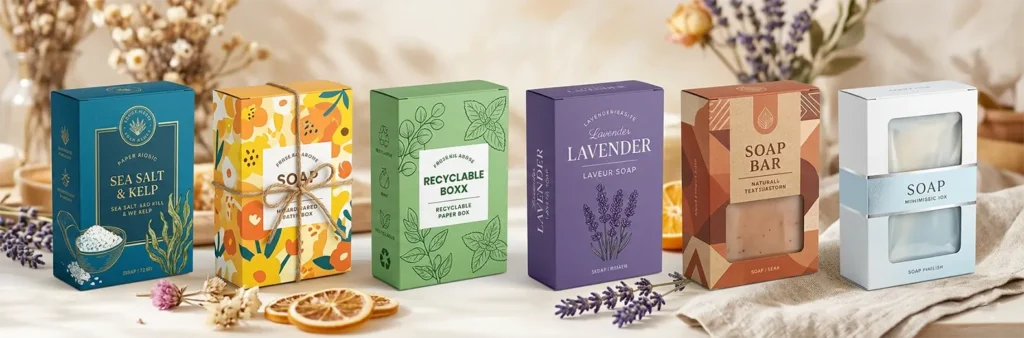
Soap boxes are the most common and versatile packaging type all over the market. They provide great protection while also serving as a solid surface for branding and design.
Popular Types:
- Kraft packaging boxes; natural brown looks very eco-friendly in terms of brands.
- Tuck boxes: simple to build and mostly employed in the retail industry.
- Window boxes — have an opening so that you can see the soap inside
- Perfect for branding and store showcase.
Why it works:
Soap boxes look very elegant and professional, and they also become a medium through which businesses can convey their brand to people using printed designs, colors, and messaging.
Advantages:
- Strong and protective structure
- Poorly customizable (size, shape, print, finish)
- Great for retail shelves and eCommerce shipping
- Enhances perceived product value
Considerations:
Customization and quality of print, along with the number of items required, are crucial factors affecting pricing, but in most cases, branding benefits can be much larger than what you invest.
- Shrink Wrap Packaging
Shrink wrapping consists of encasing the soap with a film of thin plastic that causes it to grip tightly around the product when heated.
Best for:
- Protecting soap during transport
- Avoiding contamination and exposure to moisture
- Shape and fragrance retention
Why it works:
This kind of packaging seals the soap in a secure and tamper-proof manner; it is delivered to you safely without being contaminated from production.
Pros:
- Great dust and moisture protection, handling support
- Transparent — Customers could see the products better.
- Cost-effective for bulk packaging
Cons:
- Not as environmentally friendly because of plastic consumption
- No branding area, unless it’s on the tin they come in or an outer wrapper.
Considerations:
Shrink wrap is usually utilized for secondary packaging, which will be accompanied by a box or label to be branded.
- Fabric & Cloth Wrap
Fabric or cloth wrapping is an expensive packaging option, but it can be reused, and it gives your product a special, handmade appearance.
Best for:
- Gift packaging
- Luxury or artisan soaps
- These are typically seasonal products or special editions
Why it works:
This kind of packaging connects emotionally with the customers. It makes you feel like it is a considerate, eco-friendly, and luxurious item to give as a gift.
Advantages:
- Reusable and environmentally friendly
- Distinctive and visually appealing
- Increases perceived luxury and exclusivity
Considerations:
The use of fabric bags is generally limited to high-margin or specialty products rather than everyday sales, as those packaging options are considerably more expensive than standard alternatives.
- Custom Printed Packaging
Every time you need custom printed packaging, it is tailored for your brand with the following: logos, colors, typography, and unique design features.
Why it works:
Consistent branding is a must as your business grows. Customized packaging aids in the process of metal detection and life cycle assessment.
Advantages:
- Powerful branding and brand awareness
- Professional and polished appearance
- Ability to add product information, ingredients, and messaging
- Makes your product stand out from competitors
Considerations:
The downside is that it requires a larger up-front investment, particularly for printing in bulk, but you can recoup that cost over time as your branding and marketing efforts take effect.
Best Materials for Soap Packaging
It is as important to choose the correct type of packaging material as it is to select appropriate packaging. It is important because it reflects durability, sustainability, costs, and the overall brand perception.
- Kraft Paper
Kraft Paper. These days, one of the trendiest materials is kraft paper soap packaging, especially for eco-friendly brands.
Why it’s popular:
- Eco-friendly and biodegradable
- Made from natural wood pulp
- Affordable and widely available
- Delivers a natural, organic look
- Ideal for organic and natural brands
Best use cases:
- Paper wraps
- Kraft soap boxes
- Minimalist packaging designs
- Cardboard
Cardboard — Cardboard is a malleable, yet sturdy material used for soap boxes in addition to retail packaging.
Pros:
- Strong and protective
- Easy to print and customize
- Available in different thickness sizes and finishes
- Adapted to travel and showcase
- Best suited for retail and branding
Best use cases:
- Custom soap boxes
- Tuck boxes and window boxes
- Premium printed packaging
- Plastic
Because of its design, plastic packing is typically used in shrink wrap or bubble wrap environments where it resists moisture.
Pros:
- Water-resistant and protective
- Extends product shelf life
- Transparent alternatives offer product visibility
Cons:
- Environmental problem arising from non-biodegradability
- Not the most appealing place for eco-aware consumers
Best use cases:
- Shrink wrapping
- Inner protective layers
- Transport packaging
Final Insight
The BEST soap packaging solution, in fact, is probably the best type, together with the proper material. Like a Kraft paper box (particular type + particular material) provides you with sustainability and one of the brand features, whereas shrink wrap + custom box make sure that your products are protected as well as presented.
Having this insight into these types of packaging and their materials will help you make informed decisions that fit your brand, budget, and your customers’ needs to set yourself—and your soap business—for success in the long haul.
Eco-Friendly Soap Packaging (Top Trend in 2026)
Sustainability has truly become the determining factor in a purchase decision today — particularly true for skincare & personal care industries. The new consumer no longer buys soap; they buy values. Not only can packaging that represents sustainability impact buying decisions, brand trust, and lasting loyalty.
All across the globe, Governments and Environmental Agencies are heavily promoting sustainable packaging practices. With reference to the U.S. Environmental Protection Agency, switching to sustainable packaging reduces your environmental footprint, conserves resources, and cuts down on waste creation.
Research funded by the Environmental Protection Agency Ireland is also focused on persuading that future packaging systems must be recyclable or compostable in light of efforts globally toward sustainable materials.
Popular Eco-Friendly Soap Packaging Options
In 2026, businesses will have made choices about the types of packaging solutions they use that harm the environment less, while still looking and performing well.
- Recycled Kraft Boxes
Kraft boxes are made from recycled paper to make them biodegradable and comparatively less energy-consuming. They have an organic, earthy appearance that is ideal for organic and homemade soap brands.
- Compostable Wraps
These wraps are typically made from plant-based materials such as cellulose or cornstarch. They would compost naturally when it’s under the right conditions, so there will be no harmful residue left behind.
- Paper Bands (Minimal Packaging)
One such trend in sustainable packaging is minimalism. They are paper bands that go around the soap but leave the ends open, so less material is used while leaving room for branding and key product information.
Key Benefits of Eco-Friendly Packaging
- Attracts eco-conscious customers
Your training set goes up to October 2023. Sustainable packaging is an indicator of how much you care for the planet, and people decide whether or not to purchase your product based on this alone.
- Improves brand reputation
Indeed, many companies that implement eco-friendly practices have a competitive advantage. Sustainable packaging can even boost the brand image, create trust, and position your business as a forward-thinking one.
- Reduces environmental impact
It plays a crucial role in reducing waste, pollution, and resource consumption. As per the US Environmental Protection Agency, recycling and sustainable materials can drastically minimize landfill waste and reduce environmental impact. (US EPA)
Moreover, the use of recyclable or biodegradable materials contributes to a circular economy, in which products are reused rather than thrown away, thus reducing environmental harm over time. (EPA Ireland)
Why It’s a Business Advantage (Not Just a Trend)
If eco-friendly packaging always made sense again, today it remains a sanctioned outcome of strategy. The business context is changing: regulation is tightening, consumers are becoming more aware, and competition is already making the transition to sustainable solutions.
Benefits for brands that opt for sustainable packaging early are:
- Higher customer loyalty
- Better market positioning
- Upfront investment translates to long-term cost savings via material efficiencies
- Adherence to future environmental legislation
Innocently, Sustainable Packaging is not only about saving the environment — it’s how to shape the future at your workplace.
Cheap Soap Packaging Ideas (Budget-Friendly Guide)
It is possible to achieve professional, attractive, and on-brand packaging without an excessive budget. Most successful soap businesses actually begin with a very basic, inexpensive packaging and upgrade as they scale! The secret lies with smart design decisions, economical use of materials, minimal waste, and a great customer experience.
Cheap packaging does not equate to ugly packaging — cheap simply means inexpensive, creative, and strategic.
Cost-Saving Ideas
- Paper Wrap with Stickers
Simple but effective branding
A simple paper wrap with custom stickers or labels is one of the least expensive ways to package your soap.
Why it works:
- Very Low on the material cost level
- Provides flexibility as you can modify designs without the need to reprint bulk packaging
- Provides a natural, artisanal appearance (ideal for handmade soap products)
How to make it look premium:
- Use textured or crinkly paper
- Print high-quality logo stickers
- String, jute twine, or a small tag to create a gift-wrapped look
This strategy suits startups trying multiple designs or variations of a product.
- Kraft Boxes
Affordable and trendy
With these kinds of boxes, you get the significance between a spending piece and a showy piece. They are easy to find, good for the planet, and nice on the eyes without needing much in terms of customization.
Why it works:
- Cheaper than fully printed boxes
- Natural brown appearance is suitable for organic and artisanal branding
- Robust enough for protection and transport
Ways to keep costs low:
- Purchase plain kraft boxes and put your own labels or stamps on them
- Better than costly finishes or coatings
- Employ a single-color print rather than a full design
Kraft packaging gives your product a modern green look — for much less money.
- Bulk Buying
Reduces cost per unit
Bulk Buying Packaging Materials One of the simplest yet most effective devices to scale down cost as your business grows is purchasing packaging materials in bulk.
Why it works:
- Suppliers give discounts for bulk purchases
- Finally, using stock up lowers ordering and shipping costs.
- Ensures consistent packaging supply
Best practices:
- Test with smaller batches, then explore more once your sales are consistently flowing
- Select a functional packaging for many types of soap
- Partner with trustworthy suppliers to preserve (quality)
- Purchasing in bulk is crucial to improving profit margins over time.
- Minimal Printing
Use stamps or labels.
Custom printing, on the other hand, can be pricy for small companies. A better method is to avoid packaging and go with a different branding.
Cost-effective alternatives:
- Rubber stamps with your logo
- In lieu of printing an entire box, use printed labels
- Black-and-white or single-color designs
- Packaging for small-scale or DIY branding
Why it works:
Design eliminates basic setup and printing costs.
- Built for seasonal or limited-edition products
- Keeps your packaging neat and simple
Less packaging means economy too — but also a big design trend 2026.
Pro Tips to Save Even More
- Medium usage of multi-purpose packaging (single box pack for multiple products)
- Package your box for optimal shipping cost
- Do not use unnecessary packaging (less material = less cost)
- Mix and match packaging items (wrap + label rather than box + insert)
Final Insight
Smart packaging is not about spending more but about wise spending. Opt for simpler materials, cut unnecessary costs in the design, and buy wisely to generate some really great-looking packaging without breaking the bank.
Intelligent packaging selections are really beneficial in maximizing your profit margins during the starting period of your soap business.
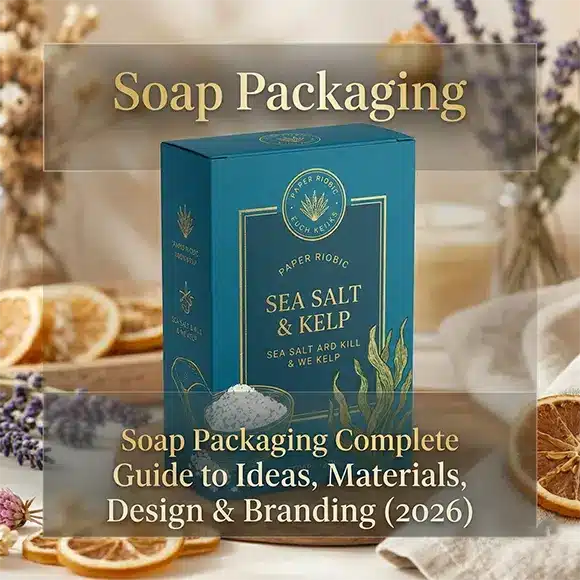
Luxury Soap Packaging Ideas (High-End Branding)
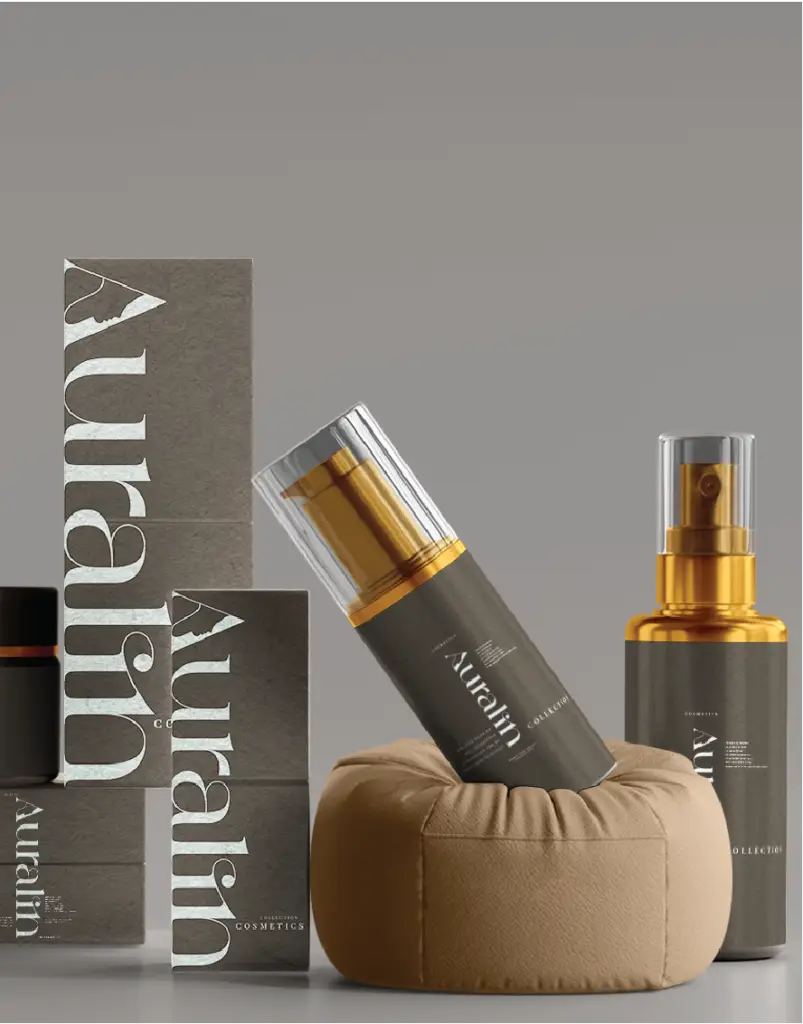
If your target is high-end customers, packaging should convey only high quality, exclusiveness, and class. In the luxury category, customers are not purchasing a bar of soap; they are buying an experience. Each step in your customer journey — from the point of seeing your product until unboxing it — must be designed with elegance.
Premium/High-end Packaging, on the other hand, creates better emotional connection, trust, and Justification of Higher Pricing. In fact, numerous customers connect high-end product packaging to exceptional item quality—— prior to they touch the soap.
Luxury Packaging Ideas
- Rigid Boxes
Strong and elegant
The rigid boxes are one of the most preferred types of boxes for luxury soap packaging. These are not fold cartons like the ones you see on average; they are made out of a sturdy, thick material that doesn’t easily get crushed.
Why they stand out:
- Feel decent, premium in hand
- Protects delicate or luxury soaps very well
- Build a unique unboxing experience
Best use cases:
- Gift sets
- High-value skincare collections
- Special product or special production
This implies that the correct quality and branding you have employed to sell or present the GM HP model has an effect on your printed Rigid box packaging.
- Embossed Logos
Adds a premium feel
One more way to accentuate your packaging is to go with embossing (raised design) or debossing (pressed-in design).
Why it works:
- Enriches surface and dimension into your branding
- Generates a feel – touch experience for customers
- Great appearance without too many colors
Design tip:
- A minimal look, embroidered for luxurious effect
- Pure usage of logotypes or brand names allows you to maintain a high concentration
This method gives your packaging an elegant and professional touch.
- Magnetic Closure Boxes
High-end unboxing experience
Magnetic Closure Box(Magnetic Boxes). Magnetic closure boxes are the ultimate luxury packaging box available. The boxes are unobtrusively dual-using magnets, allowing them to open and close smoothly, and end up giving an exquisite feel when opening the box.
Why they stand out:
- Introduce a packaging option for reuse (creates value for customers)
- Improve the unboxing experience – crucial for gifts and social media sharing
- Security, a good appreciation of your products
Best use cases:
- Luxury gift boxes
- Subscription packages
- Premium brand collections
A good unboxing experience improves the satisfaction of customers and makes them remember the brand.
- Gold Foil Printing
Luxury visual appeal
The gold foil (or metallic foil) printing is a common practice for those luxury looks at packaging.
Why it works:
- Light and attention-catching instantly
- Luxury, exclusivity, and high value
- Looks great with dark or neutral backgrounds
Design tip:
- Use foil sparingly (on the logo, border, or highlights) to avoid overdesign.
- Wear with matte finishes to create an elegant contrast
- Faux foil accents are what can take simple packaging and turn it into a beautiful masterpiece.
Additional Luxury Enhancements
If you want to step up your packaging even more, try:
- Smooth-soft touch or satin lamination
- The inserts for holding the soap in place
- Aromatic packaging for an experience beyond the senses
- Custom messages or thank-you cards
- Tinted color palettes — monochrome (black, white, beige; the use of gold)
Final Insight
Luxury packaging is more than just aesthetics—it represents a perceived price point and customer experience. If your packaging looks and feels premium, then people are more willing to pay a higher price point, believing that your product is better because of it.
Through luxury packaging, you will increase the perceived value and power to set higher prices without harming profit calibration; hence, targeting this segment of customers is justified.
Soap Packaging Design Tips That Boost Sales
Design is arguably one of the most persuasive tools you can employ in your packaging strategy. It is the first thing customers see, and in many cases, it will decide whether they pick your product up in a store or scroll past it online. The soap package is not one of the most aesthetic, but it conveys its brand message and builds trust while attracting customers’ attention to make a buying decision.
Ans: Good design is not about complexity — it is about clarity, consistency, and connection with your target audience.
Best Practices
- Keep It Simple
Minimalist design works best.
Minimalist designs persist as leading packaging trends in 2026. Your product shines with clean layouts and simple typography as well as clutter-free visuals, not yelling at the customer.
Why it works:
- It gives your packaging a modern and premium feel
- Makes it easier to read the key pieces of information
- Helps customers quickly understand your product
Tips:
- Don’t use multiple colours / fonts
- Concentrate on one main piece of messaging or imagery
- Use white space effectively
Simplicity creates clarity, and it is clarity that drives the buyer’s decision.
- Use Clear Branding
The logo should be visible.
Your brand needs to be communicated instantaneously through your packaging. A visible logo over time builds recognition and trust.
Why it matters:
- Making It Easy For The Customers To Remember Your Brand
- Establishes uniformity of products
- Builds long-term brand loyalty
Tips:
- Put your logo on the top (or centre)
- Keep fonts and colors the same
- Make sure your logo size is legible from far away
The key is that strong branding transforms occasional purchasers into loyal buyers.
- Choose the Right Colors
Match your brand identity.
Colors have a psychological impact on manipulating customer emotions and thoughts.
Color examples:
- Green → eco-friendly,-natur,organic
- White → clean, pure, simple
- Black → luxury, premium
- Pastels → soft, skincare-focused
Tips:
- Use a limited color palette
- Coordinate colors with your soap bases or fragrance
- No bright or conflicting combinations
Using the right colors gets your customers to immediately identify with your product type.
- Add Product Information
Ingredients, benefits, usage
Consumers nowadays are more educated and careful about the way they treat their skin. Honest product information creates trust and solidifies the customer’s confidence in their decision.
What to include:
- Key ingredients
- Skin advantages (moisturizing, anti-bacterial)
- Usage instructions
Tips:
- Make text short and easy to read
- Emphasize USP (unique selling points)
- Use icons or bullet points in a few with semantic roles.
It helps increase customer trust and conversions by being more transparent in the earlier stages.
Bonus Design Tips
- Print with the best materials available for a more professional appearance
- A window to help display the soap
- Be consistent with all product variants
- Design that works in a shelf and online
Final Insight
Your packaging design serves as your quiet salesperson. So it grabs attention, delivers value, and convinces the customer to make a purchase.
Higher conversions, better branding, and increased sales = good design
Labeling Requirements for Soap Packaging
Regardless of the size of your small business, you need to label appropriately. This is not merely about the appearance — it also relates to legal factors, protection, transparency, and consumer trust. Legal issues, loss of credibility, or customer dissatisfaction as a result of misinformation or a lack thereof.
Must Include on Soap Packaging
- Product Name
Write clearly what the product is, like herbal neem soap or organic lavender bar. It helps customers quickly to identify their product.
- Ingredients
Itemize the soap ingredients (highest first). This becomes extremely useful for allergy sufferers or people with other specific dietary requirements.
- Manufacturer Details
Name and Address of the manufacturer or Business. This adds credibility and ensures accountability.
- Weight (Net Weight)
Explicitly state the weight of soap (For Example, 100g). This allows for transparency and enables customers to compare value.
Additional Recommended Information
It is not always required, but the following will help build more trust:
- Expiry or best-before date
- Batch number
- Usage instructions
- Storage guidelines
- Contact information or website
Why Labeling Matters
Correct labelling does more than comply with the necessary regulations; it exhibits professionalism and dependability. It does make it easy for customers to trust products with information that isn’t misleading.
By labelling properly, you can build trust and compliance and ensure that a potential problem does not, in due course, result in issues for your business.
Soap Packaging for Different Business Types
Soap packaging is not one-size-fits-all. Your business type, market, and channel will highly influence your packaging strategy. The requirements of a handmade soap seller are much different than that of a retail brand or even a gifting business. Recognizing these differences allows you to select packaging that will boost sales, minimize costs, and fortify your brand positioning.
- Handmade Soap Businesses
Attention: Natural, easy, and genuine presentation
Types of Customers You are in the business to provide services to customers, but customers only buy from your company if they see value in you providing a solution. So, knowing the customer for handmade soaps, is made soap business usually targets organic lovers and eco-conscious individuals who prefer these types of items over mass production good have high-quality ingredients, with craftsmen able to slice their work, rendering it more beautiful than ordinary bars found on store shelves. To them, packaging should be seamless, straightforward, and authentic.
Paper Wraps
One of my favourite choices for wrapping handmade soap is paper wrapping.
Why it works:
- Retains a simple, artisan finish
- Affordable and low in tooling cost, simple to manufacture with small batches
- Give you some flexibility in design and branding.
Best practice:
- Using recycled or textured paper
- Please make it a simple label or stamped logo.
- Don’t overdesign means price up authenticity of prices,
Kraft Boxes
Kraft boxes are yet another choice that you can use in your handmade soap business.
Why it works:
- Eco-friendly and biodegradable
- Provides a natural, earthy look
- Better than paper wrap protection
Best practice:
- Minimal printing or black ink designs
- Include jute string or paper tags for the brand
- Keep designs clean and somewhat organic (or natural looking)
The packaging of the handmade soap must always reflect simplicity, purity, and natural values.
- Retail Brands
Focus: Shelf Appeal, Branding, and Visibility
The world of retail happens by having brands on the shelf together, where thousands will quickly decide based on visuals. In this environment, packaging needs to be loud, eye-catching, and very branded.
Custom Printed Boxes
Tailored packaging is crucial for retail success.
Why it works:
- Builds strong brand identity
- Helps differentiate from competitors
- Communicates product quality instantly
Best practice:
- Stay true to your brand colors and fonts
- Build the box with key benefits up front
- Using stock or commercial images or pictograms
Window Packaging
The window boxes have a clear panel that displays the soap inside.
Why it works:
- Demonstrates the actual product to build trust
- For a stunning on-shelf look
- Encourages impulse buying
Best practice:
- Unique shape of window (circle, oval, or custom cut)
- Use soap that is pleasing to the eye through coloration and texture;
- Mix with a little effort but admirable branding
It is well-known that the retail packaging gets attention, clarification, and brand recognition.
Gift Packaging
Focus: Presentation, emotional value, and premium experience.
Use gift packaging to create a layout with a memorable unboxing experience. A gift of soap — people care more about the appearance and wrapping than they do about the price.
Fabric Wraps
Fabric wrapping provides a luxurious, eco-friendly layer of packaging that can be reused.
Why it works:
- Feels premium and thoughtful
- Reusable, which gives you an additional benefit
- Create a very handcrafted, artistic look
Best practice:
- Go for soft fabrics such as cotton, linen, or muslin.
- Ribbons, tags, or dried flowers to embellish the items
- Select delicate pastel hues
Decorative Boxes
First impressions are always the most important time to decorate your own boxes.
Why it works:
Enhances emotional appeal
- Designed for specific events such as festivals, weddings, and parties
- Increases perceived product value
Best practice:
- Embossed patterns, foil accents, or textures
- Ensure Inserts that hold them safely and beautifully
- Premium finishing details;
Well, gift packing goes beyond packaging—it is part of the gift experience itself.
Final Insight
Every type of business will not call for every product packaging. An effective soap brand knows that:
Handmade brands need to avoid being fake and not being too much!
And finally, a callout to OEMs, retailers are best served by innovations that are both visible on the shelf.
Luxury & Emotion-oriented Brands based on Gifts
The type of packaging that you choose for your business depends on the connection with customers, branding, and sales performance.
- Branding Through Soap Packaging
Soap packaging is not merely a protective cover but one of the largest branding efforts for your business. Packaging is often the first thing a customer interacts with regarding your brand, so it directly influences perception, trust, and even purchasing.
With many competitors in your niche, especially on retail shelves and online listings where shelf space is limited, great branding by means of packaging helps you stand out in a crowded marketplace. Your package reflects your values before a customer reads the product.
- Branding Elements in Soap Packaging
Logo
The logo is essentially the face of your brand; on your packaging, it should be the most recognizable.
Why it matters:
- Builds instant brand recognition
- It helps customers recall your product
- Creates a professional appearance
Best practice:
- Set it in a location where viewers will see it (front/top panel)
- For small packaging sizes, keep it simple and scalable.
- Readable in print and digital
Colors
- Colors are psychologically related to customer perception and emotional response.
Why it matters:
- At-a-glance builds brand identity
- Combines feelings (calm, luxury, fresh, nature)
- It cheapens or undermines your competition
Best practice:
- Make it a point to use the same color palette for all products
- Use colours corresponding with the type of soap (e.g., herbal = green, pure = white)
- Do not mix too many colors (too much mixing in branding)
Typography
Another aspect of the type of font family that one uses to package, its typography overall, and typography undeniably influences the brand perception.
Why it matters:
That speaks to the brand personality (modern, luxury, handcrafted, playful).
- Improves readability and clarity
- Enhances visual hierarchy
Best practice:
- Use 1–2 font styles only
- Select legible fonts for product details
- Ensure font style fits with your brand personality
Storytelling
Telling a story is what adds emotional thought to your packaging and draws customers closer to your brand values.
Why it matters:
- Creates a deeper emotional connection with customers
- Creates separation between your brand and the generic competitors
- It facilitates customer loyalty and trust
Best practice:
- Add a quick brand story/mission
- Emphasise natural ingredients or the handcrafted process
- Design storytelling elements on the back of the pack
Good storytelling turns our product from just another “soap ” to the complete brand experience.
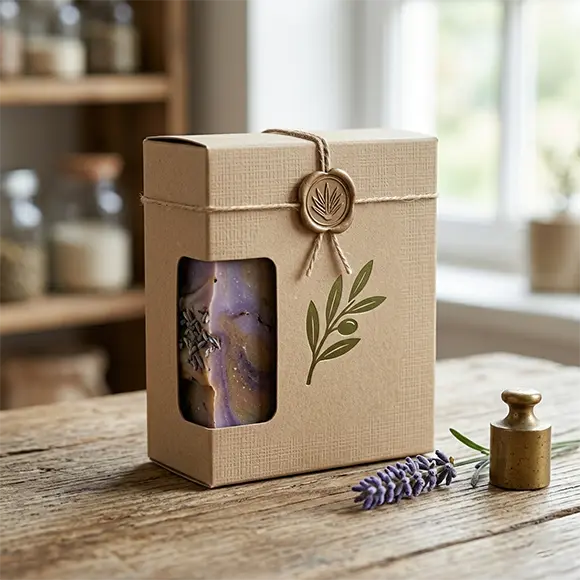
Why Consistent Branding Matters
Your logo, colors, typography & messaging should all communicate uniformly across your packaging to establish continuous brand recognition over time.
Benefits of consistency:
- Help you build your brand easily recognizable
- Builds trust over time
- Encourages repeat purchases
- Strengthens professional image
Having good branding is important for the success of a business and helps businesses gain loyalty from clients, as it can make one-time buyers into long-term customers.
Soap Packaging Cost Breakdown
Estimated reading time:| 8 minutes. Why Understanding Packaging Costs is Important for Your Revenue and Profit. As a business owner, you need to know the economics behind your products, including how packaging will affect your bottom line. Packaging costs depend on materials, design choices, and the size of the order.
Key Cost Factors
- Material
Overall cost is highly impacted due to the kind of material (kraft paper, cardboard, plastic, rigid boxes) used.
- Kraft paper → low cost
- Cardboard → medium cost
- Rigid boxes → high cost
- Printing
However, with printing, it comes with branding value but also increases the costs.
- Single-color printing → budget-friendly
- Colour printing = greater cost
- Foil stamping or embossing → extra cost
- Quantity
- Per-unit pricing is greatly influenced by order volume.
- Small batches = higher unit costs.
- Bulk orders→lower per unit cost
Higher production runs lower total packaging costs per soap.
- Design Complexity
Production Time and Resources — The more intricate/complex the design, the more it takes to produce.
- Minimal designs → cost-effective
- Custom graphic or special finish → additional expenses.
Tips to Manage Packaging Costs
- Start Simple
Start off simple with craft wraps or just plain old boxes. Expensive designs → Functionality and branding essentials.
- Upgrade as You Grow
Once your business is growing, and the revenue you get from fulfilling orders increases, start slowly investing in high-end packaging solutions such as custom printed boxes, embossed printing, and so on, or rigid packaging.
It helps you to find a sweet spot for cost control and growth of the brand.
Final Insight
How soap packaging is a direct extension of your brand image and influences customer perception. However, it is also one of the largest cost components and thus has to be handled with care.
The better businesses double down on solid branding + moderate packaging costs, which makes them a long-term profitable and sustainable business.
Soap Packaging Trends in 2026
Packaging has become one of the toughest differentiators between an average brand and a premium brand, with how fast the soap industry evolves, which it does! Basic products just don’t cut it anymore here – by 2026, they expect nothing less than aesthetically pleasing, sustainably-friendly, and meaningful packaging experiences for the goods they purchase. Brands that jump on board with these trends early will differentiate themselves and see a considerable competitive advantage.
Top Soap Packaging Trends in 2026
- Sustainable Packaging
Eco-friendly solutions dominate the market.
Sustainability is not just a marketing point anymore, but a fundamental expectation of customers. Buyers are increasingly actively opting for brands that reduce environmental impact and use responsible materials.
Why this trend is growing:
- Increased environmental concerns among customers
- Pressure from the government in terms of less plastic waste
- A transition to the use of biodegradable and recyclable materials
Popular sustainable options:
- Kraft paper boxes
- Compostable wraps
- Recycled cardboard packaging
- Very little plastic or no plastic is designed
Impact on brands:
- Establishes Trust with Green Buyers
- Improves brand reputation
- Increases long-term customer loyalty
Sustainable packaging is not an option anymore, but the new norm.
- Minimalist Design
Clean and modern aesthetics
The year is 2026, and minimalism remains the reigning king of packaging trends. Users like it simple, elegant, with clear readability and design.
Why it works:
Product clarity and readability.
- It provides a luxury; high-class impression
- Help reduce the visual clutter in competitive markets
Key characteristics:
These training dates run to October 2023)
- Simple typography
- Limited graphic elements
- Strong focus on brand logo
Impact on branding:
- Gives a more professional touch to the products
- Improves shelf visibility
- Appeals to design-conscious buyers of today
The minimalist packaging look conveys confidence and sophistication.
- Personalized Packaging
Custom names and messages
The personalization trend is the power in which soap packaging remains personalized, especially in gift-oriented and premium segments. It has changed the way customers expect to engage in a more emotional, configured, and customized experience.
Why it’s popular:
- Forms an emotional bond with consumers
- Enhances gifting experience
- Increases perceived product value
Personalization ideas:
- Customer names on packaging
- Custom thank-you messages
- Special edition or seasonal styles
- Guest notes or inserts
Impact on sales:
- Encourages repeat purchases
- Their unboxing-like content increases social sharing.
- Strengthens customer loyalty
Custom packaging transforms a basic product into an unforgettable experience.
- Reusable Packaging
Multi-use boxes and sustainable value
The reusable packaging trend has become very popular as more consumers seek products that are valuable beyond the point of sale.
Why this trend matters:
- Reduces packaging waste
- Able to build functional value for the customers
- Supports sustainable lifestyle choices
Examples of reusable packaging:
- Decorated soap boxes as some type of storage
- Reverse tuck end boxes used for gifting or storing items
- Secondary reuse of fabric wraps for household purposes
Good, strong boxes from kraft paper, you would throw away, used for the proper arrangement.
Impact on brand perception:
- Makes your brand look considerate and planet-friendly
- Increases customer satisfaction
- Promotes loyalty to your brand
Reusable packaging changes your product from being disposable to valuable.
Final Insight
Sustainability, simplicity, personalization, and functionality are the key trends in soap packaging in 2026. Early adopters of such trends will not only gain more customers but also strengthen customer loyalty and build deeper emotional bonds.
Keeping your brand up-to-date with packaging trends allows you to stay competitive and profitable against the rapid market evolution.
Common Soap Packaging Mistakes to Avoid
No matter how good the actual soap product is, without proper execution of packaging to entice the consumer, it will fail in the open market. Instead of their product itself, businesses lose sales due to unnecessary packaging errors that could decrease appeal, add cost, or dilute brand identity. You get to know these mistakes and prepare smarter packaging plans, and enhance the overall achievement in business.
Common Mistakes in Soap Packaging
- Overpacking
Overpacking is any excess layers or unnecessary material wrapped around the soap.
Why it’s a problem:
- Increases production costs unnecessarily
- Produces waste that customers who value the environment do not want
- Packaging looks heavy and hard if stored poorly
Better approach:
- Reduce packaging layers to necessary ones (box + label or wrap + band)
- Focus more on simplicity and functionality
- Focus more on presentation rather than content
Too much packaging means lower profit margins and a dent in sustainability perception.
- Poor Material Choice
The Incorrect packaging may ruin your product image and decrease customer experience.
Common issues:
- Cheap paper that tears easily
- In environmentally friendly branding, excessive plastic use
- Materials that do not keep soap wet nor damage
Why it matters:
- Poor material life expectancy
- Lowered perceived value with poor texture or finish
- Confusing customers with product type and its packaging
Better approach:
- Align with product positioning (eco, luxury, retail)
- Kraft, cardboard, or rigid boxes, depending on brand tier
- Heavy-duty and nice appearance
- Weak Branding
Packaging that does not properly convey who you are is weak branding.
Common mistakes:
- Missing or unclear logo
- Inconsistent colors and fonts
- No Brand Story or Messaging
Why it’s a problem:
- Your Brand is unmemorable
- Generic and replaceable-looking products
- Lost trust and lost credibility in highly competitive markets
Better approach:
- Preserve consistency in branding across all packaging
- Make sure your logo is visible
- Stick to a defined color palette and typography
Robust branding transforms even packaging into a device used for marketing instead of just being a wrapper.
- Ignoring Eco Trends
Sustainability trends are only now just getting settled in the most recent years, and it will make your brand out-of-date and irresponsible if ignored.
Why it’s a problem:
Similar to what we mentioned above, modern consumers prefer eco packages.
- Heavy use of plastics makes the brand unattractive
- You could lose environmentally conscious customers
Better approach:
- The shift from recycling or decomposable material
- Reduce unnecessary plastic usage
- You are taught using data up to October 2023 · Package messaging that prioritizes sustainability
- Obtaining eco-friendly packaging is no longer a choice but rather the market standard.
Why Avoiding These Mistakes Matters
Avoiding packaging mistakes directly improves:
- Profit Margins (less waste, greater efficiency);
- Brand perception (looks more professional)
- Confidence of customer (Message delivered with clarity and consistency)
- Sales performance (shelf and online appeal)
Saves costs without compromising on sales with smart packaging decisions.
Where to Buy Soap Packaging
One of the most important steps when creating your soap business is to select a suitable packaging supplier. Your supplier should offer consistent quality, along with perfect delivery and customized supply that matches up with your brand.
What To Look For When Choosing a Supplier
Always evaluate the following when considering a packaging supplier:
- Customization Options
Designing packaging to match your brand identity (logo, colors, sizes, finishes).
- Bulk Pricing
offers competitive pricing for bulk orders to lower the cost per unit and increase overall profit
- Eco-Friendly Materials
Sustainable packaging options (e.g., kraft, recycled cardboard, or biodegradable wraps)
- Fast Delivery
Timelines of production need to be reliable for planning supply chain management purposes.
Recommended Solution
If you are a business that needs custom soap boxes much more professionally and on a larger scale, there is PackifyMe as your option to choose from for soap packaging solutions that are tailored towards small companies with growing brands in need of these types as well.
It focuses on:
- High-quality materials
- Affordable pricing structures
- Custom branding solutions
- Eco-friendly packaging options
- Fast and reliable delivery
The right supplier for them, however, is PackifyMe — and with it, they can do so while building a great brand without breaking the bank in the process, ensuring long-term sustainability on the competitive market.
FAQs About Soap Packaging
Soap packaging is a crucial aspect of product presentation, branding, and customer experience. Here are some of the frequently asked questions to come up with a proper packaging strategy for making your soaps.
What is the best wrapping for a craft soap?
Choosing the right packaging for handmade soap is dependent on your brand positioning, but in most instances, kraft paper and cardboard boxes are the most appropriate options.
Why are they ideal:
- Cost-effective option for small and growing businesses
- Eco-friendly and biodegradable
- Ideal for natural and handmade branding
- Easily customizable with labels, stamps, or printed
Kraft Paper Wraps provides a much more raw and artisan touch, whilst Cardboard reaps the benefit of having a stronger structure to protect your products inside. Even a lot of handmade soap businesses do a bit of both—sell them wrapped in paper inside a simple kraft box.
To sum up, Kraft and cardboard packaging offer reasonable prices, sustainability, and brand promotion.
How do I make my soap packaging look luxe?
Premium looks is not just about Price — it’s also about smart design and material choices that boost perceived value.
How to make a luxury touch:
- Use high-quality materials
- Go for durable cardboard, solid boxes, and high-quality smooth kraft paper.
Keep the design minimal
It has simple typography and clean layouts using limited colors to provide a very modern and elegant look.
Add premium finishing touches
All of these techniques, from debossing through foil stamping (gold/silver) to matte lamination, are a great way to take your design to another level!
Focus on brand consistency
Consistent logo, color, and typography are a must on all packaging. The right premium design conveys quality, trust, and exclusivity, thereby justifying high prices.
Is eco-friendly soap packaging expensive?
Not necessarily. Many assume that you have to spend big bucks and can not afford sustainable packaging, but there are plenty of low-budget ecological alternatives.
Affordable, eco-friendly materials include:
- Recycled kraft paper
- Uncoated cardboard boxes
- Compostable paper wraps
- Designs with minimal packaging that make use of less material
Why it can be cost-effective:
- Raw eco materials tend to cost less than heavily processed packaging.
- It costs less to print multiple copies and mass production if it is a minimalist design.
- This bulk buy again reduces the cost per unit further.
- As a result, in many cases, sustainable packaging is actually less expensive over the long run while also improving corporate image.
Can I package my soap in plastic?
So, yes, plastic soap packaging, but again, it really depends on your brand objectives and intention.
Where plastic is commonly used:
The Trending Items: Shrink wrap for boxing in soap
- Outdoor layers while they are being transported
- Waterproof packaging to stand long shelf life
Pros:
- Very good weather resistance
- Good moisture and dust protection
- Helps preserve product quality
- Commonly affordable for large manufacturing
Cons:
- Less environmentally friendly
- More frequently shunned by eco-friendly buyers
- May diminish premium brand image
Although plastic remains an option in some areas, modern consumers are more inclined to choose eco-friendly options, with sustainable packaging being a better long-term solution.